
Latest News
Loading articles...
Loading photos...

State Representative
District
105th
Towns
3
Latest Updates
Swipe through recent posts
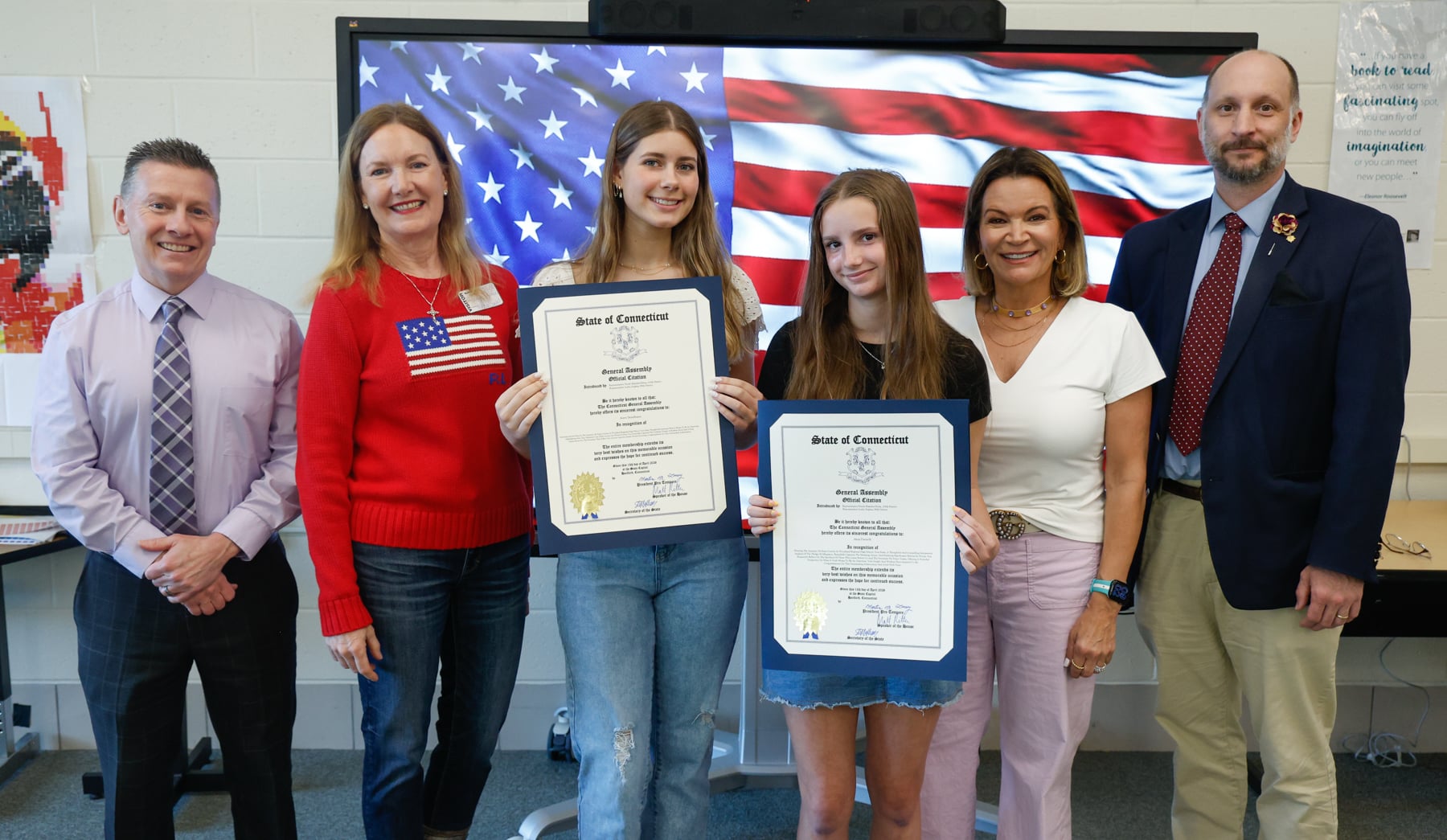
"To me, America is where the individual has the power to shape the future." - Alexa Piscitelli. State Representatives Nicole Klarides-Ditria and Lezlye Zupkus presented Woodland Regional High School students, Alexa Piscitelli, grade 9, and Avery Deitelbaum, grade 11, with official State Citations in recognition of their winning writings for the "America's 250th Essay Contest!" The veteran lawmakers, whose districts are served by Region 16, came up with the essay contest as a way to help students connect with the upcoming 250th anniversary of our nation. The voluntary contest garnered submissions from students in each grade. Ultimately, Alexa's essay titled "I Pledge Allegiance to the Flag" was selected as the winner with Avery's essay, "America 250" selected as runner-up. Woodland Regional High School Principal Kurt Ogren and social studies teacher Chris Tomlin were on hand for the brief presentation held in the school's media center.

HARTFORD—House Republican Leader Vincent Candelora (R-North Branford) and State Rep. Nicole Klarides-Ditria (R-Seymour), House Ranking Member of the Public Health Committee, released the following statement Friday in response to committee Democrats' decision to limit to midnight the March 11 public hearing on H.B. 5044 and S.B. 450, bills that would grant the governor's public health commissioner unchecked authority to mandate vaccines for schoolchildren without legislative approval and erode religious freedom: "Residents should take note: this is the new way Democrats are doing business in the legislature. This decision comes on the heels of their recent omnibus bill, passed under an emergency certification that conveniently bypassed public hearings altogether, and now they're capping testimony on bills that strip parents of their voice, their rights, and for many families, close the courthouse door on their ability to challenge the state's controversial elimination of the religious exemption for school vaccines. Governor Lamont wants to give his public health commissioner unilateral power to add vaccine mandates to school requirements, cutting out the legislature and parents entirely and setting a precedent that could ultimately extend to the workplace too. That's a dramatic departure from Connecticut law and the legislature should offer the public the maximum input possible—so it's telling that Democrats have chosen to limit this hearing to midnight. They can't praise Connecticut's open public hearing process, including the ability to testify remotely, and then slam the door shut the moment residents line up to oppose their agenda. Every Connecticut citizen who wants to be heard deserves that right."
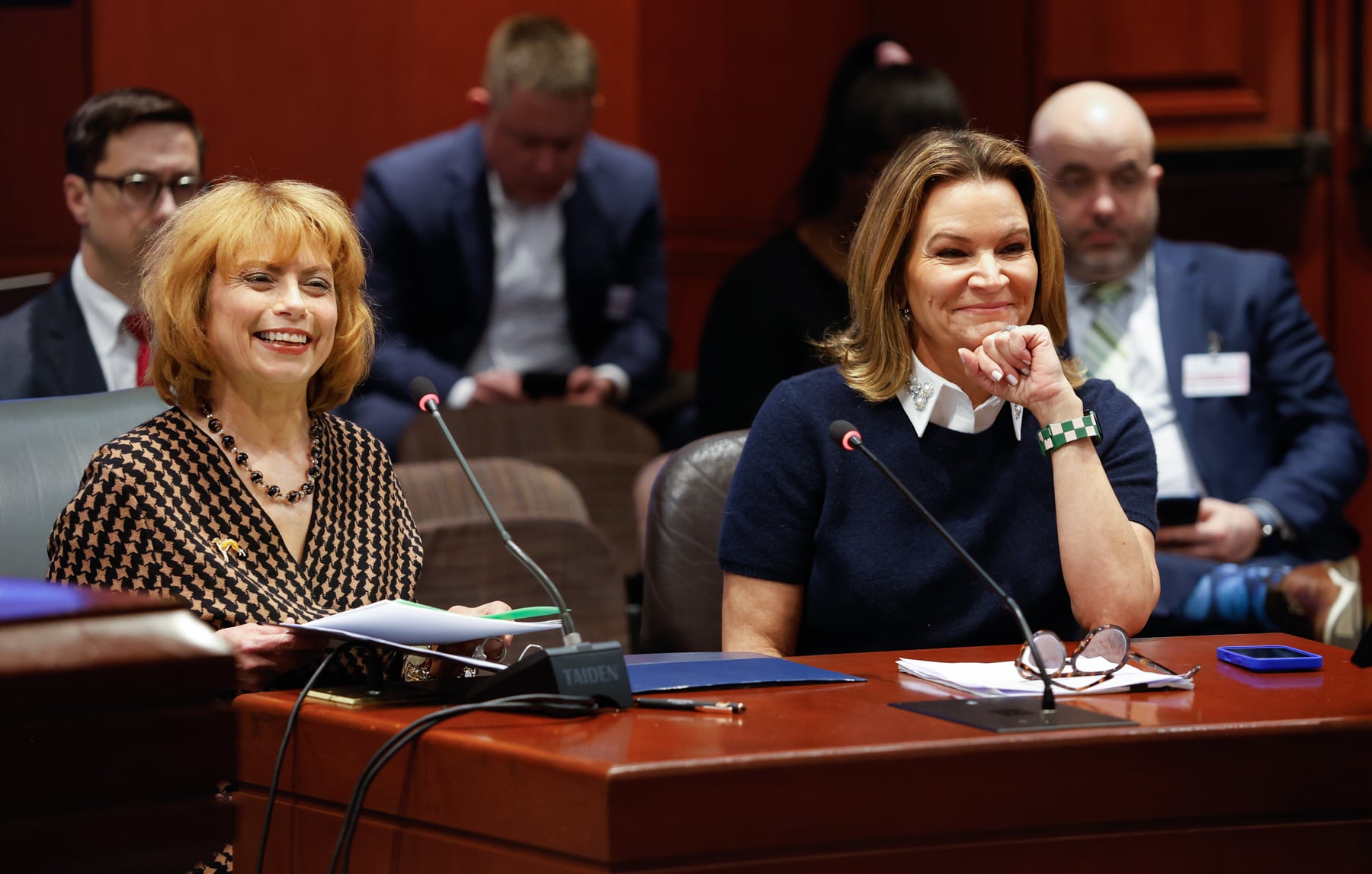
State Rep. Nicole Klarides-Ditria was joined by animal advocate Christine Dorchak, President and general counsel for Grey2K USA Worldwide to testify in strong support of HB 5229 and against the practice that allows bets to be placed on simulcast dog racing. Despite Connecticut having outlawed live dog racing in the state in 2024, people are still able to place online wagers for dog races that occur in other states. Rep. Klarides-Ditiria, a longtime animal advocate and co-chair of the legislature's Animal Welfare Caucus, has consistently called on her colleagues to end these dangerous, hurtful races, and to preserve the health and wellbeing of all animals in the state. Rep. Klarides-Ditria submitted this testimony to the committee: General Law Committee Testimony In Support of H.B. 5229: An Act Concerning Gaming March 4, 2026 Co-Chairs Maroney and Lemar, Vice-Chairs Fonfara and Turco, Ranking Members Cicarella and Rutigliano, and distinguished members of the General Law Committee, thank you for the opportunity to submit testimony in support of amending House Bill 5229: An Act Concerning Gaming, to prohibit the simulcast wagering on greyhound races in Connecticut. First, I want to acknowledge the important step this legislature took in 2024 when we banned live greyhound racing in our state. That action reflected a bipartisan recognition that the practice no longer aligned with Connecticut’s standards for humane treatment of animals. It was a meaningful policy decision grounded in evolving public values. However, while live racing is no longer permitted here, simulcast wagering on greyhound races continues. Under current law, Connecticut residents may still place bets at OTB and pari-mutuel facilities on dog races taking place in other states or countries. In effect, although we have ended live racing within our borders, we continue to financially support the industry elsewhere through simulcasting. If we determined that live greyhound racing was inconsistent with our state’s public policy, it is appropriate to ask whether continuing to facilitate wagering on the same activity is aligned with that decision. Amending HB 5229 to prohibit greyhound simulcasting would close this loophole and ensure consistency in our gaming laws. It is also important to consider the practical impact of such a change. The overwhelming majority of simulcast wagers placed in Connecticut—approximately 90 percent—are on horse racing, not dog racing. Greyhound simulcasting represents a very small portion of overall wagering revenue. Based on available figures, the fiscal impact of ending greyhound simulcasting would be minimal in the context of our broader gaming economy and General Fund. Nationally, many states have already moved in this direction. A significant majority now prohibit dog racing simulcasting, and additional states are scheduled to do so in the coming years. Connecticut has the opportunity to align with this trend and ensure our policies reflect contemporary standards regarding animal welfare. This issue is not about limiting gaming broadly, nor is it about undermining existing OTB operations. Rather, it is about maintaining policy consistency and ensuring that our laws reflect the values we articulated when we ended live greyhound racing in 2024. For these reasons, I respectfully urge the Committee to consider amending HB 5229 to prohibit simulcast wagering on greyhound races. Thank you for your time and consideration. I am happy to answer any questions.
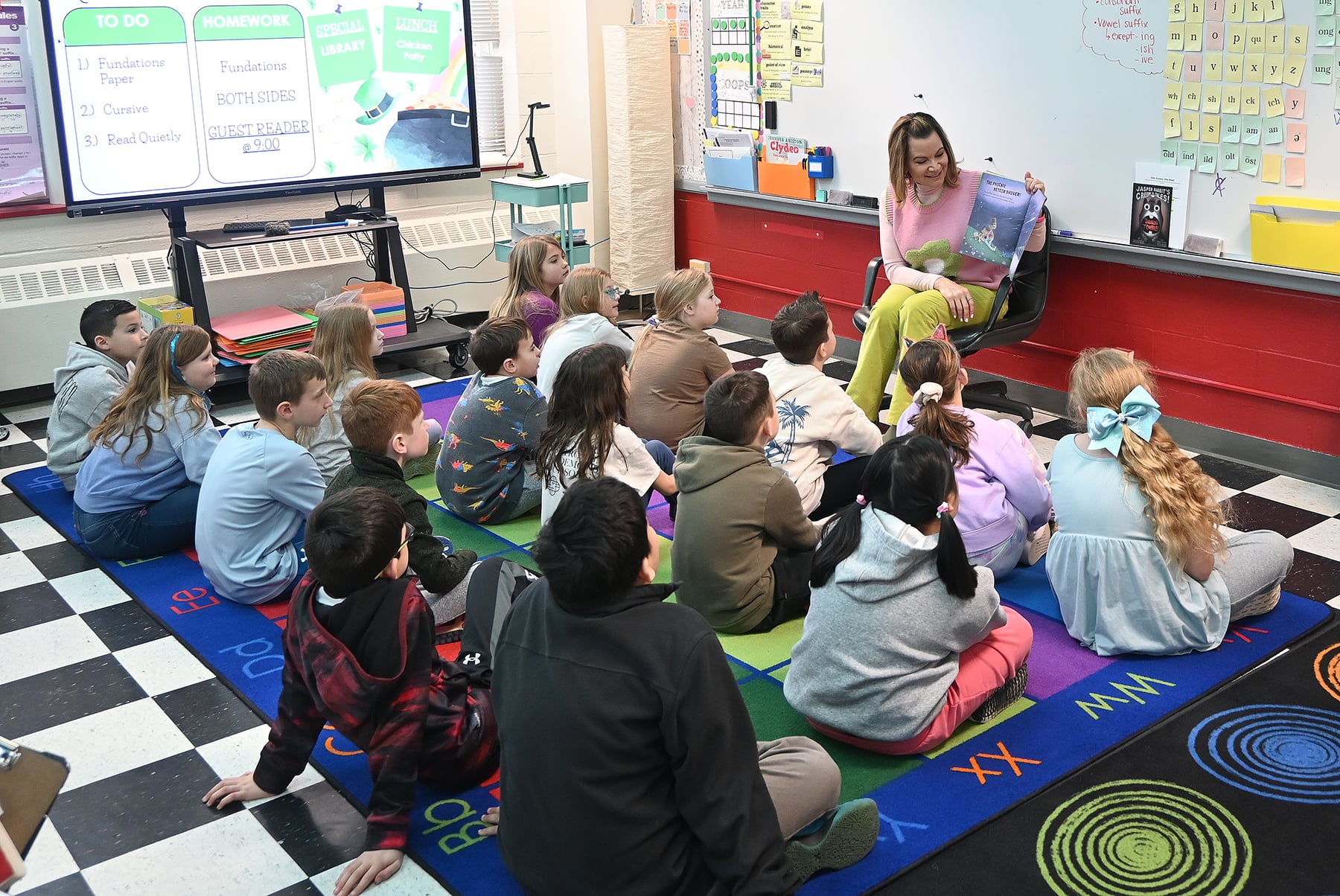
State Representative Nicole Klarides-Ditria continued an early March tradition and celebrated Read Across America Day by reading Look Up! by Nathan Bryon to students in Mrs. Ciccone’s 3 rd grade class at Laurel Ledge Elementary School. Read Across America is a nationwide reading celebration that takes place annually during the first week of March with the goal of sharing the joy of reading and promoting early childhood literacy with elementary school children. According to its website, The National Education Association seeks to build a nation of readers through its signature program, NEA’s Read Across America. For more information about this great event please visit www.nea.org/readacross . Rep. Klarides-Ditria is a longtime proponent of literacy education and volunteers annually to share the joy and excitement of reading to children throughout the district!
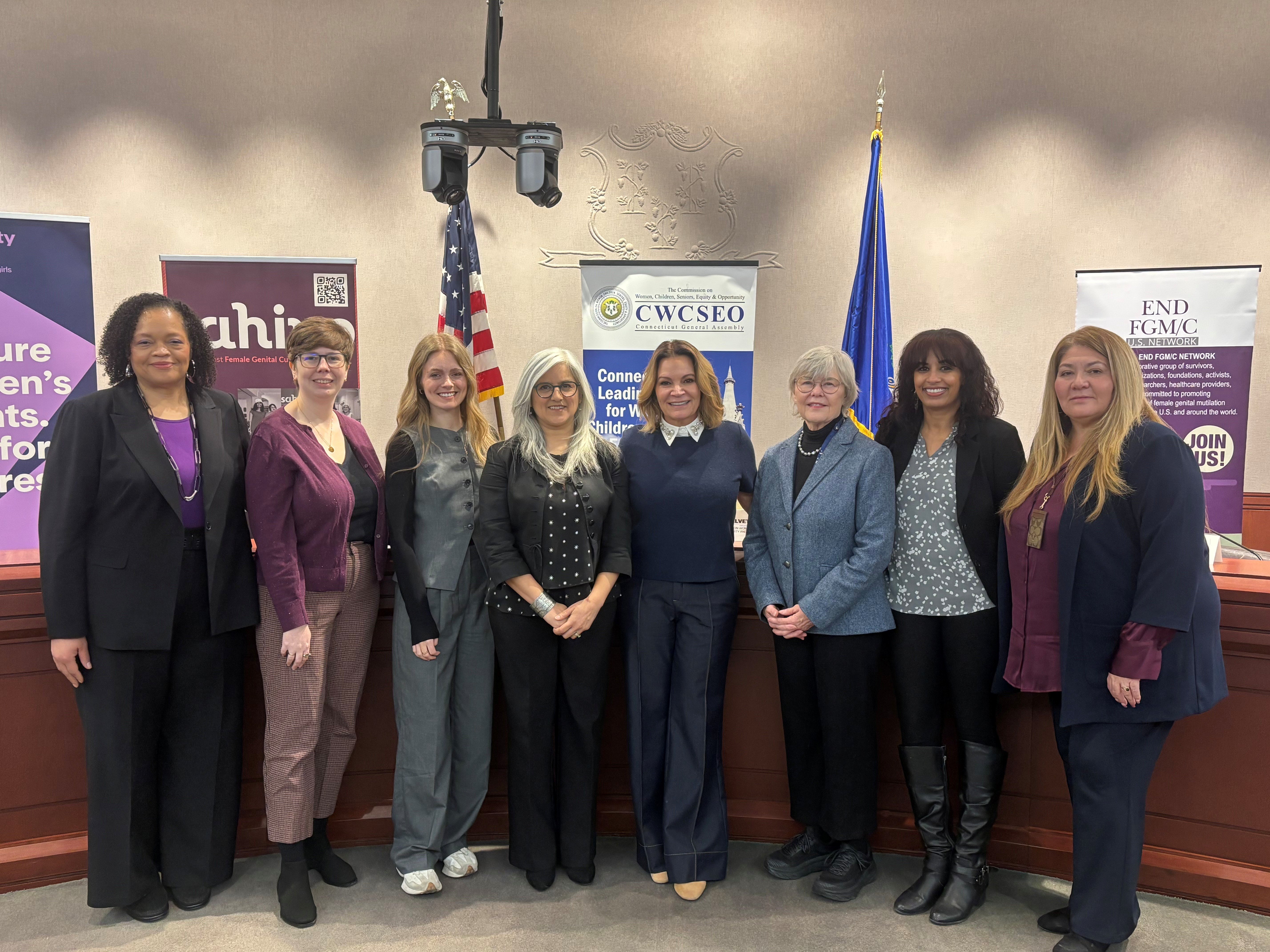
Today, I once again joined advocates, survivors, legislative colleagues, and advocates from Sahiyo and CWCSEO for a panel discussion to call for an end to Female Genital Mutilation/Cutting (FGM/c) and to announce our intention to introduce legislation to ban the practice in Connecticut. Female genital mutilation is usually carried out on prepubescent girls and involves the cutting and sometimes partial removal of a girl’s genitals, including excising of the clitoris. The immediate complications can include bleeding, infection and even death. Potential long-term complications include complications in childbirth, UTIs, scarring, hepatitis, HIV, and depression. If the clitoris is excised, a woman’s ability to experience sexual pleasure can also be permanently diminished. As the Ranking Member of the Public Health Committee, I am once again calling on my colleagues to put an end to this practice in our state and to further enshrine protections for vulnerable women into state law. We must, and can, do more to protect women. The world health organization says FGM/c is recognized internationally as a violation of human rights and reflects deep rooted inequality between the sexes and constitutes an extreme form of discrimination against girls and women. While FGM/c is traditional in some cultures experts say there are no medical benefits to this procedure. Female Genital Mutilation/cutting is currently illegal in 41 states.
Towns Served