
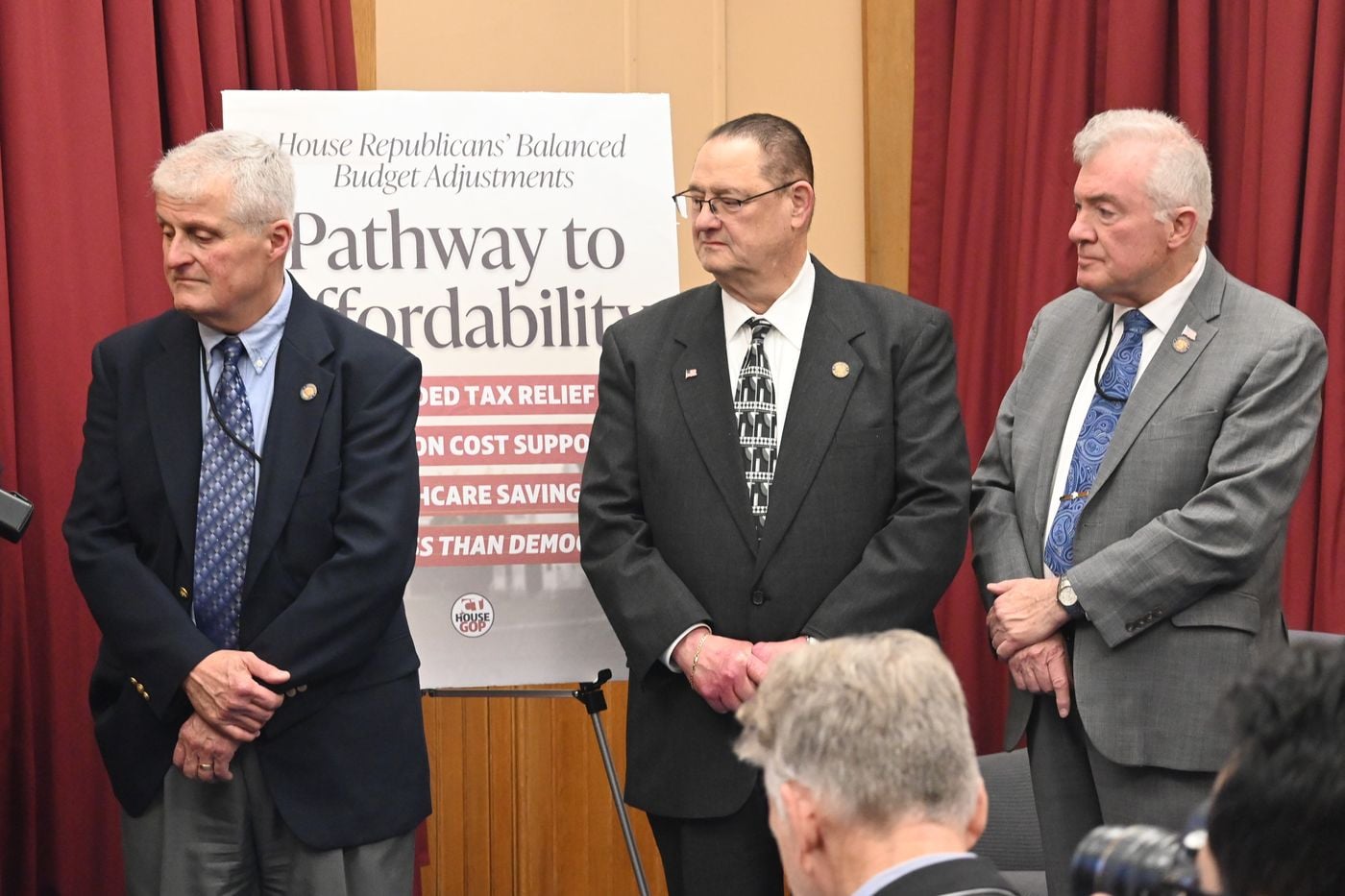
Rep. Foncello, CT House Republicans Unveil "Pathway to Affordability" Budget Plan
Key Takeaways
- House Republicans propose $27.9 billion balanced budget.
- Plan delivers more than $400 million in targeted tax and fee relief.
- STRAP sends $365 million to Connecticut towns to ease property taxes.
- Savings from reforms include challenging NY tax rule and budgeting vacancy savings.
Balanced proposal spends less than Democrats' budget, cuts household costs, and delivers new school funding relief to every Connecticut community
HARTFORD—State Representative Martin Foncello (R-Brookfield) joined his colleagues in the House Republican Caucus on Tuesday and released a budget adjustment plan for the second year of the state budget through a series of policies aimed at making Connecticut more affordable, lowering household costs, easing property tax pressures, and addressing the school funding crisis facing communities across the state.
The $27.9 billion plan, called “Pathway to Affordability,” is balanced, provides more than $400 million in tax relief, falls $167 million under the state spending cap, and spends less than the governor’s budget proposal and the product advanced by Appropriations Committee Democrats.
"Connecticut families are paying more for everything —from groceries and gas to insurance and property taxes. Spending more and hoping for the best is not a plan, but what we unveiled is balanced and delivers more than $400 million in real, sustainable tax relief," said Rep. Foncello. "Some of that relief includes eliminating taxes on Social Security, the sales tax on children's clothing, and tax on tips and overtime. We also send $365 million directly to towns to help hold down your property taxes due to rising education costs."
School Taxpayer Relief & Affordability Plan (STRAP)
The centerpiece of the House Republican proposal is the School Taxpayer Relief and Affordability Plan, or STRAP—a $365 million investment distributed to every city and town in Connecticut to help offset surging education costs and reduce the burden on local property taxpayers.
Under this proposal, Bethel would receive $1,493,212 in additional aid, Brookfield would get $204,964, and Newtown would receive $668,117.
The “Pathway to Affordability” plan includes a broad range of tax-and-fee relief:
· Increase the state’s maximum property tax credit to $650 and expand income eligibility, extending relief to 800,000 filers
· Curb healthcare costs by reducing a state levy on insurance companies ($20 million) that has been passed on to consumers in their monthly premiums
· Eliminate income tax on all Social Security benefits
· Eliminate the sales tax on children’s clothing
· Enact a “no tax on tips” exemption
· Reduce the sales tax on vehicles priced between $50,000 and $75,000 from 7.75% to 6.35%--because the cost of vehicles has risen sharply in recent years, and what once seemed like a luxury price point now covers everyday family minivans and work trucks
· Eliminate fees on certain occupational licenses
· Remove the “Passport to Parks” fee from motor vehicle registrations
· Ease local tax burden by providing $2.5 million to help municipalities cover early voting costs
The plan is funded through new revenue and spending discipline, including:
· Recover $340 million by challenging New York’s “convenience of employer” rule, which forces roughly 80,000 Connecticut residents who work remotely for New York employers and pay income taxes to New York at rates higher (10.9% top rate) than they would pay here at home (6.99% top rate). The plan includes $1 million to help these workers file legal challenges against New York’s policy.
· Save $153 million by budgeting state employee positions based on realistic hiring trends rather than funding all vacancies at once
· Save $61 million by eliminating state-funded health insurance for undocumented immigrants, who retain access to care through Federally Qualified Health Centers
· Removes 25% of double-funding of ECS grants to municipalities, saving $29 million
· Save $12 million by reducing legislative earmarks
· Save $3.5 million by eliminating inmate text messaging
Among our targeted investments in public safety and human services:
· $3.2 million to expand the CRISIS program helping police respond to and de-escalate situations involving individuals experiencing mental health or substance abuse crises
· $1.5 million for domestic violence shelters
· Provides funding to hire investigators for Medicaid Fraud Control
· $2.4 million to increase provider rates for Birth-to-Three child development services
· Creates an income tax deduction (up to $2k) for volunteer firefighter and EMS personnel
###