
Sign up for Combined Sewer Overflow Alerts!
Key Takeaways
- Combined Sewer Overflows from Massachusetts negatively impact the quality of downstream water in the Connecticut River
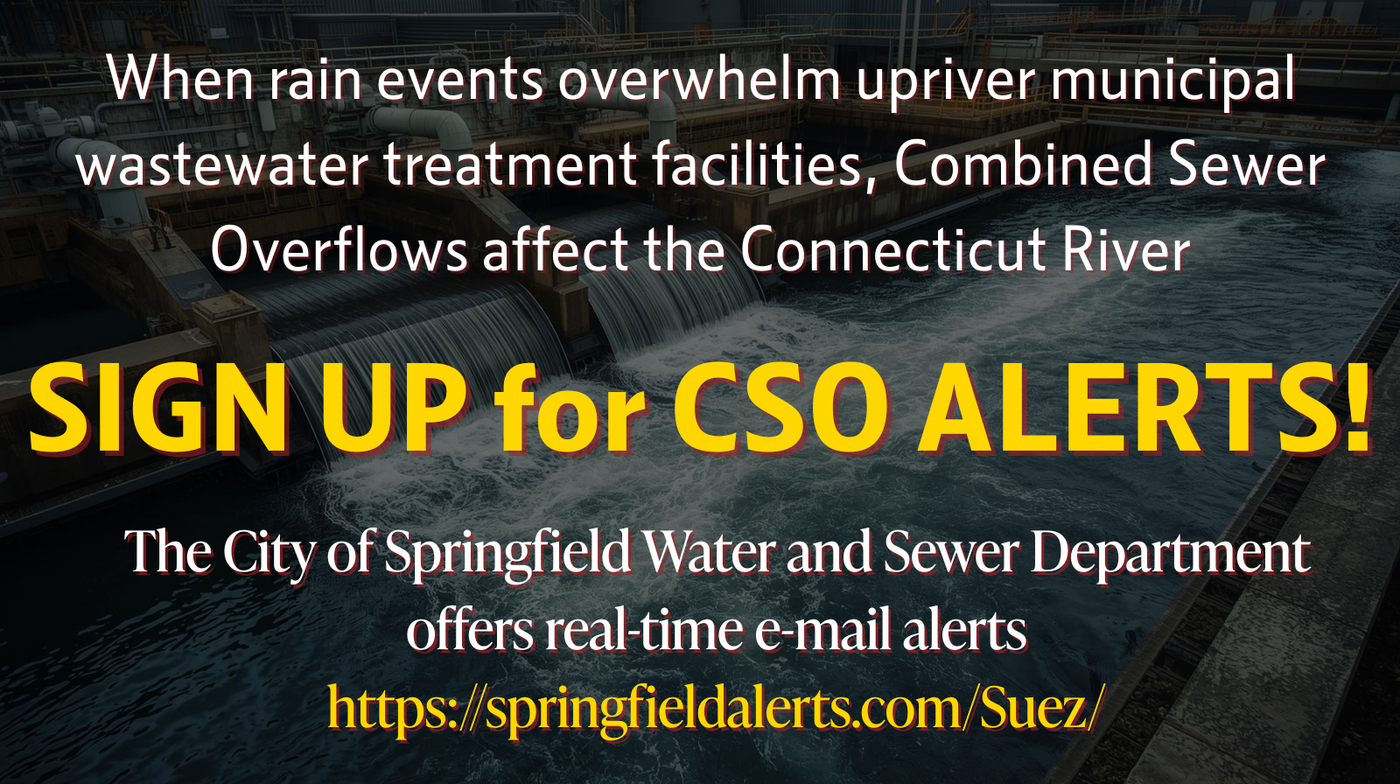
Do you enjoy boating or fishing on the Connecticut River? Or hiking along the riverbank? When rain events overwhelm municipal wastewater treatment facilities upstream in Massachusetts, the Connecticut River is subjected to a "Combined Sewer Overflow (CSO).” Excess water - combined stormwater runoff, sewage and other household and business waste - is discharged into the River to prevent sewage from backing up into homes or onto local streets.
When these CSOs occur, they can create temporary, yet potentially dangerous, situations for people who use the river to swim, bathe, or fish.
Local, state and Federal agencies have been aware of these issues for some time, and some mitigation efforts have been put into place – but very slowly. Connecticut DEEP has been more aggressive in requiring and implementing solutions for Connecticut based facilities to our south. Massachusetts needs to pick up the pace.
I recently wrote to the federal Environmental Protection Agency (EPA), met with Congressman Larson's office and corresponded with EPA New England Administrator Sanborn to share my concerns and request assistance to mitigate CSOs from facilities to our north. Steps are being taken, and some municipalities have been working to increase treatment capacity and construct retention basins to further control potential CSOs. I will continue to follow up on progress and explore potential other solutions to this problem affecting the Connecticut River.
In the meantime, the City of Springfield Water and Sewer Department – which has a large wastewater treatment facility closest to the state border - offers a real-time online map and provides email alerts when CSOs occur.
If you would like to sign up, please go to https://springfieldalerts.com/Suez/