
Rep. Zawistowski Requests AG Tong to Initiate Action to Prevent Massachusetts Cities from Polluting CT River
Key Takeaways
- Rep. Zawistowski wants Massachusetts' officials to do more to protect downstream communities
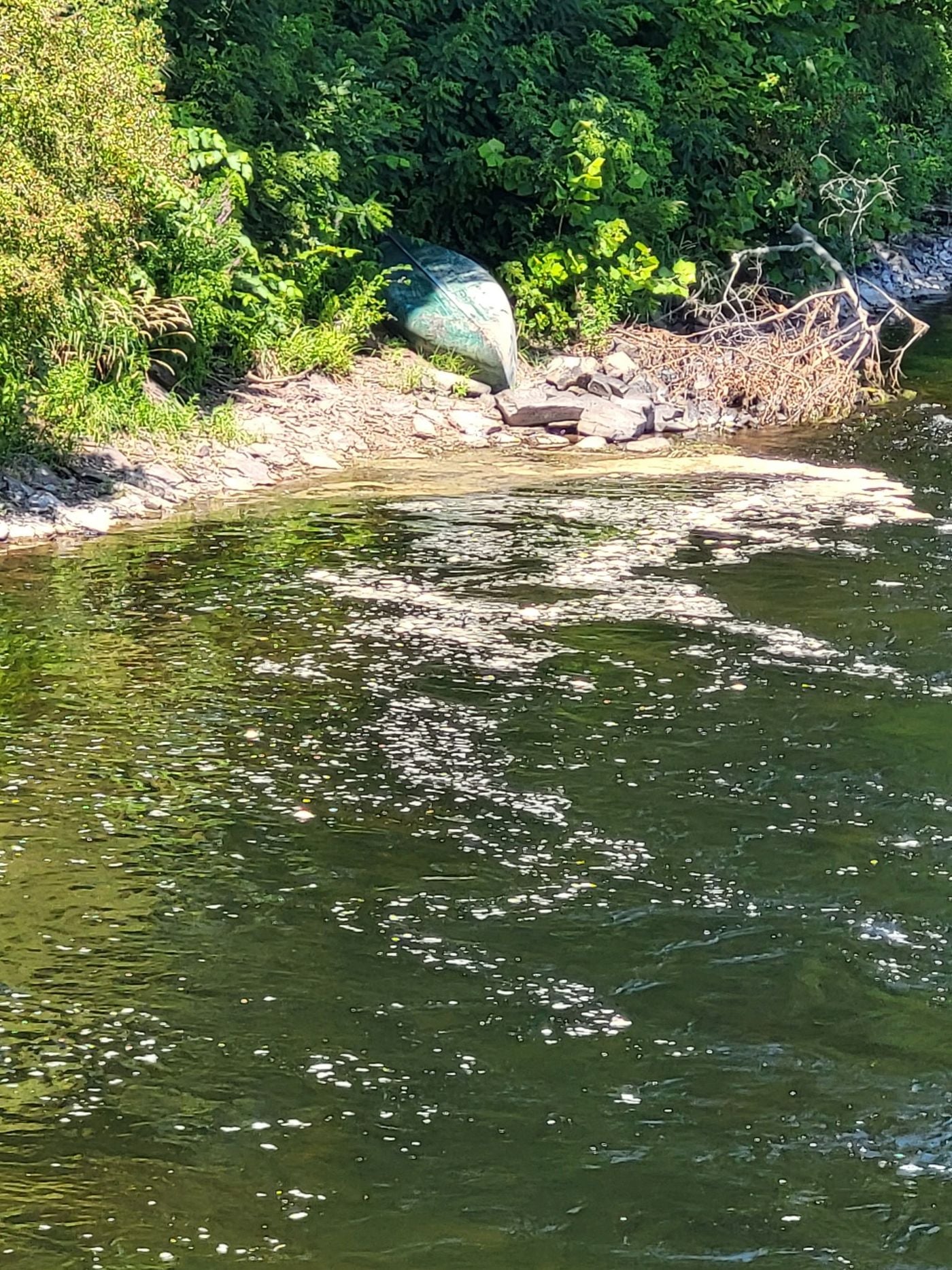
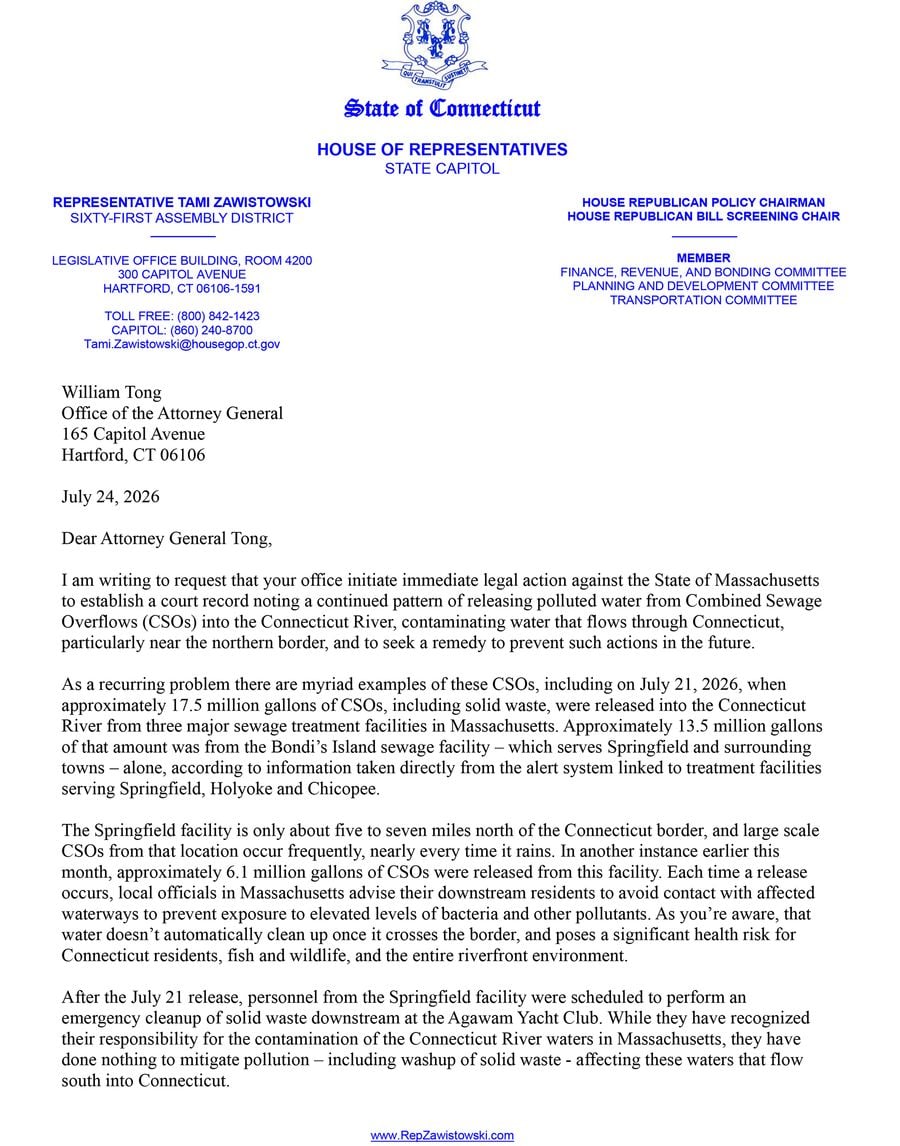
Following another massive 17.5-million-gallon Combined Sewer Overflow (CSO) from Massachusetts’ cities into the Connecticut River last week, State Representative Tami Zawistowski (R-61) immediately sent a letter to Connecticut Attorney General Tong requesting his office initiate legal action against the State of Massachusetts to eliminate these releases.
“The Connecticut River doesn’t stop at the border, and while Massachusetts’ officials have been alerting their residents about similar overflow events and working to clean up small sections of the river, Connecticut residents are left to clean up the mess downstream,” Rep. Zawistowski said. “This is a disgusting, yet preventable, issue and must be properly addressed to protect the residents, wildlife, and ecosystems downstream that rely on the river.”
Using information taken directly from the alert system linked to treatment facilities serving Springfield, Holyoke and Chicopee, in her letter Rep. Zawistowski specifically referenced July 21, 2026, when approximately 17.5 million gallons of CSOs, including solid waste, including approximately 13.5 million gallons from the Bondi’s Island sewage facility – which serves Springfield and surrounding towns – were released into the Connecticut River from three major sewage treatment facilities in Massachusetts.
Less than two weeks ago Rep. Zawistowski sent letters to United States Senators Edward J. Markey and Elizabeth Warren requesting an enhanced level of attention and urgency to prevent persistent CSOs from occurring in Western Massachusetts. Noting that similar overflows affecting the Merrimack Valley and North Shore of Massachusetts were dealt with swiftly by their U.S. Senate colleagues, Rep. Zawistowski implored the veteran federal lawmakers to act swiftly to protect water quality and preserve recreation, fishing, and a riverfront small-business economy that depends on public confidence that our waterways are safe to use.
According to the U.S. EPA, when the amount of water runoff exceeds the capacity of combined municipal wastewater treatment systems, untreated stormwater and wastewater is discharged into nearby waterbodies creating a Combined Sewer Overflow (CSO). These CSOs are subject to the National Pollutant Discharge Elimination System (NPDES) permitting program.
“These sickening, recurring overflows are now largely preventable with up-to-date combined sewer infrastructure, and while these facilities have long term mitigation plans, we can’t afford to wait decades for action,” Rep. Zawistowski said. “The public health risks are far too great.”
-30-
Rep. Zawistowski represents the 61st district of East Granby, Suffield and Windsor Locks