
Rep. Scott Testifies in Support of His Sports Betting Concepts
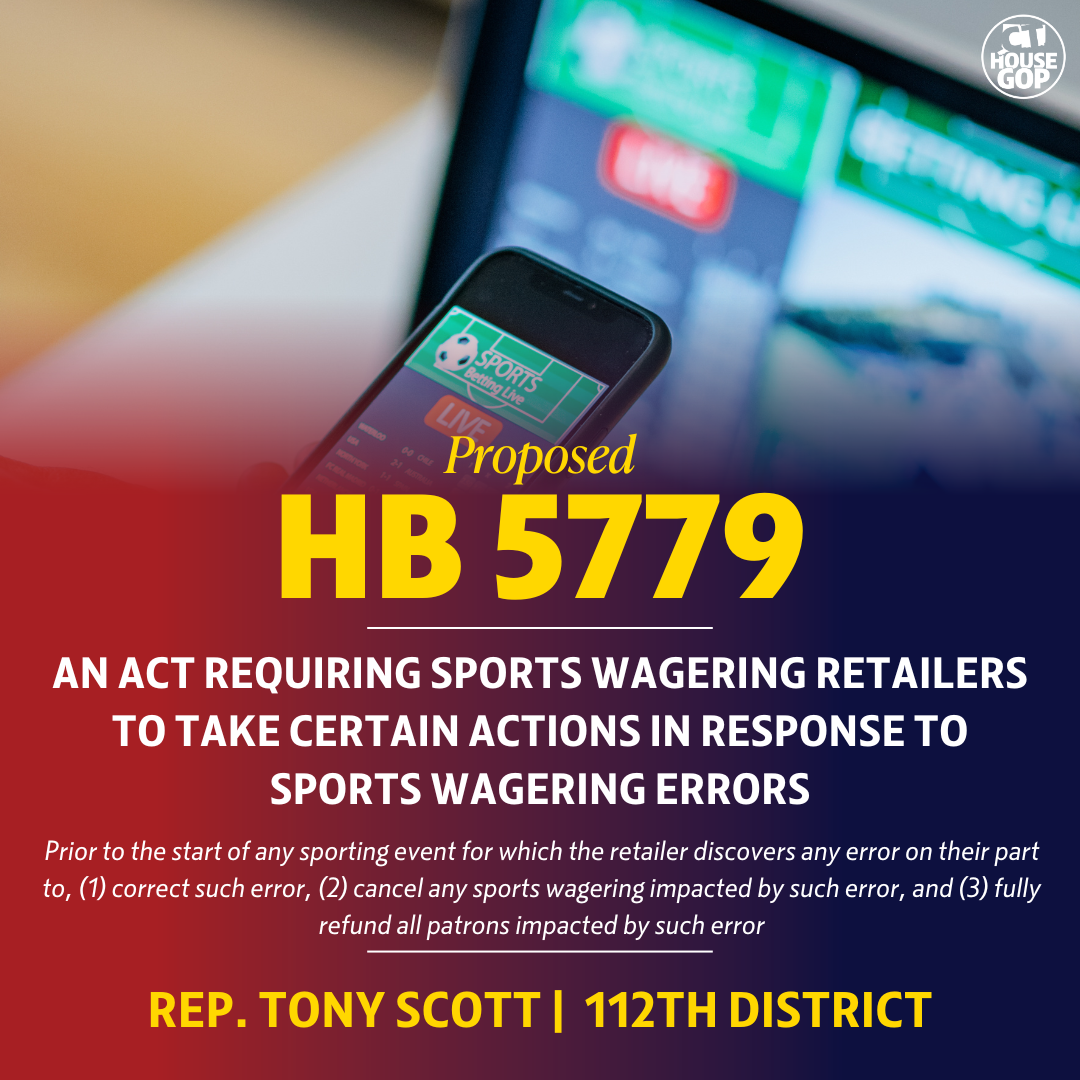
Hartford, CT. — The General Law Committee has held a public hearing on a sports betting bill. State Representative Tony Scott (R-112) testified in support of HB 1464, An Act Concerning Sports Wagering and Multijurisdictional Internet Gaming. Two the concepts Rep. Scott proposed are included in this bill. One touches on the immediate disclosure of wager errors.
This concept aims to have sportsbooks communicate immediately with consumers if there was an error on the line of a bet and forced them to notify consumer before the sporting event starts that they are canceling the bet.
“Errors and typos happen. An example in this scenario would be a sportsbook meant to put the odds of Tiger Woods to win the Masters at 10 to 1, but accidentally put it on the market at 100 to 1. Sportsbooks should not be able to wait until the event is over, when they know who won, to decide if they want to notify the consumer of the error. If Tiger Woods lost, maybe the sportsbook would not say anything and just keep the money. But if Tiger won, they cancel the bet and not have to pay that out,” said Rep. Scott.
If told of an error before the event, the bettor can choose to continue at the current, correct, odds or bet differently. Rep. Scott called it a great consumer protection piece that sportsbooks should be able to do with their technology.
“The wording in the bill currently is not my exact intent so if we need to have further conversations about that or questions, I’m more than willing to talk about it,” noted Rep. Scott.
The other concept concerns maximum wager notification. This aims to communicate clearly to consumers why and how they’re being limited.
“Some gamblers who have a success rate higher than the average sometimes get limited in certain sports or certain kind of wagers. So “limited” means they can’t bet as much as they normally would or have any free rein to bet. In a perfect world, limiting would be outlawed as it’s clearly prejudicial and selective. If they did nothing wrong, just picking some games more right than the average bettor, the consumer should be protected,” said Rep. Scott.
Connecticut has now had sports gambling for about a year now, and the General Law Committee members asked Rep. Scott about other proposals he made on this issue.
Currently, people in Connecticut are not allowed to place bets on regular season games for teams like a UConn, Yale, or Quinnipiac. But if they play in a tournament, like the NCAA tournament or a conference tournament, Connecticut residents are allowed to bet on those teams. If a Connecticut resident is in a state that has sports gambling, which there are dozens, they can bet on regular season games. Connecticut residents or people in Connecticut are currently prohibited from betting on regular season UConn basketball games, for example, because of past practices.
“By bringing it out of the underground and into the light, we have ability track these things a lot better and find out immediately when there’s issues. When it comes to the issue of college age students with gambling addictions and losing a lot of money, that is something we need to keep an eye on. We do have some things in place already to make sure that those who need help can get help. I think that advertising is something we really need to look at, to make sure that it’s not predatory, not offering free bets to try to bring people in. I also have a bill in proposal that gives players an option to opt out of certain types of bets, essentially blocking yourself from certain categories. Right now, that’s not a possibility. My proposal gives them a little bit more power for themselves,” said Rep. Scott.
###