
Rep. Rutigliano Visits to International Brotherhood of Electrical Workers Training Facility
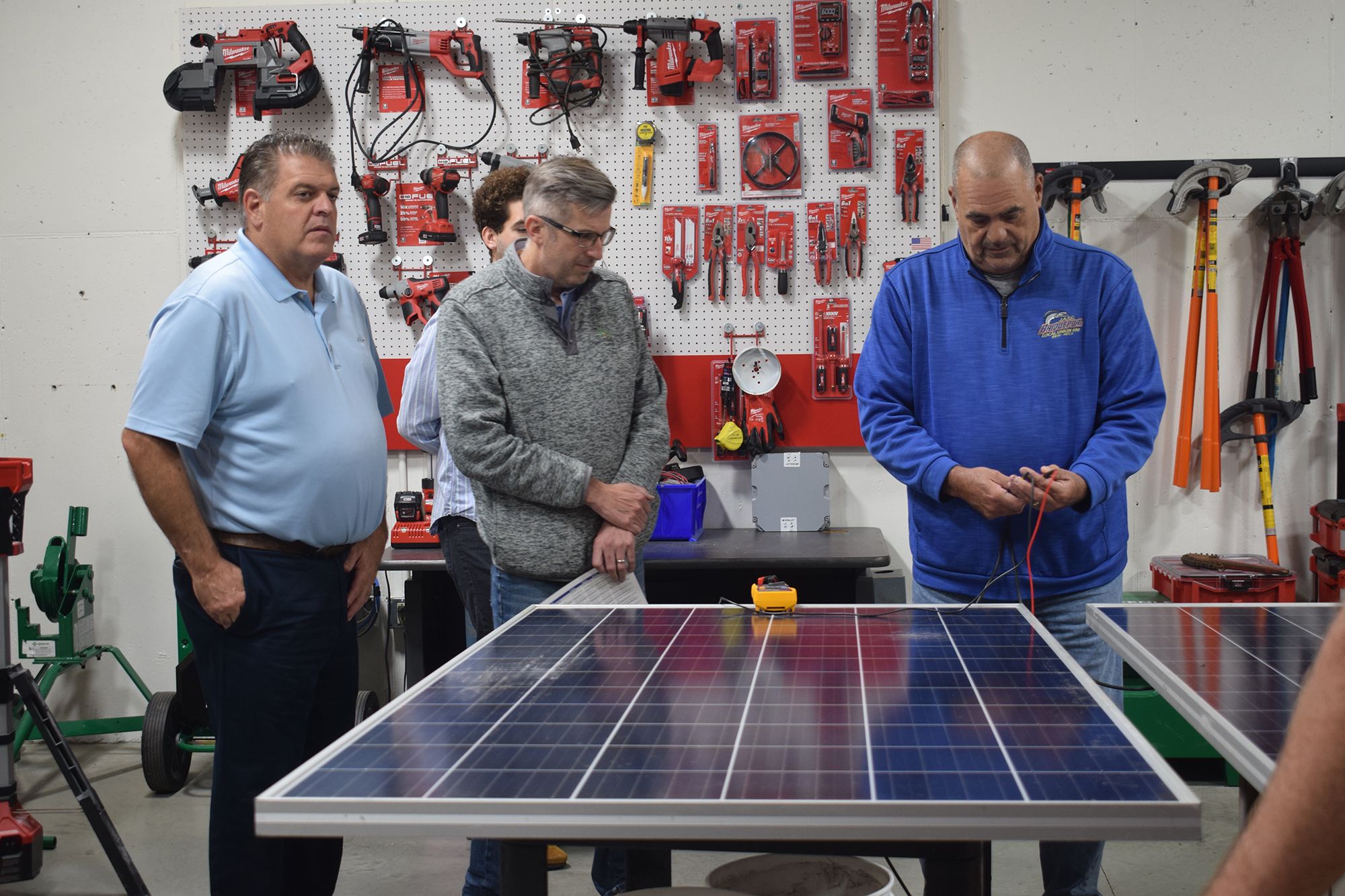
Rep. Rutigliano Visits to International Brotherhood of Electrical Workers Training Facility
MONROE- State Rep. David Rutigliano (R-123) along with members of the General Law Committee, visited with members of trades unions at the IBEW (International Brotherhood of Electrical Workers) Union training facility in Monroe, CT.
Legislators and union members discussed several issues that came up during the 2023 General Assembly session, and some topics both sides hope to continue working on in the upcoming session, including the future of electric vehicles in Connecticut.
The IBEW runs an apprenticeship program, registering participants with the state so they can put those hours toward Connecticut licensing requirements. This is a work-study program for apprentices, offered at no cost to the state.
“We understand the importance unions play in training the next generation of our state’s workforce. This is a career path for kids, and we should encourage it,” said Rutigliano, the head Republican on the General Law Committee. “This building is very impressive. What the electrical union is doing is a benefit to Connecticut and we should support them in whatever way we can.”
Union members asked the legislators if there’s a way to work with the federal Veterans Affairs Administration to get relevant information to newly discharged servicemembers about programs like the Helmets to Hard Hats program. That information should be included in discharge packets, but often times it is not.
Rutigliano and his colleagues asked several questions about electric vehicle (EV) charging stations. A Level 2 charger, the most common for residential homes, takes about six to eight hours to fully charge a vehicle. It’s the load equivalent of putting in another oven in the home.
“We’re mandating Electric vehicles (EVs), but the infrastructure is not there yet. I see people stopped at the few we have and it’s like watering a horse, people are sleeping in the cars as they stop for hours,” added Rutigliano.
When it comes to paying for an EV charge, most charging stations are app-based. The legislators raised concerns about people who don’t have credit cards or bank accounts and the unintended consequences of banning sales of new gas-powered vehicles in little more than a decade from now.
Union members noted that the state Department of Energy and Environmental Protection hired a company from Ireland to install EV charges at rest stops along I-95. They’re using a subcontractor from Massachusetts.
“Fundamentally, we as a caucus believe if it’s Connecticut taxpayer money, the legislature has a right to direct it anyway we want. We appreciate a free market, but if we’re using Connecticut taxpayer money to install public EV chargers, we should use Connecticut companies and Connecticut workers,” said Rutigliano. “If and when we do roll out EV infrastructure, we can put chargers in commuter lots. That’s state property and that would eliminate the need to work with private property owners near rest stops along I-95. We vote on ARPA dollars, and we should step in and do the same with the IIJA.”