Latest News
Loading articles...
Loading photos...

State Representative | Deputy Republican Leader
District
123rd
Towns
1
Latest Updates
Swipe through recent posts
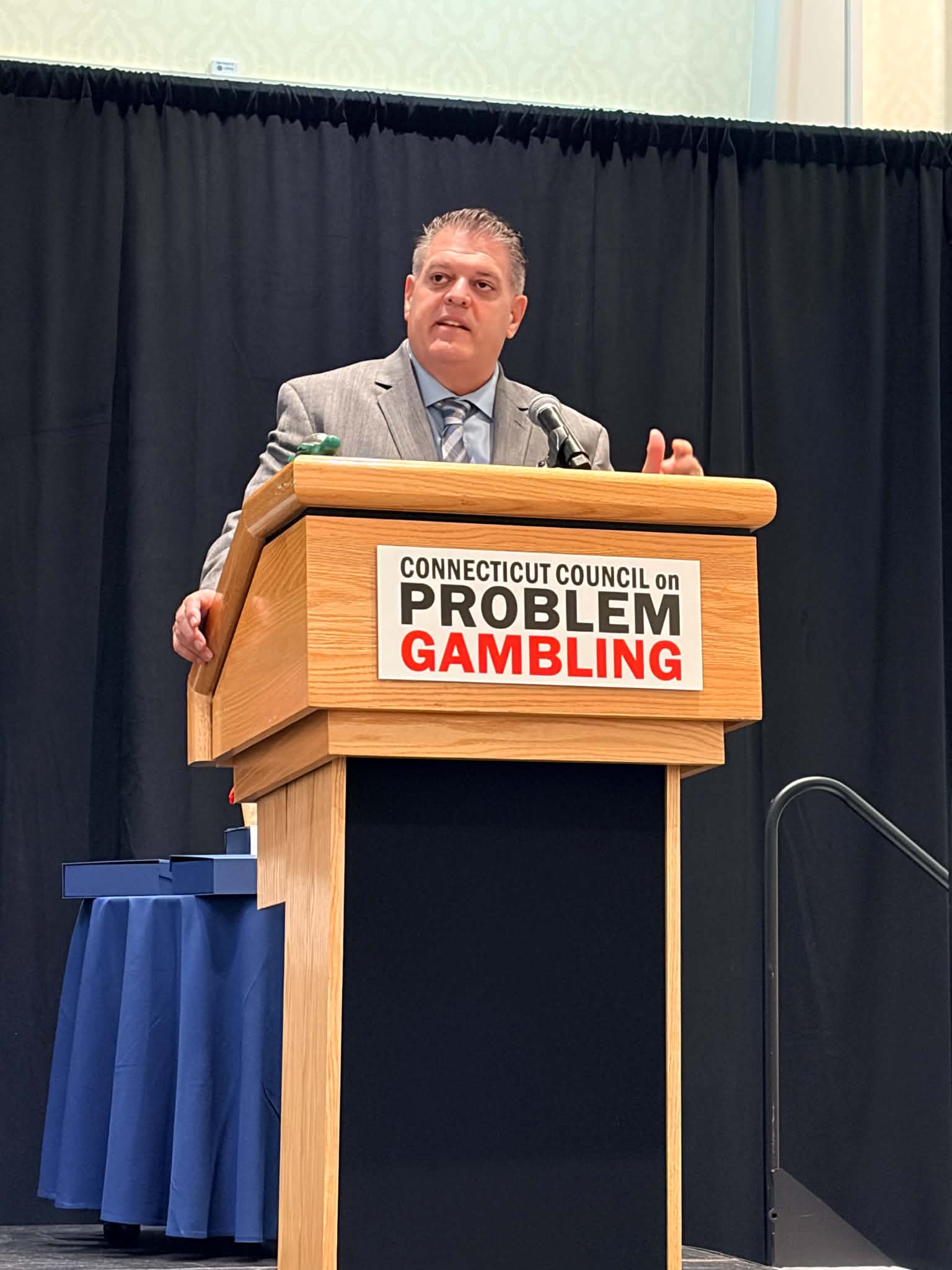
TRUMBULL — State Representative David Rutigliano (R-Trumbull), Ranking Member of the General Law Committee, has been recognized by the Connecticut Council on Problem Gambling (CCPG) with its 2026 Advocacy Award for his continued efforts to strengthen consumer protections, combat deceptive gambling advertising, and address the growing risks of online sports betting and gambling, particularly among young people. The award was presented during CCPG's annual conference on October 14 at the Hartford Marriott Downtown, recognizing Rutigliano's legislative efforts over several sessions to protect Connecticut residents from gambling-related harm and expand access to treatment and support for those affected. As online gambling and sports betting have expanded, Rutigliano has focused particular attention on the sophisticated technology and marketing strategies used by large gambling operators to attract and retain customers, particularly young adults and financially vulnerable individuals. "Today's online gambling industry is a far cry from placing an occasional wager on a sporting event," said Rep. Rutigliano. "These are multibillion-dollar companies using sophisticated technology, artificial intelligence, and carefully designed marketing strategies to encourage people to gamble more frequently and spend more money. What concerns me most is how these tools can be used to target young people and individuals who can least afford to lose." "Online gambling may be here to stay, but I strongly believe these companies have a responsibility to operate honestly and responsibly," Rutigliano continued. "We cannot allow deceptive advertising, misleading promotions, or technology designed to exploit vulnerable consumers to become an accepted business practice. The use of interest bearing credit cards to fund these accounts is unacceptable. Our laws need to keep pace with an industry that is constantly finding new ways to reach consumers." As Ranking Member of the General Law Committee, Rutigliano has worked across party lines to advance legislation addressing these concerns. In 2025, he proposed legislation to protect individuals who’s jointly held credit or debit card accounts could be used for gambling without the consent of all account holders. He also sought restrictions on deceptive promotional incentives that encourage excessive gambling and introduced a proposal addressing gambling advertisements on public college and university campuses. In 2026, Rutigliano co-sponsored legislation that became law, establishing additional consumer protections for online gaming, including restrictions on certain gambling advertisements and the use of artificial intelligence to target sports bettors.
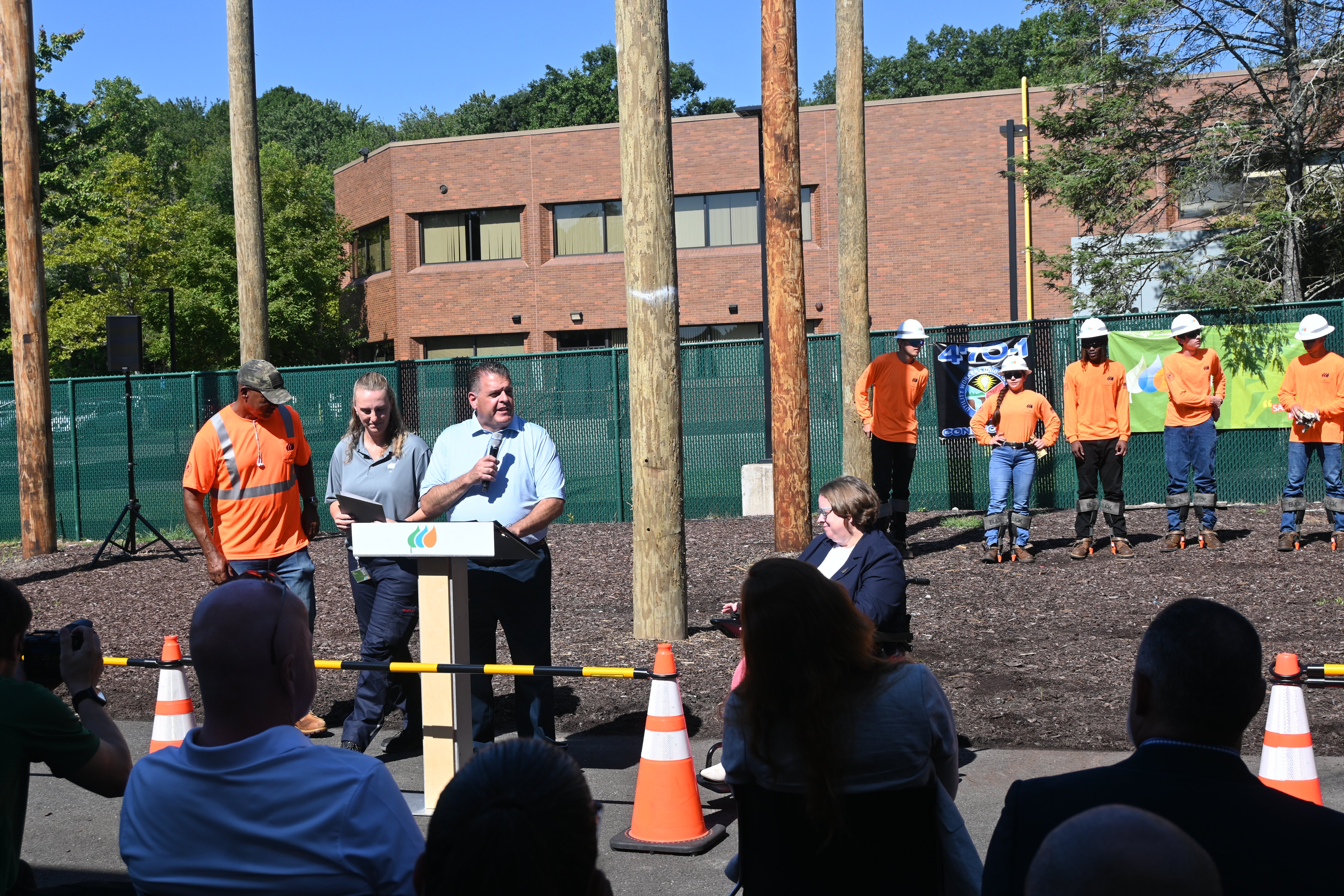
Rutigliano Attends UI and SCG Trade Internship Graduation TRUMBULL – State Representatives David Rutigliano (R-Trumbull) attended the 2026 Trade Internship Program graduation ceremony hosted by United Illuminating (UI) and Southern Connecticut Gas (SCG) on Wednesday, August 19, at the United Illuminating Training Yard, located in Trumbull. The program gives local high school and community college students hands-on experience in the electric and natural gas utility industries, working alongside experienced field employees, union leaders and operations teams. In addition to developing practical skills, participants gain firsthand exposure to careers in the skilled trades and the opportunities available through apprenticeships, technical education, and workforce training. Rutigliano said programs like the UI and SCG internship are an important part of developing Connecticut’s future workforce while showing young people that a four-year college degree is not the only path to a successful career. “College is absolutely the right choice for many students, but it isn't the only path to a good career,” said Rep. Rutigliano. “We need to do a better job showing young people all of the opportunities that are available to them. The skilled trades offer good-paying, highly skilled careers where there is real demand for workers right here in Connecticut.” Rutigliano has supported efforts to expand workforce-development opportunities and strengthen the pipeline of skilled workers needed by Connecticut employers. “For years, employers have been telling us they need more skilled workers,” Rutigliano said. “Programs like this help connect that need with young people who are deciding what comes next after high school. When students can actually work alongside people in these professions, learn the skills and see the career opportunities for themselves, it can open a door they may never have considered.” Rutigliano said developing a stronger skilled workforce is particularly important as Connecticut employers compete for electricians, utility workers, construction professionals, manufacturing employees and other skilled workers. “Workforce development is economic development,” Rutigliano said. “If we want Connecticut businesses to grow and stay here, we need a workforce with the skills to fill the jobs they are creating. Programs like this are good for students, good for employers and good for Connecticut.” The graduation ceremony recognized students for completing the internship and highlighted the skills, training and career experience they gained through the program.
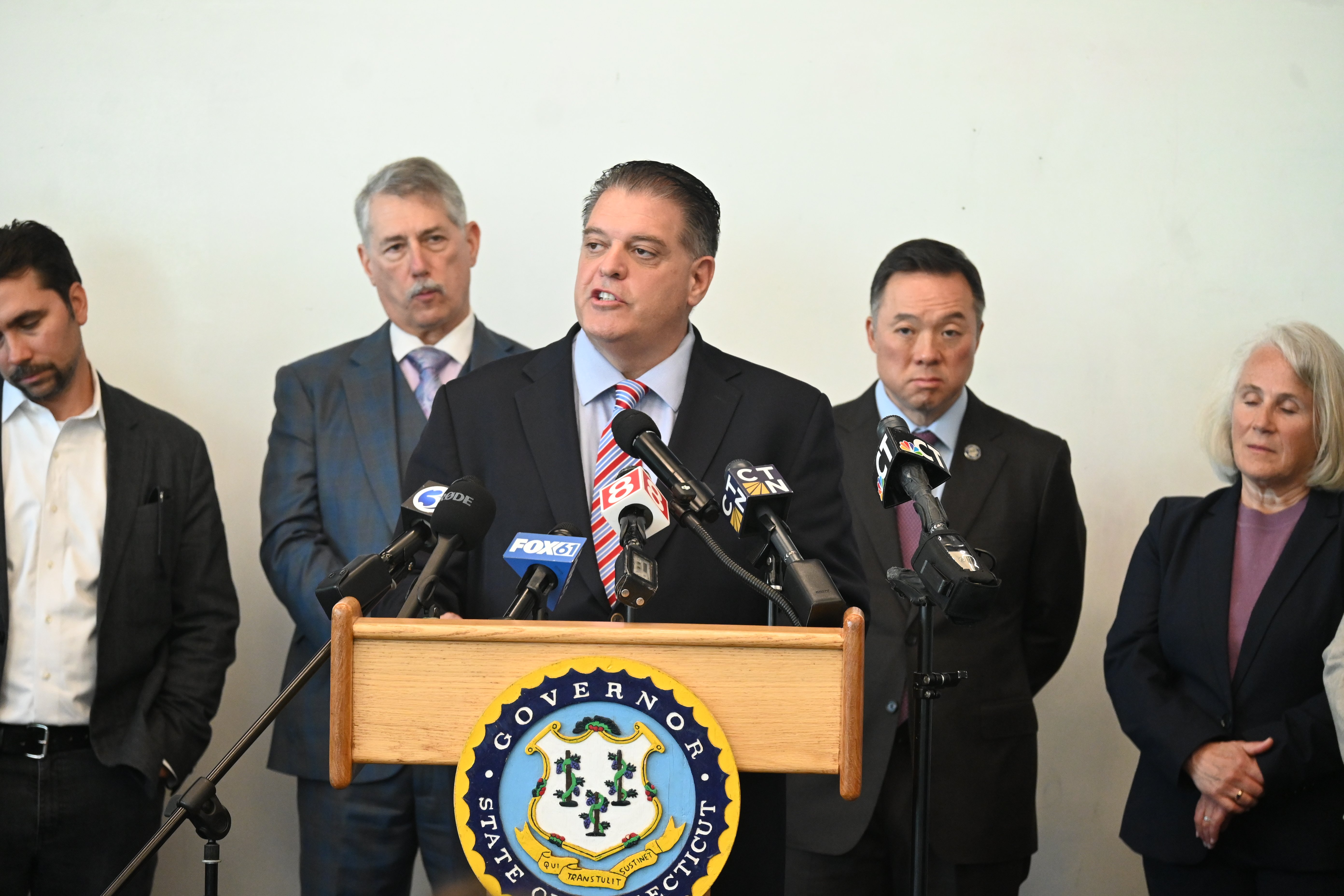
HARTFORD, CT — State Representative David Rutigliano, the Ranking Member of the General Law Committee, today joined Governor Ned Lamont and a group of bipartisan legislative colleagues for the signing of SB 5, the Connecticut Artificial Intelligence Responsibility and Transparency Act , a landmark law establishing clear safety standards for powerful artificial intelligence systems while positioning Connecticut to compete in an increasingly AI-driven economy. "Artificial intelligence is rapidly transforming the way we live, work, and do business," said Rep. Rutigliano . "Many residents have concerns over this looming technology. Connecticut has an opportunity to embrace innovation while ensuring appropriate safeguards are in place to protect consumers, especially children, promote greater transparency, and build public trust in these emerging technologies. SB5 also contained strong protections for youth and the use of social media, including tools for parents and robust age verification system, initiatives I fully support. The legislation creates a framework for responsible AI development and deployment, helping ensure that advanced AI systems are used ethically and transparently while encouraging continued investment and innovation throughout the state. "We need to strike a balance between fostering technological and economic growth and addressing legitimate concerns about accountability and safety," Rutigliano added. "This law demonstrates that Connecticut can be a leader in both innovation and responsible governance. I appreciate Governor Lamont's leadership in signing this important legislation and look forward to seeing its positive impact on our state's future." The Connecticut Artificial Intelligence Responsibility and Transparency Act will prepare Connecticut's workforce, businesses, and public institutions for the opportunities and challenges presented by rapidly advancing AI technologies.
.png)
Trumbull Legislators Sponsor Retired Flag Collection TRUMBULL- With Flag Day a little more than a month away, it's the perfect time to properly retire your worn, faded, and tattered American flags as you prepare to put on fresh new displays of the Stars and Stripes. State Reps. David Rutigliano (R-123), Ben McGorty (R-122) and Tony Scott (R-112), in cooperation with the Trumbull American Legion Post #141, are encouraging Trumbull residents to dispose of their worn American flags in a dignified and respectful way. Republican House members have made the flag collection an annual tradition for the last 14 years to commemorate Flag Day. The Trumbull legislators have provided three locations that residents can drop off their worn American flags for proper ceremonial disposal according to the U.S. Flag Code, plus an additional day to drop flags off to the State Representatives. Drop-off locations will receive flags from May 1 st - June 13 th . The drop-off locations are: Trumbull Town Hall at 5866 Main Street, Trumbull Trumbull Library (Main Branch) at 33 Quality Street, Trumbull Fairchild-Nichols Memorial Library on 1718 Huntington Turnpike, Trumbull Additionally, the Trumbull lawmakers will host a final drive-up flag donation event for your worn and tattered flags at the Middlebrook Elementary School on 220 Middlebrooks Avenue in Trumbull on Saturday June 13 th from 9:00am-11:00am . In 1916, Flag Day was officially established as June 14 th by President Woodrow Wilson marking the anniversary of the Second Continental Congress passing a resolution stating that “the flag of the United States be 13 stripes, alternate red and white,” and that “the union be 13 stars, white in a blue field, representing a new constellation”. The U.S. Flag Code specifies that old American flags no longer in service must be properly disposed. The collected flags will be given to the American Legion Post #141 for proper retirement during a ceremony on June 14. For additional information please call (800) 842-1423.

Trumbull State Officials Recognize Participants in Annual Women’s History Month Essay Contest TRUMBULL — State Representatives David Rutigliano (R-123) and Tony Scott (R-112) recently honored the winner and runner-up of their Annual House of Representatives Women’s History Month Essay Contest during a ceremony at Madison Middle School. Earlier this year, the legislators partnered with Madison Middle School to invite sixth-grade students to participate in the contest as part of Women’s History Month in March. Students were asked to submit essays on the topic: “Important Women in Connecticut’s History and How Their Contributions to the State and Nation Affect Me.” Each student wrote a 300-word essay highlighting a notable Connecticut woman, exploring her life, accomplishments, and the personal impact of her contributions. During the ceremony, the first-place winner shared thoughtful reflections on an influential woman in history and her personal connection to the subject. “This contest is a great way to engage students in learning about the important role women have played in shaping our state and nation,” said Rep. Rutigliano. “I want to thank all the students for their hard work. They are outstanding representatives of Trumbull, and I was truly inspired by their presentations.” “I want to congratulate our contest winners for going above and beyond in their work,” said Rep. Scott. “Each student submitted a well-researched and meaningful essay, and it’s encouraging to see this level of effort and enthusiasm.” Madison Middle School Winners: Winner: Shanvi Panthangi — Rosa Ponselle Runner-Up: Catalina Andrade — Prudence Crandall
Towns Served