
Rep. David Rutigliano Votes for Compromise Budget that Restores Town Funding
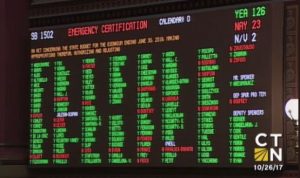
HARTFORD –State Representative David Rutigliano (R-123) voted to approve a bipartisan budget on Thursday as it passed the House of Representatives with a 126-23 margin. Following State Senate with their passage of the budget bill late Wednesday night, it now heads to the desk of Governor Dan Malloy for signing or potential veto.
The legislature’s budget was a compromise between House and Senate leadership from both parties in the midst of the governor’s executive order, which included sharp funding reduction for town aid, education cost sharing, and core social services – facts that had local leaders and residents worried about teacher layoffs and supplemental tax bills.
“Let’s be honest, we are only in this terrible budget position after years of fiscal neglect by Gov. Malloy and the majority party. They pushed through a sweetheart deal with the state unions in July that left the legislature with few good options to close a $5 billion dollar deficit. This budget is not a budget I would have drawn up however at this late date the only alternative was Governor Malloy’s executive order that was devastating important services for many residents and massive cuts for Trumbull education funding,” said Rep. David Rutigliano. “I am encouraged that this budget does have some much needed structural budget reforms which will hopefully start the slow process of recovery. Much damage has been done over the years; it is going to take time to fix.”

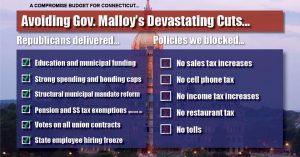
- Phase-in exemptions of taxes on Social Security, pensions and estates. This caps a multi-year push from Republicans who pursued these proposals as a way to encourage people to stay in expensive Connecticut rather than fleeing to lower cost states;
- The legislature will now be required to vote on union contracts, a major win that caps our efforts over the last couple of years;
- EITC: Reduction to 23 percent from federal level of 30 percent;
- Democrats agreed to keep spending on core social services programs at GOP levels. We’re protecting programs such as Care4Kids and others for neediest populations;
- No widespread DMV fee and permit hikes. Democrats wanted $70 million over two years;
- Freeze on hiring state employees: We’ll actually implement one!
Controlling State Spending
- Finally implements an effective cap on state spending;
- A stronger bond cap of $1.9 billion
- This budget includes a Revenue Cap, which will prevent lawmakers from considering 100 percent of state revenue as they build the budget. Essentially, it’s another spending cap that creates an automatic reserve of money. This measure will give the state two spending controls.
- Volatility cap: Excess revenue goes into the Budget Reserve Fund. Money in that fund goes toward unfunded past service liability for SERS and teacher retirement fund.
Important reforms in the package that help municipalities include:
- A town’s ability to pay in arbitration: An arbiter shall not consider 15 percent of a town’s fund balance in a town’s ability to pay an award;
- Minimum budget requirement: in the biennium, towns will not be punished if they reduce their budgets beyond previous year’s spending levels so long as the reductions are no more than the reductions in state aid; the MBR expires every two years.
- Prevailing wage threshold for new construction: We’ve increased it to $1 million from $400,000—a major victory municipal projects;
- Another binding arbitration win: In proceedings between municipalities and school board employees, an arbiter will not be limited to choosing [current law] either the last best offer from each party. Example: Town offers a zero percent increase, school board offers 5 percent increase, the change in this budget would allow the arbiter to choose an award in the middle;
- Transparency: Any new hires or contract changes installed by a school board during a budget year must be submitted to that town’s finance board for review/comment. This will help create a public dialogue that in most communities does not exist now, providing finance board and members of the public with timely insight to financial decisions made by school board members.
The budget vote margins are enough to override a possible veto by the governor.
For a full view of the state budget go to : www.cthousegop.com/budget.
###