
Rep. Rutigliano Hailed a Bipartisan State Budget Plan with Historic Income Tax Cut
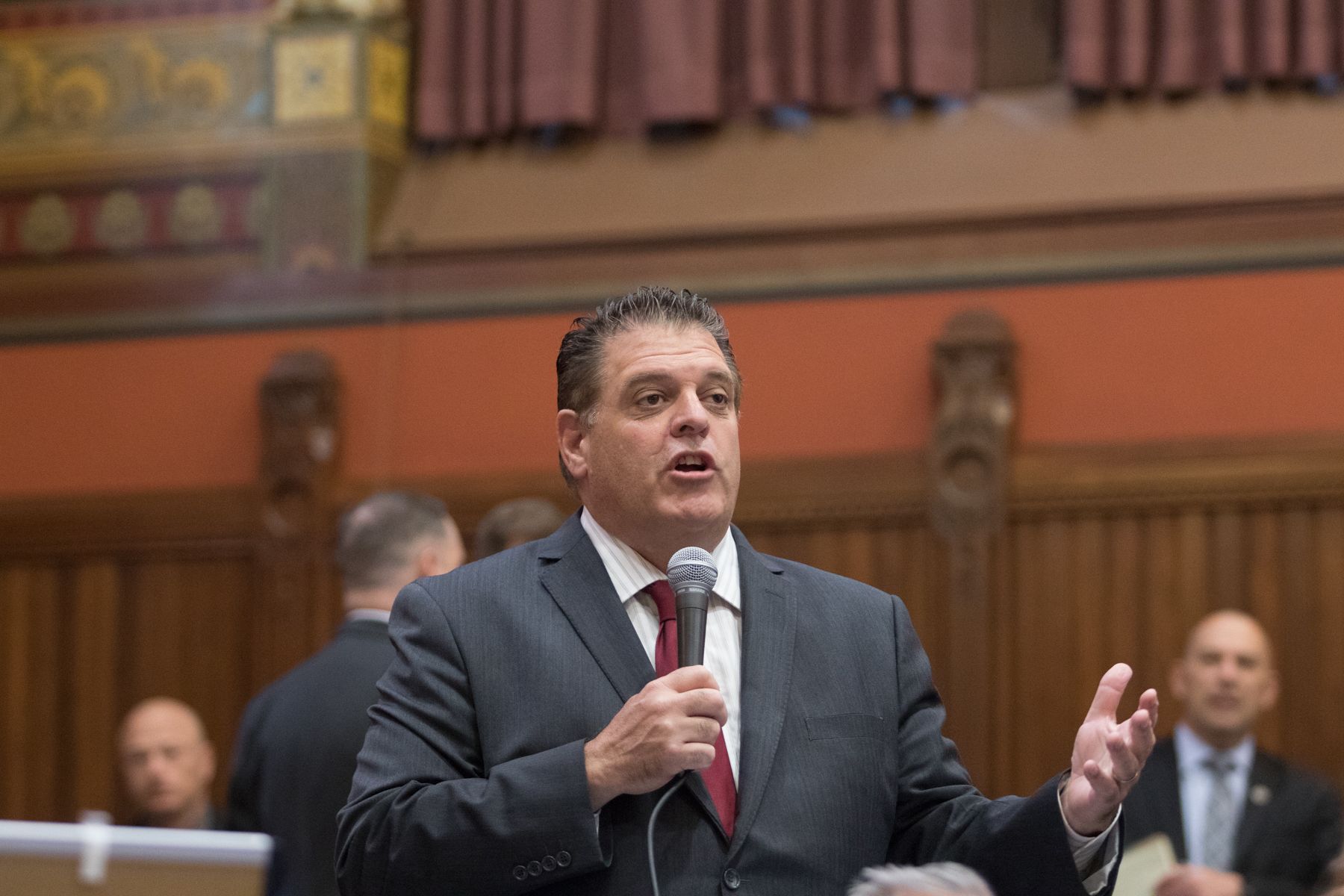
HARTFORD – On Monday, State Rep. David Rutigliano (R-123) supported the two-year Connecticut state budget, headlined by a momentous cut to the state income tax for the working-class earners and families while providing a historic investment in K-12 education.

For the last two years, Rep. Rutigliano has been a staunch advocate for permanent tax relief with the state running record surpluses due to inflation.
“Families across the state, especially my constituents in Trumbull are having a terrible time keeping up with the cost of goods and services. Lessening their tax burden is one way to help families, said Rep. Rutigliano.
Rutigliano also singled-out the phase out of the pension tax for retirees by raising the income eligibility limits as a way to help our seniors on fixed incomes hopefully stay in Trumbull.
The fully balanced bipartisan budget features over $150 million for local education, establishes a phase-out on pension and annuity taxes, investments in public safety, and strict adherence to fiscal guardrails established in the 2017 budget agreement. Each of these key initiatives were proposed and supported by House Republicans dating back to 2022, when they proposed the income tax cut included in the final compromise.
Income tax cuts included in the budget reduce the bottom two marginal tax rates – from 3% to 2% and from 5% to 4.5% – with full benefit going to single filers earning under $105k and joint filers earning under $210k.
The new state budget will maintains Education Cost Sharing (ECS) funding which directly infuses our local schools with additional tools to strengthen our children’s education. The budget also fully funds the Excess Cost grants for special education reimbursements to towns.
Additionally, the budget will shrink the size of state government by requiring state agencies to follow real-world hiring principles. In doing so, the state will save $200 million.
Connecticut seniors are supported in the budget agreement, which eliminates the benefits cliff on their pension and annuity income. The plan phases out the income tax exemption on those earnings post-retirement gradually, permitting many seniors to remain and retire in Connecticut.
Funding to improve safety and training for local firefighters were included, assisting in promotion from Firefighter I to Firefighter II, an additional $5 million in firefighter cancer relief funding, and helping to remove PFAS, which contains dangerous carcinogens, from standard use in fire service operations.
The bipartisan state budget was enabled by honoring the spending, volatility, and bonding caps enacted by Republicans in the 2017 budget agreement that were re-certified early in the 2023 legislative session.
The budget passed on a 139-12 vote in the House and the State Senate by a vote of 35-1 before it is signed by Governor Lamont.
###