
Piscopo Raises Concerns Over State Budget Adjustment Legislation
Key Takeaways
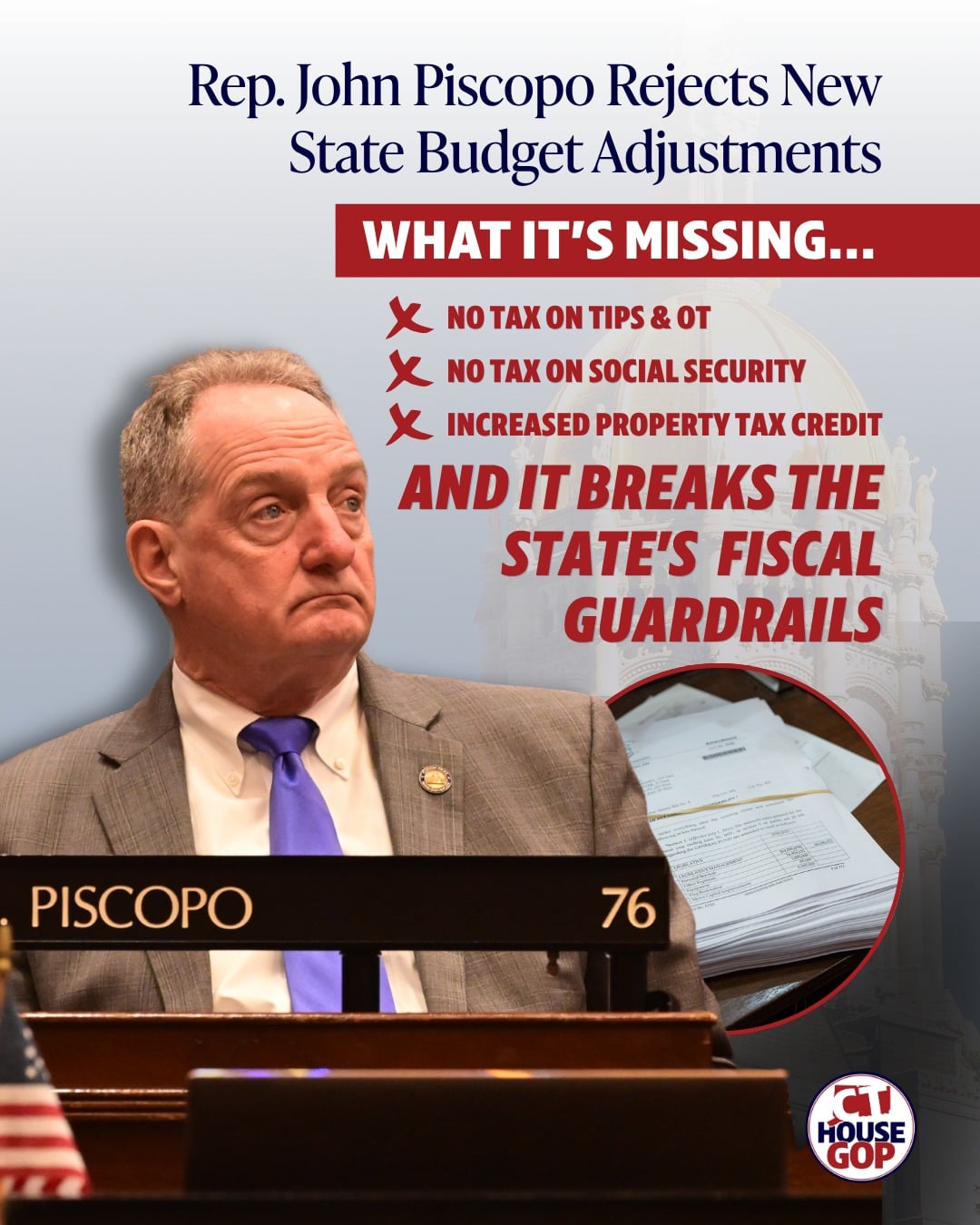
- Warns budget adjustment leans on one-time spending, not long-term fixes
- Opposes rushed process after 700-page bill reached lawmakers hours before votes
- Calls for structural reforms and tax relief amendments rejected on party lines
- Urges adherence to fiscal guardrails to protect taxpayers and stability
As the Connecticut General Assembly wrapped up its 2026 legislative session on Sine Die in Hartford, State Representative John Piscopo voiced serious concerns about the recently passed budget adjustment legislation.
While acknowledging that the package contained a few positive elements, Piscopo said the overall proposal fails to address the state’s long-term financial challenges and instead moves Connecticut closer to a potential fiscal cliff.
“The legislation relies heavily on one-time expenditures that primarily benefit larger cities, while committing the state to ongoing spending that will be difficult to sustain in future years,” Piscopo said during debate on the House floor.
Piscopo also criticized the rushed legislative process surrounding the bill. Lawmakers received the more than 700-page budget document only hours before the vote, leaving little opportunity for a thorough review or detailed analysis before final passage.
During debate, House Republicans proposed amendments aimed at providing tax relief and implementing structural fiscal reforms. According to Piscopo, both proposals were rejected along party-line votes.
Another major point of concern, Piscopo noted, was that the budget adjustment package does not fully adhere to Connecticut’s fiscal guardrails — policies designed to promote responsible budgeting and long-term financial stability.
“You deserve a more responsible plan,” Piscopo said. “One that prioritizes sustainable spending, protects taxpayers, and avoids creating uncertainty for future budget cycles.”
The debate marked one of the final major actions of the legislative session as lawmakers adjourned for the year.