
Latest News
Loading articles...
Loading photos...
State Representative | Assistant House Republican Leader
District
80th
Towns
2
Latest Updates
Swipe through recent posts
From the Desk of Rep. Mastrofrancesco: More than 114,000 warnings in just 18 days. You read that number right, and it is not a typo. That is how many drivers were flagged by Fairfield's new school-zone speed camera program in less than three weeks. If that statistic does not raise red flags, I do not know what will. Supporters of these cameras want you to believe this is all about safety. But when a program is "catching" more than 100.000 drivers in a matter of days, and local officials are already talking about the millions of dollars it could generate, it is fair to ask whether this is really a public safety program or just another way for government to reach into your wallet. Now this same type of program is being considered for our town. There will be a public meeting in Wolcott on July 21 on this system, and I strongly encourage residents to attend and ask questions. Once these cameras go up, they will not just disappear. Like every other government program, they tend to grow. I understand why some people support them. Everyone wants safer roads, especially around schools, and keeping children safe is something we all agree on. But there is a difference between enforcing traffic laws and creating an automated ticket machine that also is a money grab. Before Wolcott installs even one camera, residents deserve straight answers. Where exactly would the cameras be located? What speed would trigger a warning or fine? Would the cameras operate only during school arrival and dismissal times, or would they be active all day? Who reviews each violation before it is mailed? How much of the money collected would stay with the town, and how much would go to a private vendor? Will the town have to hire more staff? Who will be hearing and deciding the appeals process? Those questions go to the heart of whether this is truly about safety or simply another source of revenue. The Fairfield numbers are astonishing. Are we really supposed to believe that more than 114,000 drivers suddenly became speed demons in just 18 days? Or is the system designed to maximize violations? Those are questions residents deserve answers to before a single camera is installed. The installation of these cameras was authorized by the "Vision Zero" transportation legislation that was proposed by majority Democrats in 2023 as part of an "aircraft carrier" bill that was packed with multiple bills. As you can imagine, I voted NO. Government has a long history of introducing fees, fines, and new enforcement programs under the banner of public safety, only to become dependent on the money they bring in. That is why so many taxpayers and drivers are skeptical when they hear officials discussing projected revenue alongside safety benefits. If the purpose is truly safety, then the town should be able to show the safety data that justifies each proposed location. How many accidents have occurred there? How many involved children, pedestrians, or school traffic? What other safety options were considered first? Better signage? Flashing school-zone lights? Improved road design? Public awareness? More police patrols? Hiring another officer who can issue real tickets and use real judgment? Those options cost money. Cameras generate money. That distinction matters. A driver caught by a camera faces a $50 fine plus a $15 processing fee for a first offense and $75 plus the same fee for every violation after that. Miss the payment deadline and another $25 late fee is added. If the fine remains unpaid, it can be sent to collections and even result in a lien that prevents renewal of your vehicle registration. That sounds less like a safety reminder and more like another tax on residents. The state is already unaffordable because of the taxes and policies put in place by the Democrat majority. Families are being squeezed by electric bills, insurance costs, grocery prices, property taxes, and endless fees. Now government wants another way to squeeze drivers by mail. If a town can issue more than 100,000 warnings in less than three weeks, it suggests the problem may not be reckless driving. It may suggest the program is casting far too wide a net. Of course we want people to be safe on the roads. That is important. But that sheer number of warnings is an indicator that the technology may be calibrated to make everyone, even folks just trying to get to work or traveling at normal speeds on roads with artificially low posted limits, into a criminal. And let's be honest about another argument we hear from supporters. They often say residents will simply learn where the cameras are and slow down when they approach them. Others suggest that local people will know where the cameras are, while out-of-town drivers will be the ones getting caught. Does that sound like a serious public safety strategy? If safety is the goal, we should want safer roads everywhere, not just drivers slowing down where they know a camera is waiting. We should focus on sensible speed limits, clear signs, and visible enforcement, not a system that depends on people making mistakes to generate revenue. While these violations do not appear on your driving record, at least not yet, they still create a growing system of automated enforcement that allows governments to issue fines by mail rather than having law enforcement officers interact directly with drivers, I also worry about where this leads. Today it is school zones. Tomorrow it will be busy intersections. Next year it is another location deemed worthy of automated enforcement. Step by step, decisions that once involved a police officer's judgment are handed over to cameras and computers. That is the Big Brother concern, and it is real. Once government becomes comfortable using cameras to monitor and fine citizens automatically, it rarely stops there. The real question is how much surveillance and automated enforcement residents are willing to accept in the name of safety. There are better ways to improve safety. Increased police patrols, improved signage, flashing school-zone lights, road design improvements, public awareness campaigns, and sensible speed limits can all help slow traffic without creating a system that automatically generates violations by the tens of thousands. The meeting later this month is an opportunity for Wolcott residents to hear the details and make their voices heard. Whether you support the cameras or oppose them, this decision deserves serious public discussion. Residents should ask: What is the projected annual revenue? What happens to the money collected? Will there be a sunset provision or mandatory review after one year? And if the program does not reduce accidents or improve safety, will the town shut it down? As for me, I remain unconvinced. When a program issues more than 114,000 warnings in 18 days, my first thought is not that government found the perfect solution. My first thought is that government found a new source of revenue. That is why I will continue asking questions. I can be reached by email at Gale.Mastrofrancesco@housegop.ct.gov or by phone at (800) 842-1423. You can also follow my legislative activity by visiting my website at www.repmastrofrancesco.com or my Facebook page.

WOLCOTT / SOUTHINGTON - Throughout June, Rep. Gale Mastrofrancesco is inviting residents to join Sen. Rob Sampson and her for upcoming legislative updates and events in Southington and Wolcott as they discuss the 2026 legislative session and other issues related to state government. In Southington, the delegation will be joined by Rep. Donna Veach. These meetings are a chance to hear about what is happening in Hartford, ask questions, and share your thoughts on legislation, or other concerns that are important to you. And if you like bingo, please join them on June 24 for Financial Fraud Bingo where you can learn about financial scams, identity theft and how to protect yourself. Representatives from the Connecticut Department of Banking will join for this informative and fun event. 📍 Wolcott ( Wolcott Town Hall, 10 Kenea Avenue ) 🗓 Monday, June 22 ⏰ 6:30 – 8 p.m. 📍 Wolcott ( Charles Rietdyke Senior Center ) 🗓 Wednesday, June 24 ⏰ 10 – 11 a.m. 📍 Southington ( John Weichsel Municipal Center, 200 North Main Street ) 🗓 Thursday, June 25 ⏰ 6:30 – 8 p.m.
HARTFORD — State Representative Gale Mastrofrancesco , Ranking Member of the Government Administration and Elections Committee, spoke in opposition to HB 5001 following hours of debate on the House floor on Wednesday, while also highlighting several key changes secured through House Republican efforts. “While I ultimately opposed this legislation, our caucus fought to make meaningful improvements. I want to thank the GAE Committee chairman for his willingness to work with us for the betterment of our election systems,” said Rep. Mastrofrancesco . “We were successful in stopping a portion of the bill regarding permanent absentee voting status, which would have allowed a path for the mass mailing of automatically mailed absentee ballots.” Under changes adopted following debate, voters seeking ongoing absentee status will now be required to request an application from their municipality. Lawmakers also removed a more than $1 million provision in the proposed bill for funding of a statewide mailing campaign from the elected office of the Secretary of the State’s Office. Despite these revisions, Mastrofrancesco expressed continued concerns about the scope and direction of the bill. An amendment offered by House Republicans that would have reduced the amount of early voting days to reduce costs for towns was rejected by the majority. “This legislation spans more than 70 sections and makes sweeping changes that should have been considered individually,” she said. “Instead of focusing on strengthening election safeguards, especially in light of serious concerns raised in Bridgeport, the majority chose to expand absentee voting without adequately addressing vulnerabilities.” Mastrofrancesco emphasized that Connecticut already provides multiple avenues for voting, including early voting, absentee voting under existing law, and in-person voting on Election Day. “The main issue at hand is not access, it is integrity,” she said. “Expanding absentee voting without strong protections risks undermining confidence in our elections.”
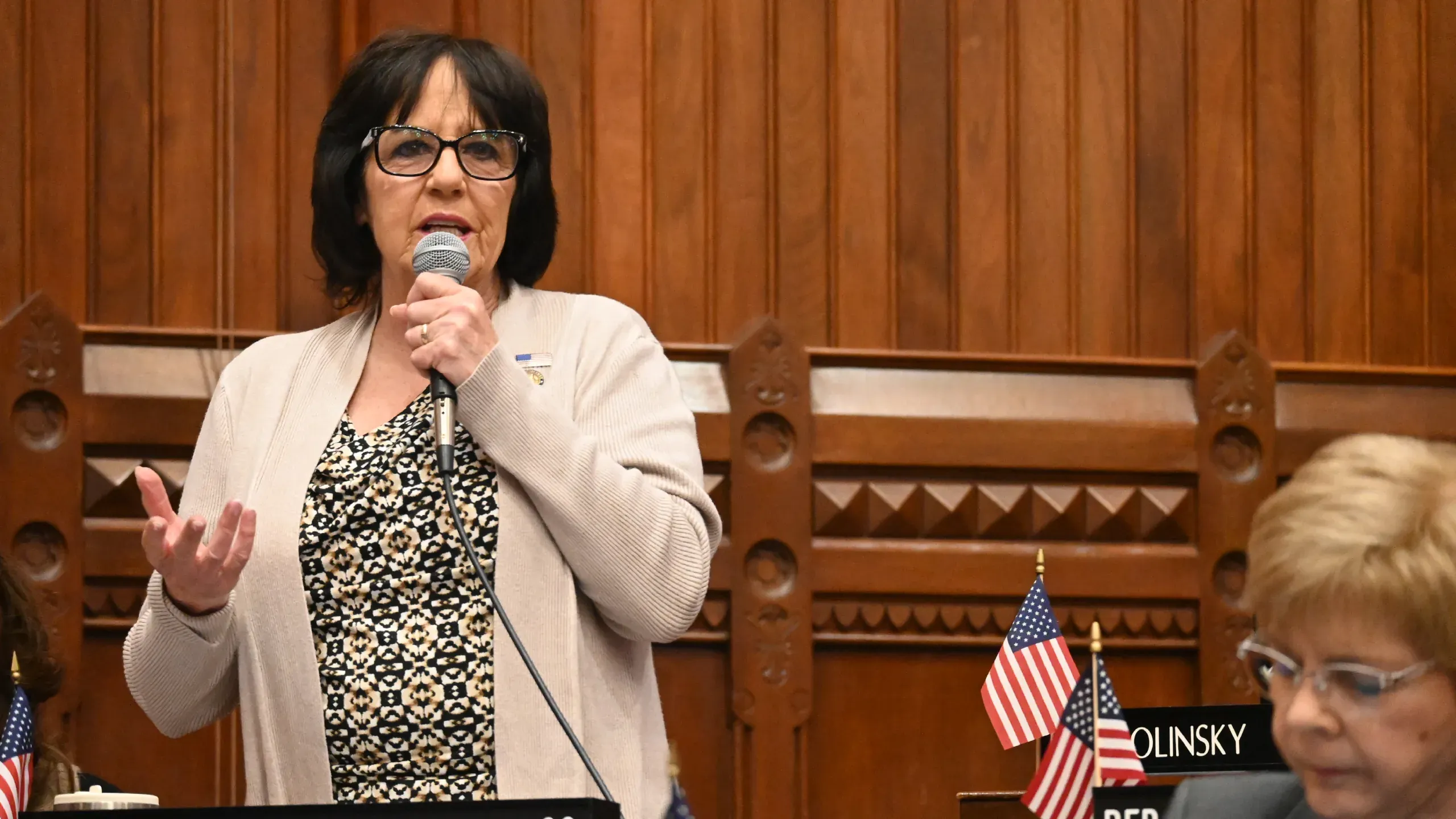
From the Desk of Rep. Mastrofrancesco: Over the past several weeks at the Capitol, one issue has drawn an extraordinary response from Connecticut families: H.B. 5468, legislation that would place new requirements on homeschooling families and those who choose private or parochial schools. The public reaction to that proposal has been overwhelming. More than 3,000 people submitted written testimony opposing the bill. About 50 supported it. Hundreds more parents, students, educators and residents came in person to testify at the Legislative Office Building, packing the room, when a public hearing was held. Families traveled from across the state. Many took time off from work. Some brought their children because they wanted lawmakers to see exactly who this bill would affect. And they all came with the same message: the state is going too far. H.B. 5468 focuses on so-called "equivalent instruction" requirements. Under the proposal, parents who withdraw a child from public school would be required to appear in person at their local district office, completely new forms declaring their educational choice, and provide documentation showing where their child will receive instruction. For many families, that may sound like a simple administrative step. But to parents who have responsibly chosen homeschooling or nonpublic education for years, it feels like something else entirely: government stepping into decisions that belong with families. The sheer volume of testimony should have been a signal that people wanted to be heard. Instead, the process surrounding these hearings left many residents frustrated and angry. Multiple major public hearings were scheduled at the same time, forcing many people to choose which issue they could testify on. Meanwhile, testimony before the Public Health Committee on another controversial proposal, HB 5044, which dealt with a radical change to the state's vaccine regulations, was capped at 12 hours despite objections from Republican lawmakers. I also opposed this bill, which I wrote about in last month's column. Think about that for a moment. Residents take the time to travel to Hartford to speak directly to their government, only to be told the clock has run out. Public hearings are supposed to be about listening. But increasingly, it feels like the goal is to get through them as quickly as possible, leaving people shut out of the process. And it was not only parents sounding the alarm about this education bill. Several public school superintendents also testified in opposition to HB 5468. When parents, educators and local school leaders are all raising concerns about a bill, that should give lawmakers pause. But slowing down doesn't seem to be the approach at the Capitol lately. My colleagues recently raised concerns about another troubling trend: the growing abuse of the "emergency certification" process - better known around Hartford as an "e-cert". E-cert was created for true emergencies – situations where the legislature needs to act immediately. A natural disaster. A fiscal crisis. Something that simply cannot wait. Instead, it is increasingly being used to move major legislation around the normal committee process. No public hearing. Limited debate. Just drop the bill and move it to the floor. That is not transparency. That is cutting corners and cutting the public out of the process. When thousands of families show up to testify about a bill that affects their children, the answer shouldn't be to rush the process or limit the discussion. The answer should be to listen. Here is the thing about Connecticut families: they are reasonable people. They understand that government has a role to play in education and public policy. But they also expect respect from the people making those decisions. Right now, many feel like they are being talked at, instead of listened to. Three thousand people spoke up on HB 5468. That is not a small group. That is a massive outpouring from parents who believe the state is stepping into decisions that belong at the kitchen table, not in a government office. When that many people raise their voices, Hartford should not be looking for ways around the process. It should be paying attention, But will the majority actually listen to the people? We shall see.

WOLCOTT, CT — Students in Wolcott had a special opportunity this month to celebrate Read Across America with a visit focused on the importance of reading and early education. During the visit, Rep. Gale Mastrofrancesco, R-Wolcott , spent time with first-grade students at Frisbee Elementary School, where she read two books to students, including “Let It Rain” by Maryann Cocca-Leffler and a Sesame Street story. The event gave students a chance to engage with reading in a fun and interactive way. Rep. Mastrofrancesco also visited an additional classroom at Wakelee Elementary School during a spirited pajama day celebration. Students in both second- and third-grade classrooms enjoyed a reading of “Happy Dreamer” by Peter H. Reynolds, continuing the theme of creativity and imagination through literacy. Read Across America highlights the importance of building strong reading habits at an early age, helping set students on a path toward long-term academic success. Events like these reinforce the value of literacy while encouraging a lifelong love of books.
Towns Served