Latest News
Loading articles...
Loading photos...
State Representative
District
14th
Towns
1
Latest Updates
Swipe through recent posts
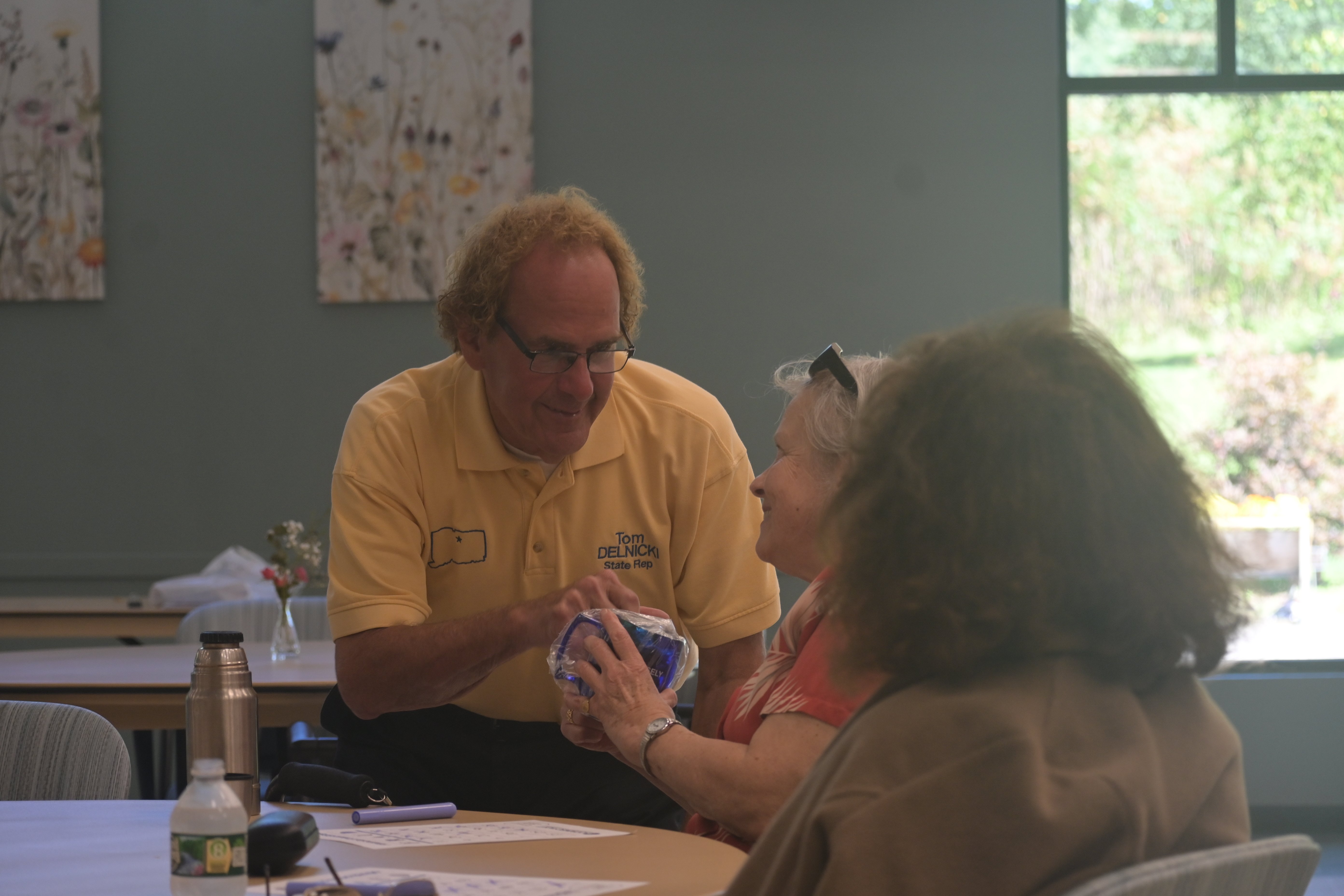
SOUTH WINDSOR – State Representative Tom Delnicki (R-South Windsor), who serves on the Connecticut General Assembly’s Banking Committee, is highlighting the importance of protecting residents from financial scams and fraud. “Financial scams are getting more sophisticated, and unfortunately, seniors are often targeted,” said Rep. Delnicki. “That’s why I’ve made fighting fraud and strengthening protections for consumers an important part of my work on the Banking Committee.” The event, held in partnership with the Connecticut Department of Banking, turned an important topic into an interactive afternoon. As numbers were called, the Department’s “Bingo Master” shared tips on how to recognize common scams, including imposter scams, identity theft, and online shopping fraud. Participants also had the chance to ask questions, share stories, and win prizes. Delnicki encourages South Windsor residents to be cautious of unexpected calls, texts and emails asking for money or personal information.
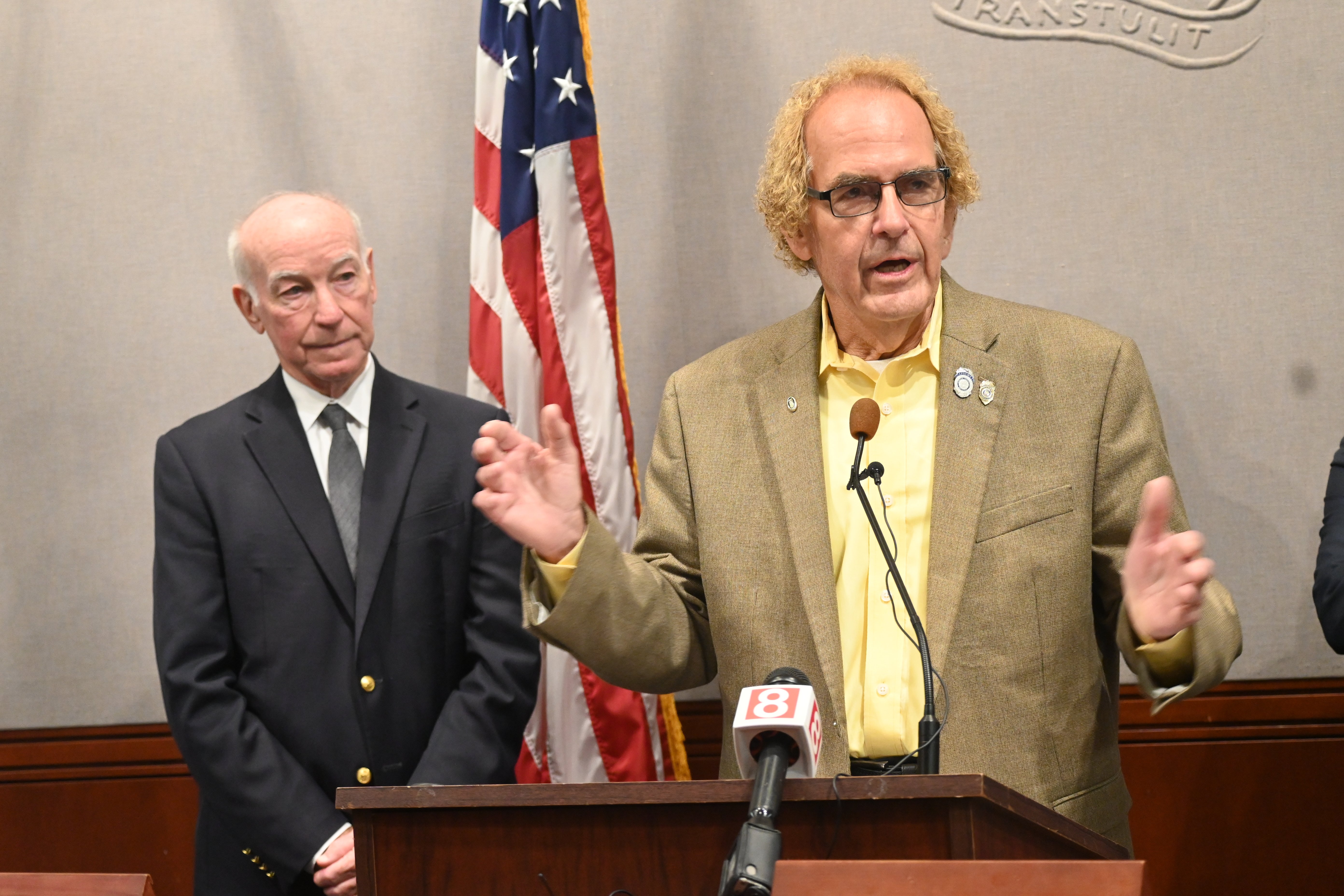
HARTFORD – State Representative Tom Delnicki (R-South Windsor) today applauded the bipartisan advancement of federal legislation that would restore a critical tax deduction for Connecticut homeowners forced to repair crumbling foundations caused by pyrrhotite. The proposal, championed by John B. Larson and Joe Courtney, would allow affected homeowners to once again claim the federal casualty loss deduction for unreimbursed foundation repair costs, including retroactive relief dating back to 2021. Delnicki, who attended Tuesday’s press conference at the Legislative Office Building, said the announcement marks another important step forward for families who have spent years dealing with the financial hardship caused by crumbling foundations. “I appreciate Representatives Larson and Courtney for continuing this fight,” Delnicki said. “I hope the full House acts swiftly so homeowners can receive the relief they’ve earned.” “For years, I’ve stood alongside homeowners fighting for meaningful relief from this devastating problem. We have helped over 1000 homeowners in the state, and 125 in South Windsor with their foundations,” State Rep. Tom Delnicki (R-South Windsor) said. “Families should not be punished because their homes were built with defective concrete. Restoring this tax deduction is a commonsense solution that will help ease the financial burden on many Connecticut homeowners, including residents here in South Windsor.” Since the crumbling foundations crisis first emerged, Delnicki has been a consistent advocate for impacted homeowners, supporting state efforts to expand financial assistance, strengthen testing and accountability, and work with federal partners to secure additional relief. He said the committee’s bipartisan action is encouraging and urged Congress to quickly pass the legislation.
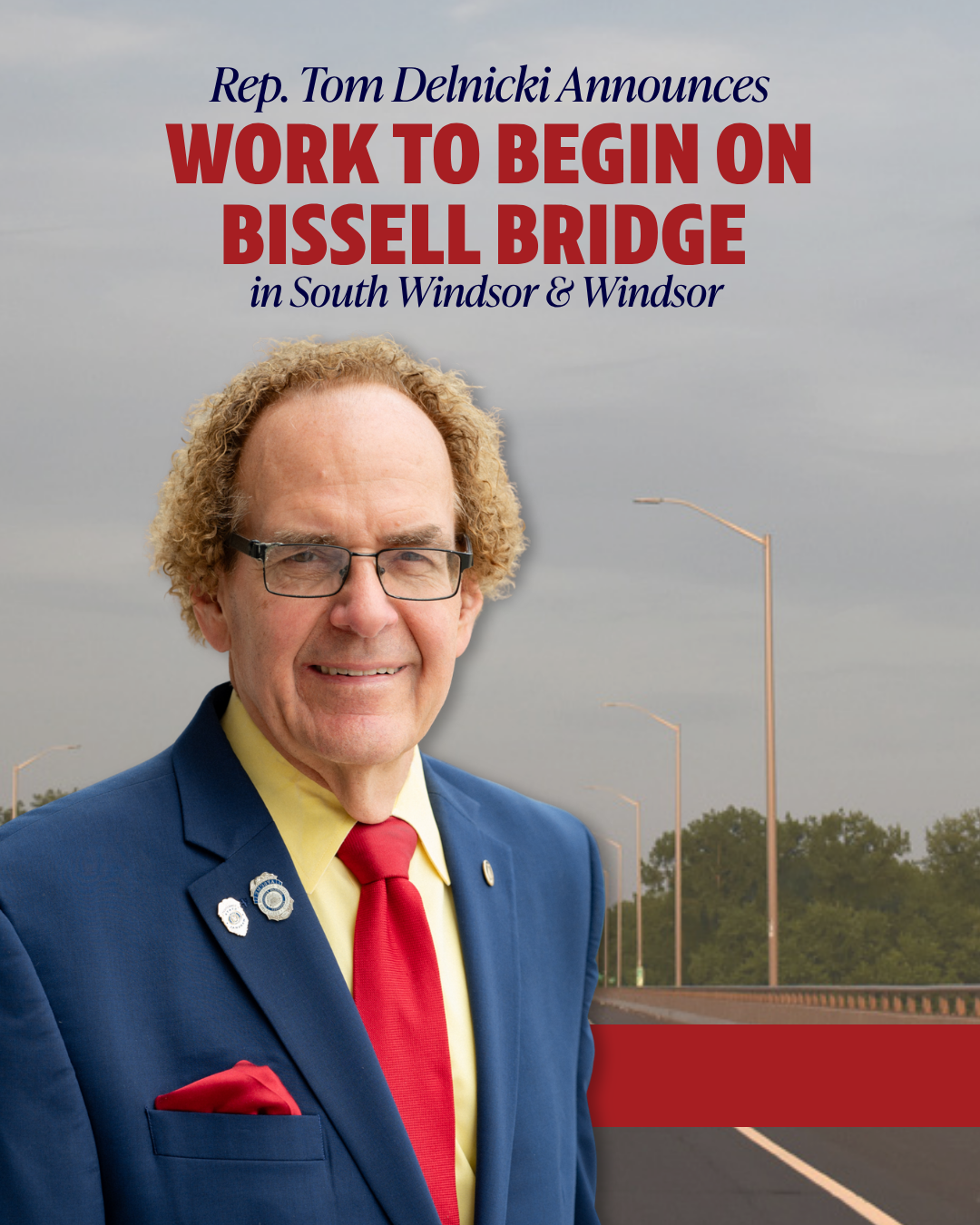
CTDOT is announcing that Bissell Bridge Rehabilitation will be performed on I-291 over the Connecticut River in Windsor and South Windsor starting on Thursday, June 18, 2026. The Connecticut Department of Transportation (CTDOT) is announcing that Bridge Rehabilitation will be performed on I-291 in Windsor and South Windsor. This project is scheduled to occur on Thursday, June 18 and be completed on Friday, November 12, 2027. The project 0164-0245 consists of Paving, Safety Improvements, Joint reconstruction as well super and substructure repairs. CTDOT Project No. 0164-0245 was awarded to McNamee Construction Corp. at a cost of $16,874,000.00 on May 5, 2026, and is scheduled to be completed November 12, 2027. This project is administered by the Bureau of Engineering and Construction, Office of Construction, District 1 in Rocky Hill. LANE CLOSURE/DETOUR INFO There will be a lane reduction on I-291 westbound over the CT River between Exit 2 to 1D starting June 18 through the summer season. Traffic will be reduced to one 11‑foot‑wide lane with associated traffic control signing patterns will guide motorists through the work zone. Motorists should be aware that modifications or extensions to this schedule may become necessary due to weather delays or other unforeseen conditions. Motorists are advised to maintain a safe speed when driving in this area.
.png)
HARTFORD – State Representative Tom Delnicki (R-14) supported final passage of legislation aimed at strengthening oversight of hospital ownership and protecting patient care across Connecticut. The legislation, Senate Bill 196 establishes new safeguards to ensure that healthcare decisions are driven by patient needs— not outside financial interests —while increasing transparency and accountability for hospital systems operating in the state. Rep. Delnicki said the legislation is especially important for South Windsor, many of whom rely on Manchester Memorial Hospital and Rockville General Hospital for care. “Families need dependable local hospitals,” said Delnicki. “After the uncertainty surrounding Manchester Memorial and Rockville General, it became clear that we need stronger oversight and commonsense protections to ensure patient care always comes first. We cannot permit another Prospect Medical situation." Senate Bill 196 places guardrails on certain financial practices—such as sale-leaseback arrangements—and increases state review of hospital transactions, particularly those involving private equity firms. The goal is to prevent financial instability that could jeopardize services, staffing, or long-term access to care. Delnicki emphasized that protecting community hospitals is about more than infrastructure—it’s about safeguarding access to emergency services, supporting healthcare workers, and maintaining trust within the community. “This legislation helps ensure that our hospitals remain focused on serving patients, supporting frontline healthcare workers, and being there when families need them most,” Delnicki added. The bill now heads to the Governor’s desk for signature.
HARTFORD — State Representative Tom Delnicki (R–South Windsor) voted against massive cannabis expansion bill on Monday, warning it puts the public's safety and their health at risk. “In South Windsor, residents have made it clear—we’ve rejected cannabis retail stores because we take youth safety and community impact seriously,” said Delnicki. “This bill moves in the opposite direction by expanding access and weakening safeguards that were put in place for a reason.” Delnicki, a longtime ally of the Governor's Prevention Partnership, the statewide prevention organization to address underage drinking and substance use, emphasized the importance of prevention efforts and responsible policy. "By increasing the potency limits in THC products and loosening marketing restrictions, Connecticut runs the risk of more youth drug dependency," said Rep. Delnicki. "I’ll continue working with prevention advocates to ensure we’re putting the health and safety of our kids and communities first.” There are some of the provisions in House Bill 5350, An Act Concerning Cannabis, Hemp and Infused Beverage Regulation: Eliminating potency limits on cannabis flower and concentrates which he warned could lead to stronger, more dangerous products entering the market. Loosening packaging and branding restrictions , allowing colorful, logo-heavy designs that could appeal to minors. Increasing THC limits in infused beverages and permitting “tap room”-style sales which he said further normalizes cannabis consumption and blurs the line with alcohol. Allowing out-of-state patients and caregivers to purchase cannabis in Connecticut raising enforcement and regulatory concerns. Expanding retail access to palliative products and redefining hemp-derived cannabinoids in ways that could create loopholes in oversight.
Towns Served