Latest News
Loading articles...
Loading photos...

State Representative | House Republican Leader
District
86th
Towns
4
Latest Updates
Swipe through recent posts
HARTFORD—House Republican Leader Vincent Candelora and Senate Republican Leader Stephen Harding are calling for a public meeting of legislative leaders to vote on Governor Ned Lamont’s $5 million request from the Federal Cuts Response Fund. In a joint letter, the leaders ask the committee created under Special Act 26-1 to reject the request, arguing that it does not respond to a federal funding cut and instead uses state taxpayer dollars to address a change in a temporary immigration status. Candelora and Harding said Connecticut families facing the state’s affordability crisis deserve greater accountability for how public funds are spent. They urged legislative leaders to convene promptly, noting that the law provides only 24 hours to vote on the request and permits a public virtual meeting. The leaders said the committee should reject the request and demand a stronger focus on affordability and the needs of Connecticut’s legal residents.

HARTFORD— House Republican Leader Vincent Candelora (R-North Branford) and Rep. Jay Case (R-Winchester), House Ranking Member of the Human Services Committee, released the following statement Tuesday in response to an independent audit conducted of New Opportunities Inc.: "This forensic audit exposes mismanagement of public dollars at New Opportunities that is even worse than we feared when this crisis first broke earlier this year. Energy assistance funds meant to heat the homes of low-income families were diverted to cover operating losses, including a failing hydroponics venture that bled money year after year. Checks bounced. Negative cash balances were disguised on the books and hidden from the board. We're glad this report has been referred to the Attorney General and the state’s attorney’s office. The audit rightly focuses on the former CEO and the current CFO, but we think the board of directors also has questions to answer. Management kept them in the dark, and that's inexcusable, but a board's job is to ask hard questions before a crisis, not after. Going forward, the state needs to know whether this board is up to the task of overseeing an organization entrusted with public funds. We urge authorities to pursue a thorough investigation in a timely manner, both for the families who depend on these programs and for taxpayers already stretched thin by the cost of living in a state where government spending climbs year after year."
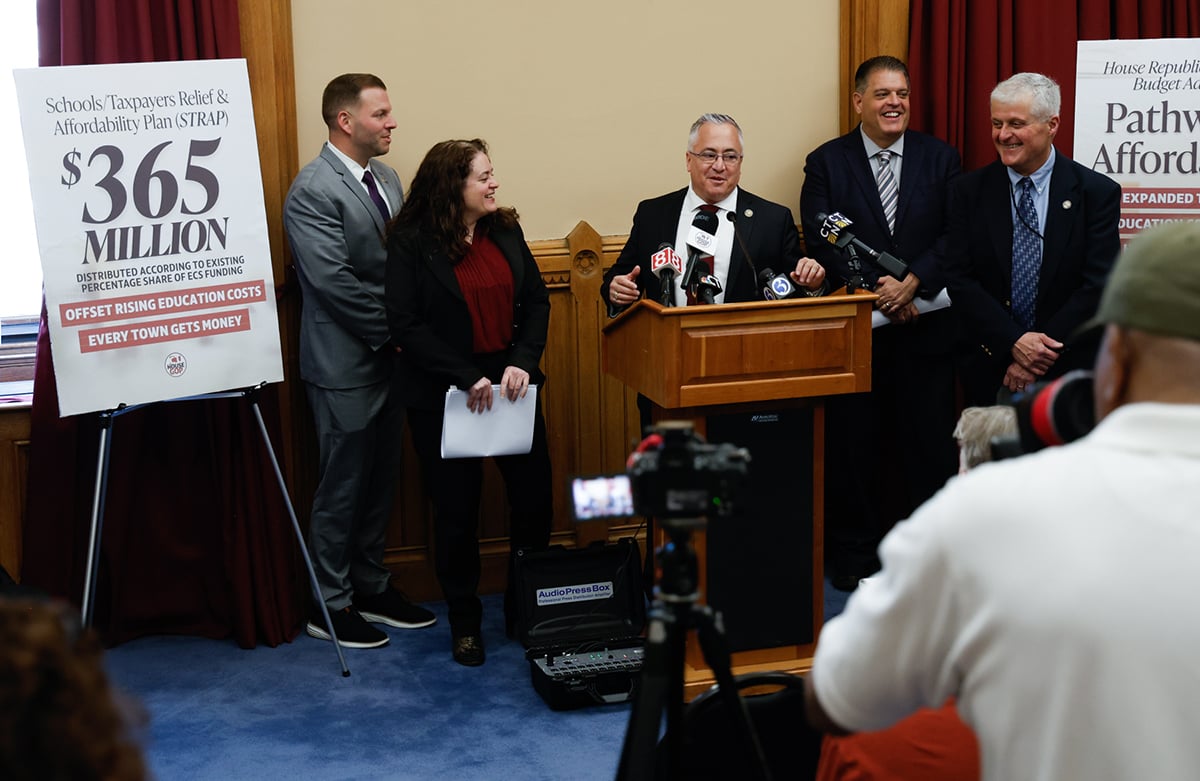
HARTFORD—House Republicans on Tuesday released a budget adjustment plan for the second year of the state budget through a series of policies aimed at making Connecticut more affordable, lowering household costs, easing property tax pressures, and addressing the school funding crisis facing communities across the state. The $27.9 billion plan, called “Pathway to Affordability,” is balanced, provides more than $400 million in tax relief, falls $167 million under the state spending cap, and spends less than the governor’s budget proposal and the product advanced by Appropriations Committee Democrats. “Connecticut is staring down a projected budget deficit that could grow worse before it gets better, and the majority’s answer is to spend more and hope for the best,” said House Republican Leader Vincent Candelora (R-North Branford). “That’s not a strategy—that’s a recipe for the next tax hike. Our plan keeps us under the spending cap and puts real money back in people’s pockets, whether through their property tax bills or their insurance premiums." School Taxpayer Relief & Affordability Plan (STRAP) The centerpiece of the House Republican proposal is the School Taxpayer Relief and Affordability Plan, or STRAP—a $365 million investment distributed to every city and town in Connecticut to help offset surging education costs and reduce the burden on local property taxpayers. “Here’s the reality: Connecticut is underfunding education, using a fatally flawed formula, which has not kept up with what it actually costs to educate a child, and towns are left making up the difference,” said Rep. Tammy Nuccio (R-Tolland), House Ranking Member of the Appropriations Committee. “STRAP distributes $365 million to every Connecticut community on a proportional basis—using the same percentage each town already receives from the $2.3 billion ECS program. It would mean actual tax relief for our communities, and it’s built into the budget so it’s sustainable. It’s a solution that towns can actually plan around, so they’re not constantly scrambling or raising taxes just to keep schools running. We will continue the necessary work to fix this, but in the meantime, our proposal keeps these funds there until the legislature fixes the broken ECS formula once and for all.” The “Pathway to Affordability” plan includes a broad range of tax and fee relief: Increase the state’s maximum property tax credit to $650 and expand income eligibility, extending relief to 800,000 filers Curb healthcare costs by reducing a state levy on insurance companies ($20 million) that has been passed on to consumers in their monthly premiums Eliminate income tax on all Social Security benefits Eliminate the sales tax on children’s clothing Enact a “no tax on tips” exemption Reduce the sales tax on vehicles priced between $50,000 and $75,000 from 7.75% to 6.35%--because the cost of vehicles has risen sharply in recent years, and what once seemed like a luxury price point now covers everyday family minivans and work trucks Eliminate fees on certain occupational licenses Remove the “Passport to Parks” fee from motor vehicle registrations Ease local tax burden by providing $2.5 million to help municipalities cover early voting costs “Connecticut is already one of the most expensive states in the country to live in, and our residents feel it every single month,” said Rep. Joe Polletta (R-Watertown), House Ranking Member of the Finance Committee. “The relief we’re proposing isn’t a one-time check or a political stunt. It’s built into the budget, which means it’s sustainable. Democrats have floated ideas that rely on volatile, one-time revenues. That’s not a plan, that’s a gamble with people’s money. We’re done gambling.” The plan is funded through new revenue and spending discipline, including: Recover $340 million by challenging New York’s “convenience of employer” rule, which forces roughly 80,000 Connecticut residents who work remotely for New York employers and pay income taxes to New York at rates higher (10.9% top rate) than they would pay here at home (6.99% top rate). The plan includes $1 million to help these workers file legal challenges against New York’s policy. Save $153 million by budgeting state employee positions based on realistic hiring trends rather than funding all vacancies at once Save $61 million by eliminating state-funded health insurance for undocumented immigrants, who retain access to care through Federally Qualified Health Centers Removes 25% of double-funding of ECS grants to municipalities, saving $29 million Save $12 million by reducing legislative earmarks Save $3.5 million by eliminating inmate text messaging Among our targeted investments in public safety and human services: $3.2 million to expand the CRISIS program helping police respond to and de-escalate situations involving individuals experiencing mental health or substance abuse crises $1.5 million for domestic violence shelters Provides funding to hire investigators for Medicaid Fraud Control $2.4 million to increase provider rates for Birth-to-Three child development services Creates an income tax deduction (up to $2k) for volunteer firefighter and EMS personnel
Towns Served
State Representative | House Republican Leader
86th Assembly District