
Bolinsky, Foncello Hold Community Office Hours in Sandy Hook
Key Takeaways
- Bolinsky and Foncello held community office hours in Sandy Hook
- Residents raised concerns about electric rates and property taxes
- Representatives backed fiscal guardrails and greater energy transparency
- Election security, voter identification and surveillance cameras drew questions
Bolinsky, Foncello Hold Community Office Hours in Sandy Hook
Newtown residents raise concerns about electric rates, property taxes, cameras and election security
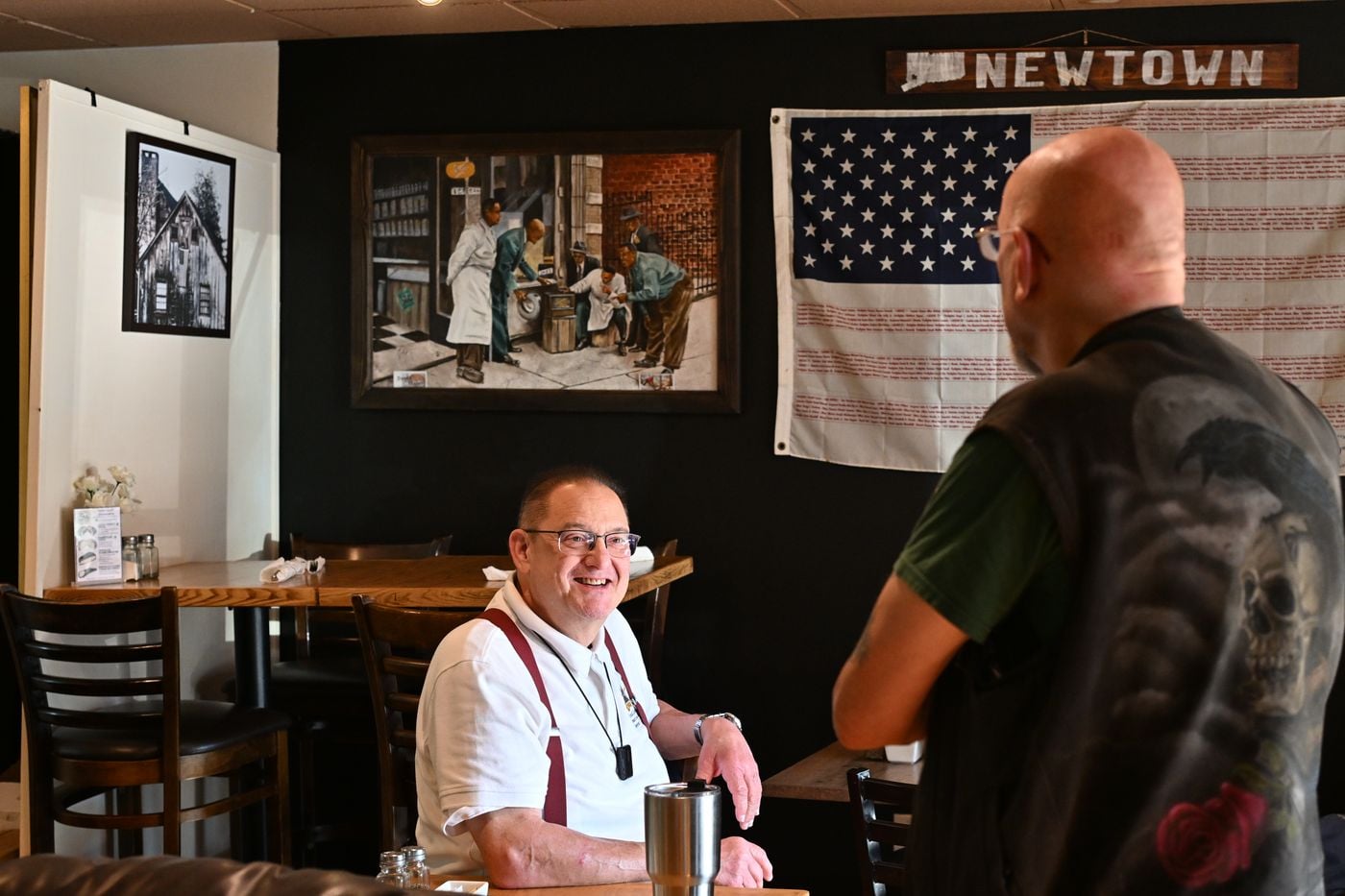
NEWTOWN, CT – On a steamy August morning, State Representatives Mitch Bolinsky (R-106) and Martin Foncello (R-107) held community office hours Friday, in the comfort of Ralph’s Sandy Hook Cafe, giving Newtown residents an opportunity to discuss the issues that matter most to them.
The Newtown representatives thanked everyone who attended the event. Residents brought a wide range of questions and concerns, including about Connecticut’s fiscal health, electric rates, veterans’ property tax relief, election security and the use of various types of public-facing law-enforcement cameras.
“Showing up, being accessible, and listening to the folks we represent is one of the most important parts of this job,” said Rep. Mitch Bolinsky. “ Our thanks to Ralph and crew for the hospitality of their casual, cozy cafe to hear directly from residents, our neighbors, about their concerns, including the cost of electricity, property taxes, public safety and election security, to name a few.”
On the state’s fiscal health, both representatives stressed the importance of maintaining Connecticut’s fiscal guardrails and continuing to pay down state debt. Bolinsky noted: “In a year of state election advertising, the messaging can get a bit misleading. While it is absolutely true that the historic 2017-2018 Bi-Partisan Budget I had a hand in produced more than seven years of state surpluses, and knocked $11-billion off the state’s long-term, unfunded retiree healthcare and pension liabilities, Connecticut still has about $35-billion unfunded long-term debt left from its decades-long practice of not properly funding, or deferring these obligations altogether. The fiscal guardrails are still needed to eventually get the state back ‘in the black’. Weakening them, like the Governor and Majority Leaders did at the end of 2026 regular session by breaking the ‘Volatility Cap’, was a move my colleagues and I strongly opposed, and led to deferring part of our 2026 paydown, shorting retiree plans’ repayment for the first time since 2017. Connecticut is far from being awash in extra cash, as some campaign ads would have you believe.”
Electric rates were another major topic of discussion. Residents expressed frustration with the high cost of electricity and the various charges included on their monthly bills.
“People are more than a little fed up with opening their electric bills and seeing rising costs they have little control over,” said Bolinsky. “They deserve to know where that money is going, including executive compensation and other expenditures, while looking for real ways to bring energy costs down for Connecticut families. I’m most alarmed by all the hidden costs being approved without transparency and stashed in Public Benefits. by ”We need to keep asking tough questions and shining the light of transparency on all the charges in our electric bills that don’t power our homes and businesses. When public benefits rise meteorically because our state leaders choose to defer payment of pandemic-era, executive-order driven moratoria on four-years of unpaid bill forbearance, or for deferred line maintenance and storm damage charges, this indebtedness accumulates. It’s time for Connecticut to pay as it goes and see to it that the Public Benefit explosion of August 2024 does not become a regular occurrence, although PURA has already approved an 11% increase for January 1, 2027, and the latest deferral of line maintenance and storm damage repair is coming, and could impact our electric bills again around August 2027. Stay tuned…”
Foncello also emphasized the need to take a hard look at public benefits charges that are passed along to ratepayers.
“Families should not be treated like an unlimited ATM every time the state wants to fund another program,” said Foncello. “We need greater transparency and accountability in our energy system, and we need to focus on lowering the bills that residents are paying every month.”
Veterans’ property tax relief was also discussed. Both representatives said they remain committed to finding additional ways to reduce the tax burden on Connecticut veterans.
Election security and voter identification were also raised by residents. Foncello, who serves on the General Administration and Elections Committee, discussed the importance of maintaining accurate voter rolls and ensuring that Connecticut’s elections remain secure and reliable.
Residents also raised questions about cameras, including school bus cameras, speed cameras and Flock cameras. The representatives discussed the different purposes and concerns surrounding each technology, including questions about how surveillance information is used and who ultimately has access to it.
“Technology can have a role in improving public safety, but we also have to make sure there are appropriate safeguards and accountability,” said Bolinsky. “Residents are asking legitimate questions about how these cameras are being used, how information is stored and whether they are being used for their intended purpose. Those concerns deserve serious consideration, and until get answers from, and set parameters on the companies being paid to administer them, we need to slow it all down .”
The representatives also heard from residents about what they would like to see prioritized by their legislators moving forward.
“We appreciate everyone who took the time to come out and speak with us,” said Foncello. “Whether it was about the cost of living, taxes, public safety or the way our state government operates, these conversations matter. Our job is to listen, bring those concerns back to Hartford and continue working to make Connecticut a more affordable place to live.”
Bolinsky and Foncello encouraged residents to continue reaching out to their offices with questions, concerns or ideas for improving the community.