
Anderson, Local Officials Hold News Conference on Battery Energy Storage System Moratorium Proposal
This article was archived from the previous WordPress site. Formatting and media should be close, but may not match the original post perfectly.
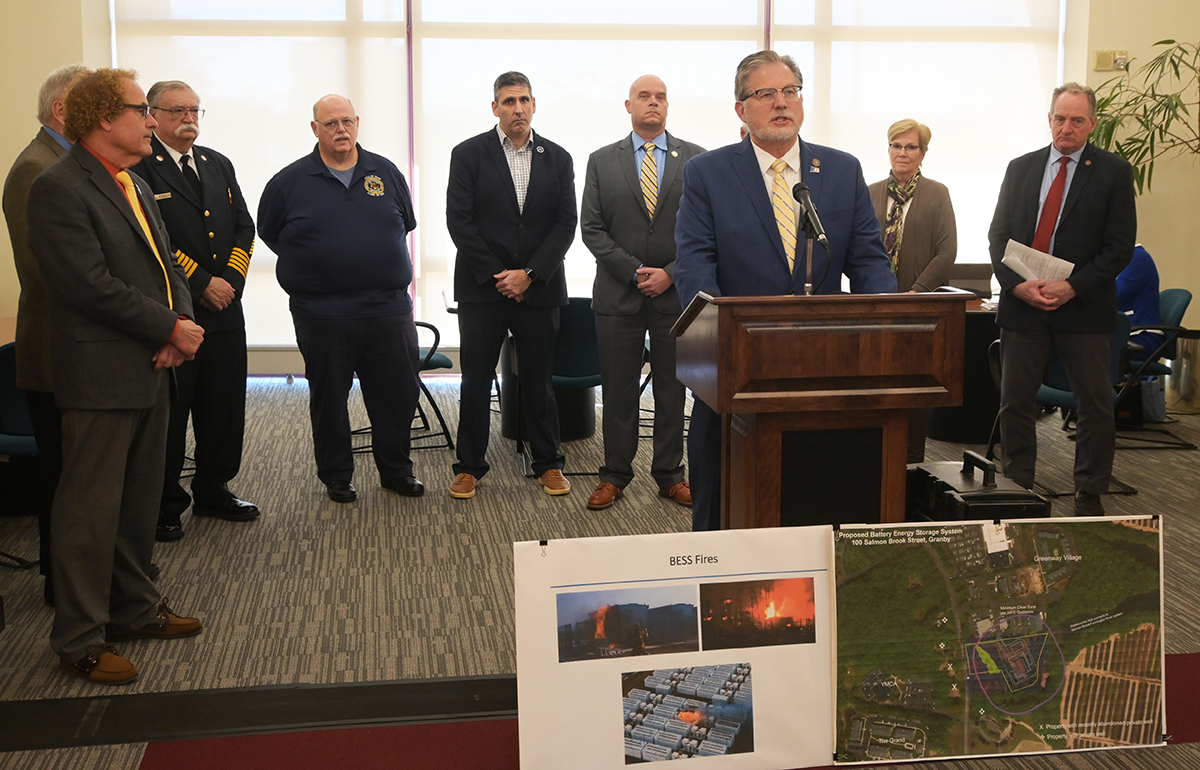
HARTFORD – Rep. Mark Anderson joined First Selectman Fiorentino, Peter Brown from the Uniformed Professional Fire Fighters Association (CT), State Rep. Tom Delnicki, and a group of dedicated first responders, town leaders, and lawmakers to advocate for a moratorium on Battery Energy Storage Systems (BESS).
>>>Watch the news conference here!
“While the group supports efforts to strengthen our energy grid, they want to ensure that we are not compromising our local environment, public safety, or the sustainability of our businesses. It’s critical that there are clear, comprehensive guidelines in place before any further BESS installations are approved,” said Anderson
They’re proposing the following key requirements to ensure the safety and protection of our communities:
1. Minimum setback/separation distances for BESS installations.
2. A mandatory process for identifying resources needed to address emergencies like thermal runaway, with BESS operators required to fund these resources.
3. A comprehensive evaluation of the operational and safety records of each BESS technology, including the manufacturer and battery components.
4. Strict environmental protections to safeguard water, air quality, and natural resources during emergencies, with BESS operators covering the costs.
5. A bond or other sufficient security from BESS operators to ensure compliance with safety standards.
6. Adequate insurance requirements for BESS operators to cover potential losses or damages.
7. A corporate response within two hours in the event of a thermal runaway or other emergency.
8. A Certificate of Environmental Compatibility and Public Need for all proposed BESS facilities as required by CSG 16-50k.
We believe these measures are vital to protect our environment, our community, and our businesses while still advancing toward a more resilient energy future.