Latest News
Loading articles...
Loading photos...
State Representative
District
119th
Towns
2
Latest Updates
Swipe through recent posts

Families in Milford and Orange Deserve Real Relief If you sit down at the kitchen table with a family in Milford or Orange and ask what is making life harder these days, you probably won’t hear much about political talking points. You’ll hear about the electric or gas bill. The price of filling up the car. Groceries, property taxes, insurance, and the cost of keeping a roof over your head. And you’ll hear people saying the same thing: Everything costs more. I hear it and think it too. Whether I’m talking with a neighbor, visiting with seniors, meeting with a small-business owner on the Post Road or New Haven Avenue or attending a community event, affordability comes up again and again. People are working hard and doing their part but it’s an uphill battle. They just want a little breathing room. That is why Connecticut needs to take a serious look at policies that put money back in the pockets of the people who earned it. I, along with my Republican colleagues are calling for meaningful relief, including income tax reductions, eliminating the Highway Use Tax, removing sales taxes on meals sold at grocery stores, a one-year gas tax holiday, association health plans aimed at lowering insurance premiums and eliminating the Public Benefits Charge on electric bills. For a working family in Milford, saving money at the gas pump can mean more money for groceries or a child's activities. For a senior in Orange, living on a fixed income, every dollar matters when the electric bill arrives. For a small-business owner, lower costs can mean keeping prices reasonable or keeping the doors open. We also need to keep working on property taxes. For many homeowners, that bill is one of their largest annual expenses. We should give municipalities the tools to provide relief while continuing to deliver the services residents depend on. Affordability isn't about one tax or one bill. It's the total cost of living in Connecticut—the electric bill, mortgage or rent, insurance, groceries, gas and property taxes, all added together. I don't pretend there is a magic wand that will make every bill disappear. Every proposal deserves a serious discussion about costs and how we responsibly pay for them. But we can make different choices. We can prioritize affordability. We can look for savings before looking for new revenue. And we can give taxpayers more of their own money back. What has frustrated me is hearing the majority party repeatedly say that Connecticut doesn’t have the money for meaningful tax relief, while at the same time continuing to fund new state programs that create additional costs and obligations for future years. If we can find the money for new programs, we should also be able to find ways to give Connecticut families some much-needed tax relief. I will continue fighting for lower costs, responsible spending and real relief for our communities. You shouldn't have to move out of Connecticut to afford Connecticut. We can—and must—do better.

A Good Career Doesn’t Always Start in a Four-Year Classroom By State Rep. Kathy Kennedy One of the things I enjoy most about serving in the legislature is getting out into our communities and seeing firsthand the opportunities available to our young people. Last week, I had the opportunity to attend the graduation ceremony for the 2026 Trade Internship Program hosted by United Illuminating and Southern Connecticut Gas. The ceremony brought together students who spent the summer getting something you simply can’t learn from a textbook: real-world experience. These students worked alongside experienced utility employees, union leaders and operations teams, getting a firsthand look at what it takes to build a career in the skilled trades. And let me tell you, Connecticut needs more opportunities like this. For too long, we have sometimes acted as though there is only one definition of success for a young person: graduate high school, go to a four-year college and earn a degree. There’s nothing wrong with that path. But it’s not the only path. A young person who wants to become an electrician, work in utilities, construction or manufacturing, or learn another skilled profession can build a great career without taking on four years of college tuition. With the right training and apprenticeship, they can learn a valuable skill, earn a paycheck and start building a future. That’s something we should be encouraging. As a state, we need to do a better job connecting our students with these opportunities. Our employers need skilled workers, over 14,000 skilled trades jobs are not being filled in Connecticut and our young people deserve to know about the many different doors that are available to them. That’s why programs like the UI and SCG Trade Internship are so important. They give students the chance to try something out before deciding what comes next. They get to meet people who have made careers in the trades and see that these are not just jobs—they can be lifelong careers. I was proud to join the students, their families and the UI and SCG teams to celebrate their accomplishments. I’m especially grateful to the mentors and workers who took the time to show these young people what is possible. There is a lot of talk these days about preparing Connecticut for the future. Well, that future starts with giving our young people the skills and opportunities they need today. Whether the next generation chooses a four-year college, a technical school, an apprenticeship or a career in the trades, we should be opening doors—not closing them. And when a young person walks through one of those doors and discovers a career they can be proud of, that’s something worth celebrating.

Working Together for Connecticut's Pets By State Representative Kathy Kennedy If you've ever had a dog greet you at the door after a long day or a cat curl up next to you on the couch, you know that pets become part of the family. For me, it’s my cuddly cats Spencer and Sebastian. They give us unconditional love, and it's our job to give them the care they deserve. That's why I'm honored to have been appointed to Connecticut's new Animal Population Control Program (APCP) Working Group, I already serve as a co-chair of the legislature’s Animal Welfare Caucus. This new bipartisan group is bringing together legislators, veterinarians, animal welfare organizations, animal control officers, and other experts to take a fresh look at how we can strengthen one of Connecticut's most important animal welfare programs. For years, the Animal Population Control Program has helped eligible pet owners, municipal shelters, and organizations caring for feral cats by providing assistance for spaying and neutering. These services help reduce the number of unwanted animals, ease overcrowding in shelters, and save taxpayer dollars by reducing the strain on local animal control services. The problem is simple: the need has grown, but the funding hasn't kept up to that need. Our job is to figure out how to make this program stronger and operate for the long term. We'll be looking at ways to create more stable funding, improve access to services across Connecticut, and make sure the program is there when families and communities need it most. We'll also discuss ways to better respond to animal diseases and identify resources that can help domestic violence survivors find temporary care for their pets. For many victims, leaving an abusive situation is even harder when they're worried about what will happen to a beloved dog or cat. These are real challenges facing real people. One thing I've learned during my time in the legislature is that the best solutions come from listening and bringing people together. I look forward to hearing from veterinarians, shelter volunteers, animal control officers, rescue groups, and pet owners who work every day to care for Connecticut's animals. Whether you adopted your pet from a shelter, rescued a stray, or simply believe every animal deserves a safe and healthy life, this work matters. Responsible pet ownership and effective population control help create healthier communities, reduce overcrowded shelters, and give more animals the chance to find loving homes. I'm grateful for the opportunity to serve on this working group and to represent the voices of Milford, Orange, and communities across Connecticut. Together, I believe we can build on a program that has already done so much good and make it even better for both our pets and the people who love them.
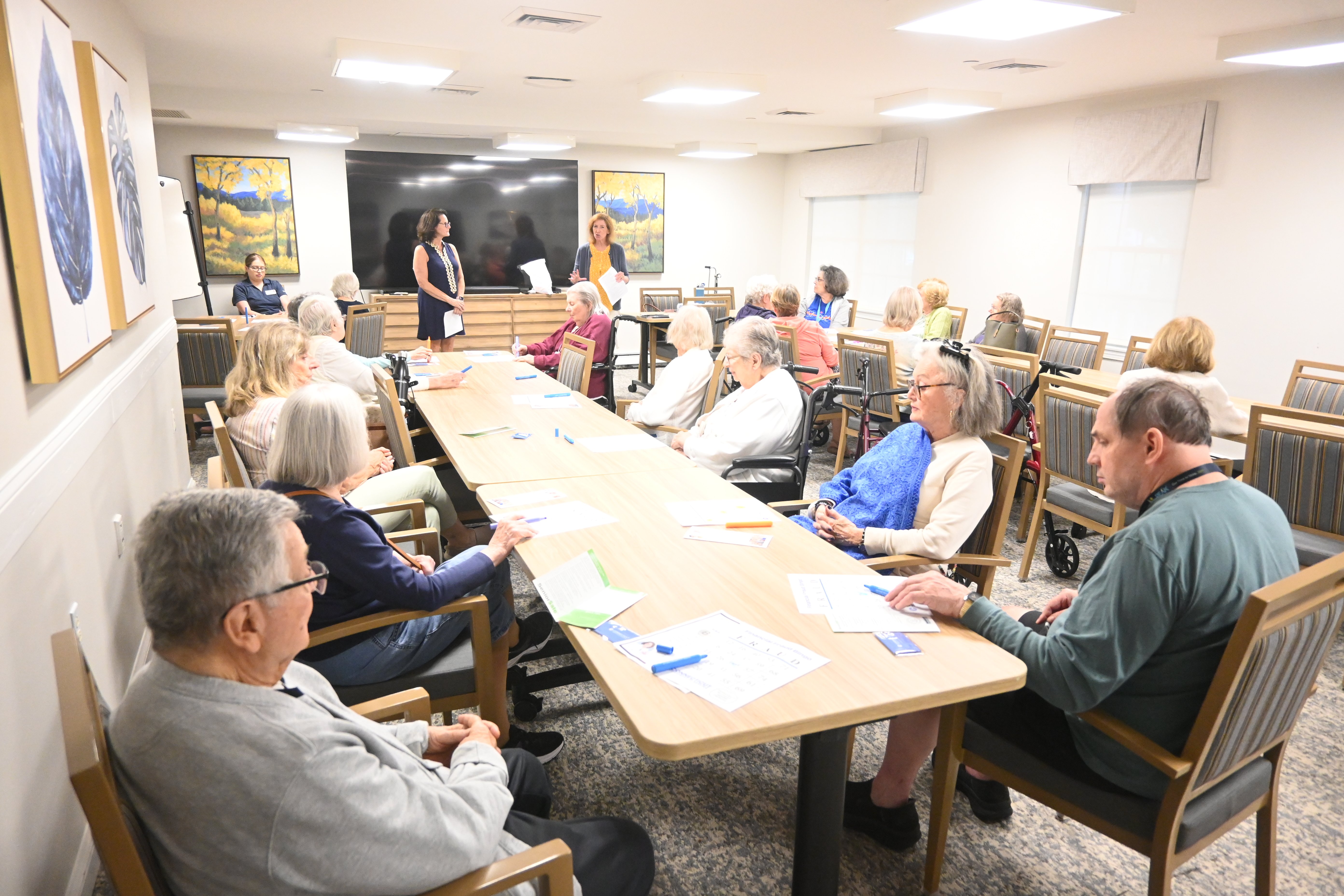
MILFORD – State Representative Kathy Kennedy (R-Milford/Orange) hosted a Financial Fraud Bingo event Tuesday at Carriage Green at Milford, giving local seniors a chance to have some fun while learning how to protect themselves from financial scams. The event, held in partnership with the Connecticut Department of Banking, turned an important topic into an interactive afternoon. As numbers were called, the Department’s “Bingo Master” shared tips on how to recognize common scams, including imposter scams, identity theft and online shopping fraud. Participants also had the chance to ask questions, share stories and win prizes. “Who says learning about financial scams has to be boring?” said Rep. Kennedy. “We had a lot of laughs, a little friendly competition and, most importantly, some really good conversations about how to protect ourselves and our loved ones. Scammers are getting more creative every day, and we have to be just as smart and a little more cautious.” Kennedy said seniors are often targeted because scammers believe they may have savings, retirement income or other financial resources. “Here’s the bottom line: if somebody calls, texts or emails you and something just doesn’t feel right, stop and take a breath,” Kennedy said. “Don’t be embarrassed to hang up, ask questions or call someone you trust. Your bank is there to help, and there’s no prize for responding to a scammer in a hurry.” Participants learned about several common scams, including so-called “grandparent scams,” where criminals pretend to be a grandchild or other family member in an emergency and demand money immediately. Residents were encouraged to independently contact the family member or another trusted person before sending money or providing personal information. They were also reminded to be cautious about information shared on social media, which scammers can use to make their schemes sound more believable. Other tips included avoiding suspicious links in text messages and emails, double-checking email addresses, being cautious with unexpected phone calls and taking care when providing personal information. “Scams don’t just happen to somebody else,” Kennedy said. “The best defense we have is looking out for one another and making sure our friends, parents, grandparents and neighbors know what to watch for.”
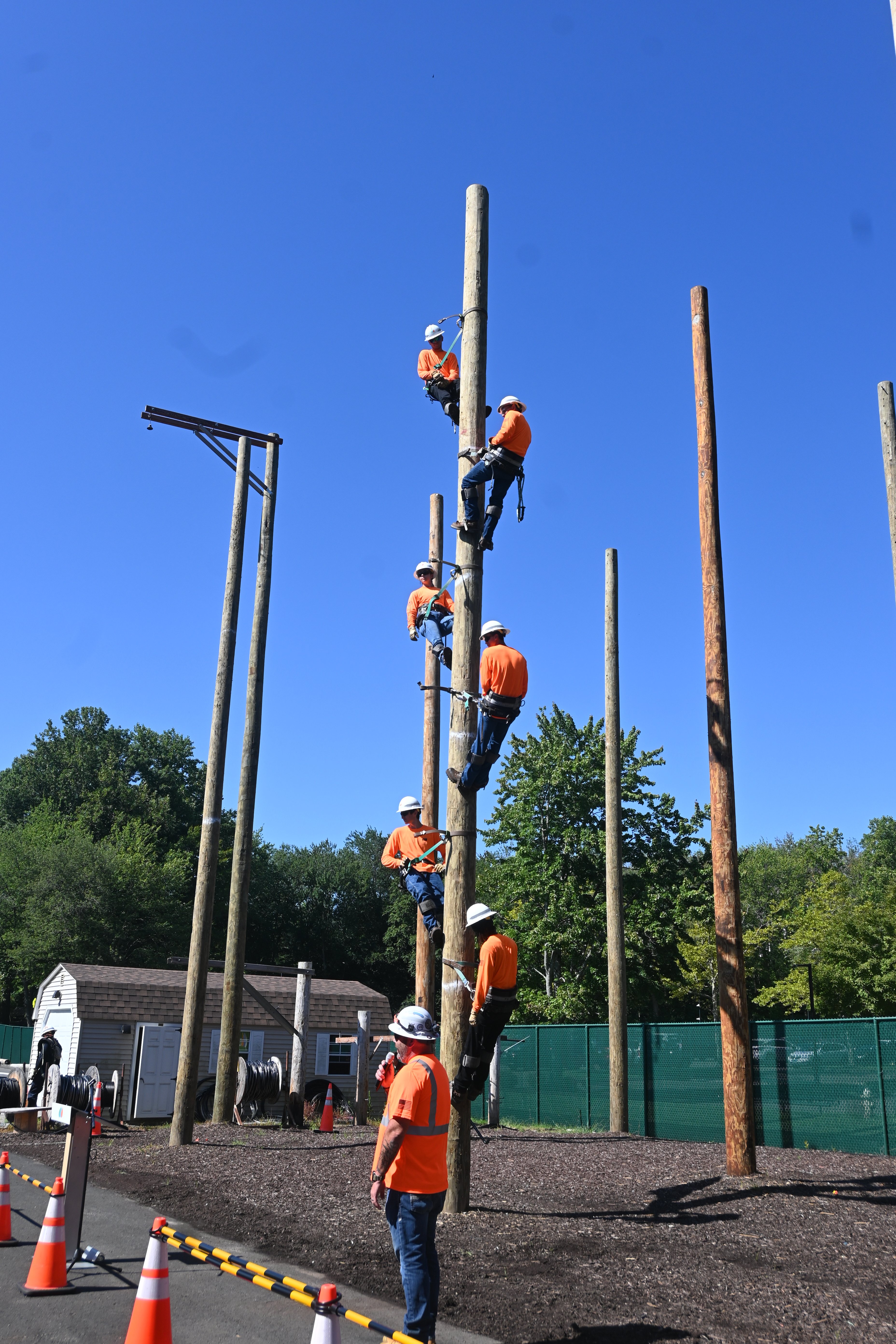
TRUMBULL – State Representative Kathy Kennedy (R-Milford/Orange) attended the 2026 Trade Internship Program graduation ceremony hosted by United Illuminating (UI) and Southern Connecticut Gas (SCG) on Wednesday, August 19, at the United Illuminating Training Yard in Trumbull. The program provides local high school and community college students with hands-on experience and exposure to skilled trade careers in the electric and natural gas utility industries. Throughout the internship, students worked alongside experienced field employees, union leaders, and operations teams while gaining valuable insight into careers that offer rewarding alternatives to the traditional four-year college path. Kennedy has supported efforts to strengthen Connecticut’s workforce and expand opportunities for students to pursue careers outside the traditional four-year college route. This includes legislation aimed at improving access to workforce-development resources and strengthening Connecticut’s pipeline of skilled workers. Kennedy praised UI and SCG for investing in the next generation of Connecticut’s skilled workforce. “Connecticut needs more opportunities like this that connect young people with good-paying careers, and the skills employers need,” said Rep. Kennedy. “Not every student needs to follow the same path, and the skilled trades provide tremendous opportunities for a fulfilling career. We should continue making sure students know that a successful career can begin with hands-on training, an apprenticeship or a technical education.” Kennedy said programs like the UI and SCG Trade Internship are particularly valuable because they allow students to experience the trades firsthand before making decisions about their future. The graduation ceremony highlighted the students’ accomplishments and the skills, training and career awareness they gained through the program.