
O’Dea, Republicans unveil “Confident Connecticut” No-Tax-Increase Budget
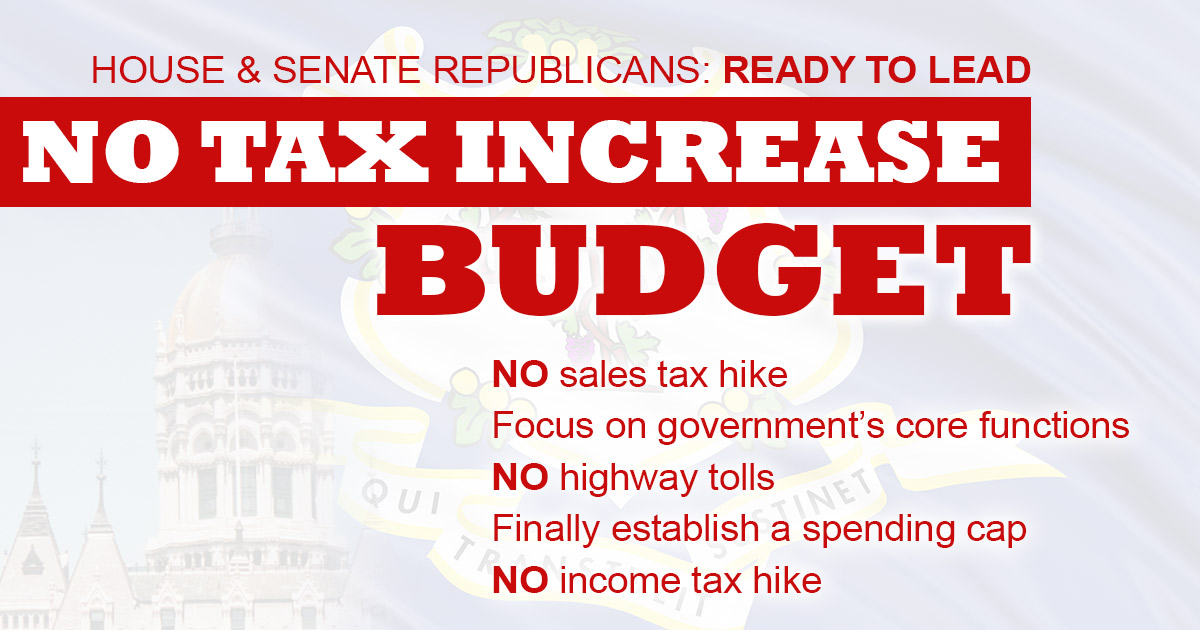
Representative Tom O’Dea (R-125) joined his Republican colleagues in the Senate and House today to share a state budget proposal that closes the current projected state deficit over the next two years without new taxes and without pushing state expenses onto towns, cities or hospitals. The “Confident Connecticut” budget includes increased education funding with a new funding formula, restores money for core social services, and provides for significant structural changes to state government that roll out into the future.
The budget proposal does not include shifting a third of teachers pension costs back onto the municipalities, cancels bonding $250 million for improvements to the XL Center, requires $700 million in union concessions, maintains tax exempt status for hospitals, consolidates state agencies, phases out the income tax on pensions and annuity income, and exempts social security from the income tax for middle income seniors.
“Virtually everyone agrees, from the Governor on down, that Connecticut residents are over-taxed,” said Rep. O’Dea. “This proposed budget that we have put out cuts taxes by eliminating the gift and estate tax along with the tax on social security. While it makes some difficult choices regarding cuts to virtually every state agency, it gets us back on the pathway to economic strength and recovery, the key to which is job growth.”
Creates Stability for Towns and Cities
The “Confident Connecticut” budget rejects a proposal to require municipalities to assume a portion of the costs associated with teachers’ retirement. This will save towns from over $400 million in new financial burdens in year one – a savings that multiplies significantly each year in the future. This budget eliminates the state’s Municipal Revenue Sharing Account program and instead reformulates municipal funding by establishing a new education funding formula and Urban Improvement Grant. Almost all municipalities fare significantly better than under the governor’s proposal. No towns receive less state funding in fiscal year 2018 than enacted in fiscal year 2017. The budget also contains municipal mandate relief to help towns manage their budgets and identify savings for local taxpayers.
Enhances Education Aid
This budget includes a fully revised Education Cost Sharing Formula that takes into account factors regarding CCJEF and Meskill court decisions, enrollment, poverty and wealth. In addition, this budget dedicates $33.6 million more to education in fiscal year 2018 and $136.6 million more in fiscal year 2019. Once fully implemented, the state will be spending $678.7 million more on education funding under this proposal. In 2018 all towns and cities will either be held harmless or gain more funding for education needs.
Protects Hospitals
This budget rejects a proposal to eliminate the tax exempt status for hospitals, and therefore protects hospitals from being subject to a new local tax. This budget preserves the small hospital pool to protect funding for community hospitals and does not increase the current hospital tax. It also reinstates hospital Payment in Lieu of Taxes to towns and cities.
Protects Core Services
Budgeting is about priorities. This budget prioritizes core social services for the most vulnerable as well as important health and public safety programs. In order to preserve the safety net of services for the disabled, poor, those with mental health needs, children, the elderly and those in poverty, this budget rejects proposed cuts to many direct services and restores funding for core functions of government. For example, this budget fully funds Meals on Wheels, Care4Kids, day services and employment opportunities for those with developmental disabilities, and mental health and substance abuse grants.
Prioritizes Transportation
This budget would enact the Republican “Prioritize Progress” transportation funding plan which dedicates $63 billion to transportation needs over 30 years without tolls or new taxes. In addition to the funding plan, this budget includes a plan to make the state’s Special Transportation Fund solvent in future years by dedicating transportation related revenue to the fund and weening the General Fund off of transportation related revenue. Currently, the fund is in danger of being in deficit by fiscal year 2020. This budget resolves that issue for future years.
Implements Structural Changes
In addition to addressing the deficit over the next two years, this budget includes changes to the structure of government that will roll out into the future to create significant savings for future generations. Recognizing that the state desperately needs to think about the current size and shape of state government, this budget recommends consolidating duplicative administrative functions and privatizing certain functions to best protect core services and enhance efficiencies. In addition, this budget contains an extensive list of policy changes to put the state on a better path in future years.