
State Rep. Kathy Kennedy Op-ed: State Budget Time
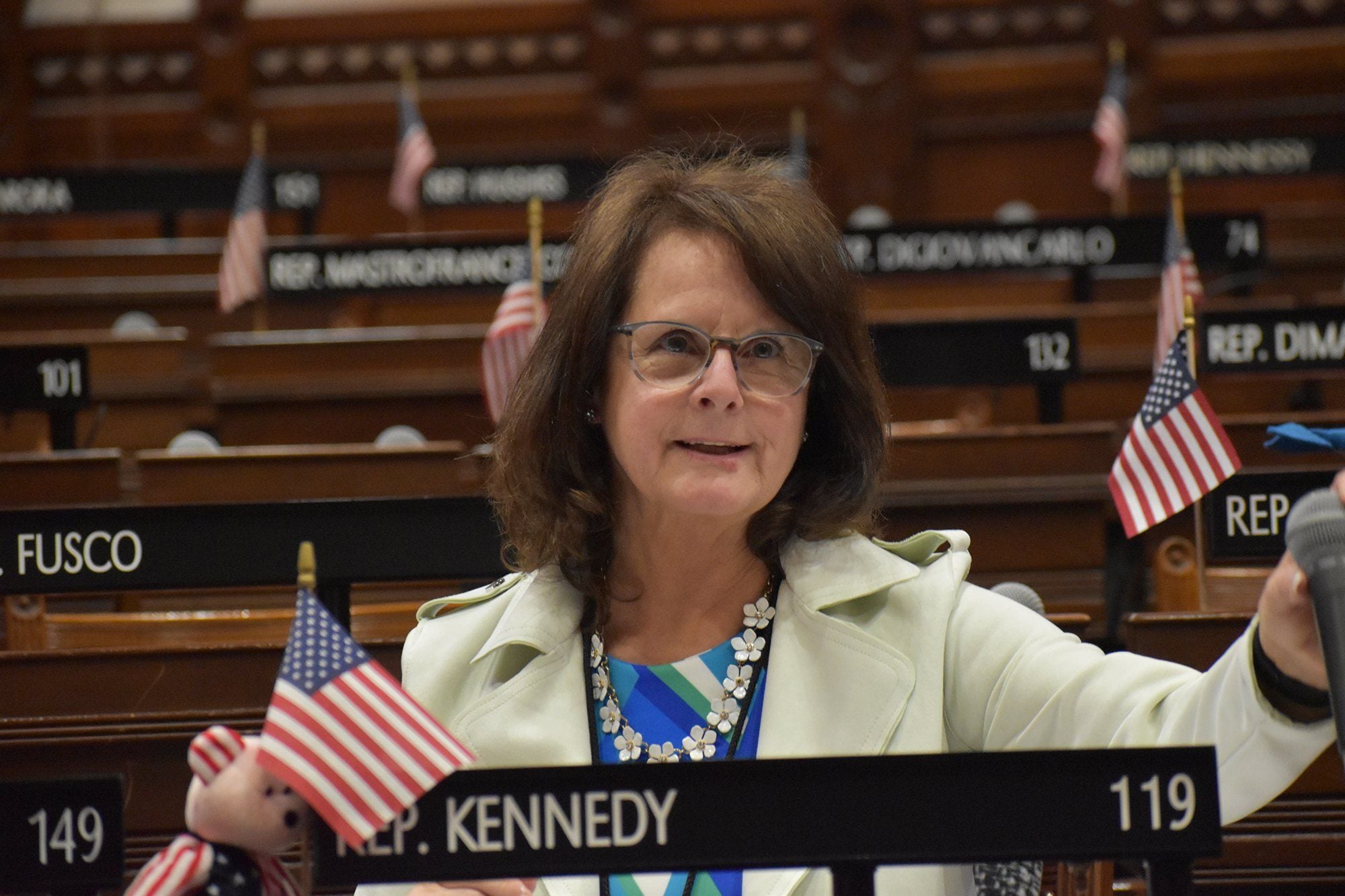
This year in addition to serving as Ranking Member on Executive and Legislative Nominations, being a member of the Public Health and Education Committees, I am honored to sit on the Appropriations Committee. The committee’s main focus is to write the two-year state budget. In addition, the committee has jurisdiction over matters relating to state employees’ salaries, benefits and retirement, teachers’ retirement and veterans’ pensions, as well as collective bargaining agreements and arbitration awards for all state employees.
As you can imagine this is an incredibly busy committee. The Governor delivered the budget to the General Assembly in early February. Over the last three months the committee has been busy with numerous public hearings dealing with the numerous bills submitted. The committee has also heard from department heads, commissioners and agencies concerning the Biennial Budget for fiscal year 2022-2023. The Appropriations subcommittees I served on were the Legislative, Health, the Elementary and Secondary Education and Collective Bargaining.
Last week, after hours of deliberations, HB-6439 An Act Concerning the State Budget for the Biennium Ending June Thirtieth, 2023 And Making Appropriations Therefor was voted out of committee. In deciding my vote my first thoughts and considerations are to my constituents from Milford and Orange, residing in the 119th House District. On a positive note, there are some good parts in the bill, such as added funding to the ECS formula, but those grant allocations to towns may have been based on the rollout as passed in 2017. It does direct the legislative non-partisan Office of Fiscal Analysis to do a wide-ranging study with independent analysis for future legislative consideration. It also prevents the Governor from cutting ECS once enacted. Other positives include a cost of living adjustment and rate increases for nursing homes and recipients of state assistance like Temporary Family Assistance program (TANF) and State Administered General Assistance (SAGA), increases local health districts formula grants per capita to $1.93, increases personal needs allowance.
That said, I ultimately voted against the budget because I made a commitment to my constituents to lessen the tax burden for those hard-working families, those on a fixed income and local business. The budget as passed increases spending over the next two years by 5.5%. It relies on federal funding; while adding new commissions, new full-time staff (salary and benefits) and new programs. There is no short or long-term transportation plan beyond federal money.
The authors of the new budget document have seemed to create a shadow budget that sidesteps the state spending cap by creating a massive off-budget account that will hold $1 billion from revenue generated from cannabis legalization, i-lottery gaming, a new social media ad tax and a new consumption tax. The questions I have, and it has not been sufficiently answered is: who controls this account and why is it off-budget? This type of budgeting leads to less accountability and less transparency for the taxpayers of our state.
While there are some merits to the budget, it is just not sustainable going forward. There is too much co-mingling of revenue (funds from the federal government) which is quite frankly irresponsible.
Even Gov. Ned Lamont voiced his opposition to the plan before a single vote was cast, expressing concern that it could risk the state’s recent financial successes as it emerges economically from the pandemic.
I completely agree with the governor. We can do better than the budget plan passed last week.
As always, please contact me should you have any questions about this important issue or concerns on any other topics relating to state government at Kathy.Kennedy@housegop.ct.gov or at (800) 842-1423. I do frequently update my State Facebook page and my state website with the latest COVID-19 information.