
Rep. Howard Stands with Crime Victims
Disappointed Violent Crimes Could be Erased from Criminal Records
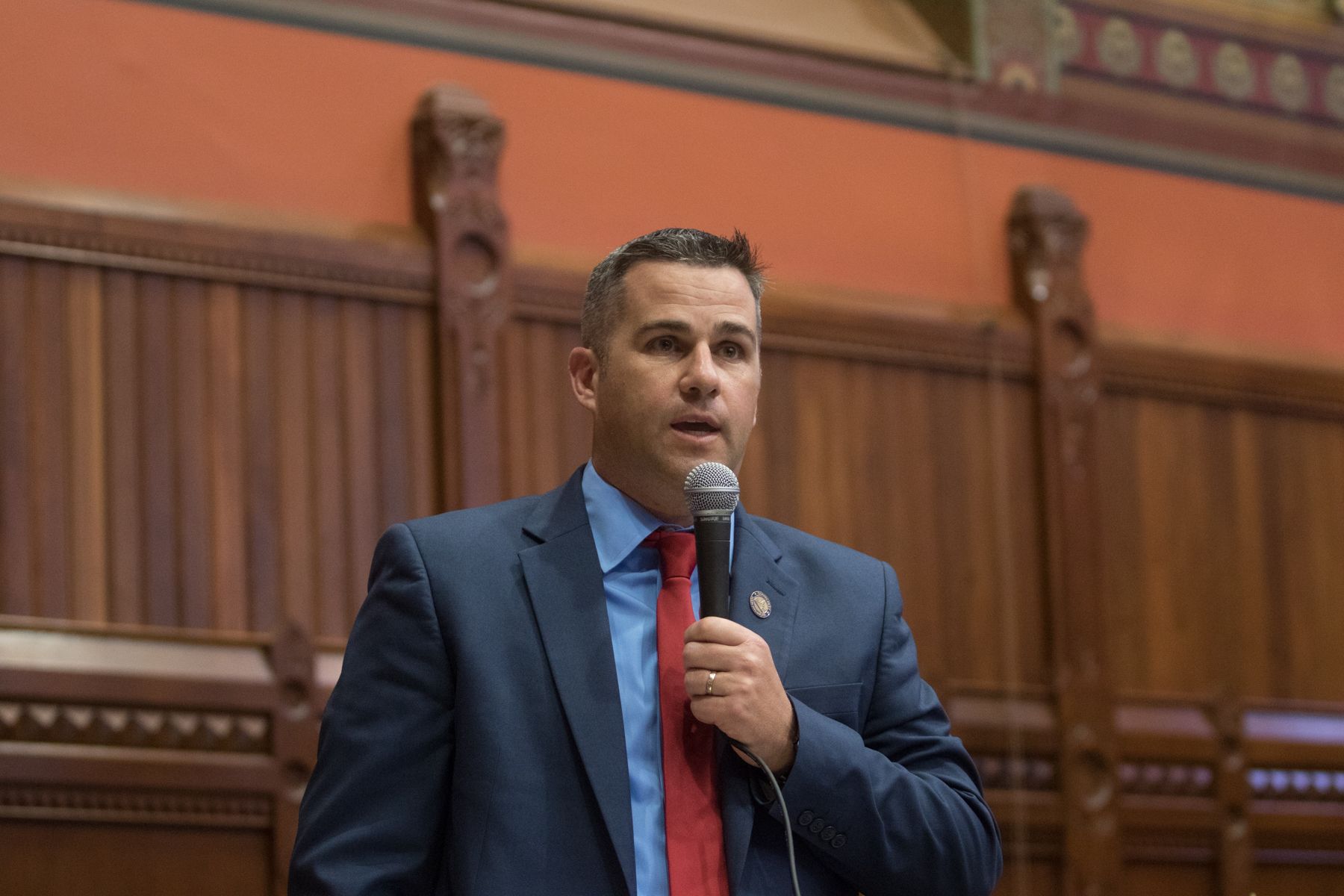
HARTFORD- State Rep. Greg Howard (R-43) today expressed dismay that legislation was passed in the House of Representatives that permit certain violent crimes to be erased from the record.
Rep. Greg Howard voted against Senate Bill 1019, which establishes a process to erase records of certain criminal convictions after a specified period following the person’s most recent conviction.
“As I said on the floor of the House, victims have been forgotten in this whole conversation on record erasure. I voted against Senate Bill 1019 on behalf of victims of crime today,” said Rep. Greg Howard.
Some of the crimes eligible for record erasure include serious, violent crimes like; 1st degree threatening – essentially bomb threats – threatening to commit a crime involving use of hazardous substance with the intent to terrorize or cause evacuation OR threatening a person by possessing or representing possession of a firearm; 3rd degree robbery – larceny, but with the use or threatened immediate use of physical force – class D felony; carjacking; interfering with an officer – obstructing, resisting, hindering, or endangering any officer; criminally negligent homicide – causing the death of another by criminal negligence, often a lesser included offense of murder; 3rd degree assault – with intent to cause physical injury to a person, actually causes such injury; recklessly causes serious physical injury; or with criminal negligence, causes physical injury to another by means of deadly weapon, dangerous instrument or electronic defense weapon.
Rep. Howard noted that a small but an important victory for the safety of Connecticut residents was the addition of several convictions’ ineligible for erasure under another piece of legislation passed this session (Senate Bill 1093).
Some of those crimes include:
The following Class D Felonies:
- Assault 2nd degree with a firearm (not resulting in serious physical injury
- Assault of an elderly, blind, disabled, or pregnant person or person with intellectual disability 2nd degree, with or without a firearm
- Strangulation or suffocation 2nd degree
- Sexual assault 3rd degree (victim age 16 or older; other cases are class C felonies)
- Enticing a minor (1st offense, victim age 13 or older; other cases are class B or C felonies)
- Burglary 3rd degree with a firearm
- Stalking 1st degree
- Voyeurism (cases not covered by the sexual offender registration law; 2nd offenses and certain other cases are class C felonies)
- Incest
- Obscenity as to minors
- Possession of child pornography 3rd degree
- Possession of sawed-off shotgun or silencer
- Criminal use of firearm or electronic defense weapon
- Criminally negligent storage of a firearm
- Abuse of an elderly, blind, or disabled person or person with intellectual disability 2nd degree
- Failure to register as a sexual offender when required
- The following Class A Misdemeanors:
- Assault of an elderly, blind, disabled, or pregnant person or person with intellectual disability 3rd degree
- Strangulation or suffocation 3rd degree
- Abuse of an elderly, blind, or disabled person or person with intellectual disability 3rd degree
The bill (SB-1019) passed the House of Representatives by a vote of 91-56.