
Enfield Legislators Support Bi-partisan Budget
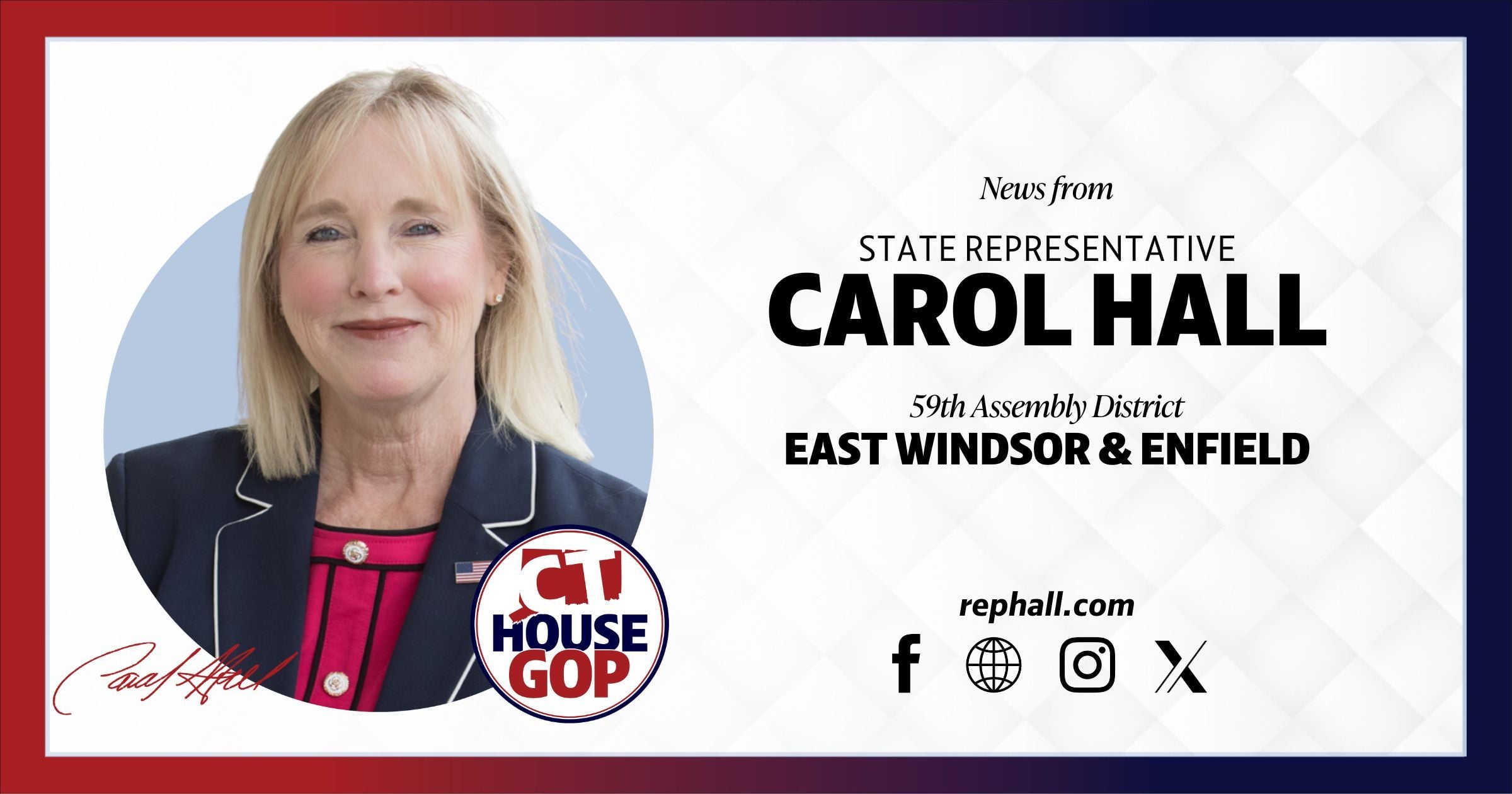
Hartford – State Representatives Greg Stokes (R-58) and Carol Hall (R-59) applauded passage of a bi-partisan budget that avoids tax increases, preserves core social services, keeps commitments to education, provides stability for municipalities and rejects Governor Malloy’s proposed shifting on teacher pension costs onto towns and cities.
The budget was made possible by a remarkable display of bipartisanship by Democrat Senators Hartley, Doyle and Slossberg, who joined their Republican colleagues to pass the budget out of the Senate on a vote of 21-15. Later that evening, the document was taken up by the House and, after lengthy debate, was passed by a margin of 77-73.
Rep. Stokes commented, “I am proud to support a budget that restores funding to Enfield schools. As a grandfather with four grandchildren in our public schools I understand the concerns my constituents have shared about potential devastating cuts to education.”
“Avoiding tax increases was a priority for my constituents; hardworking families cannot afford another hit to their wallets,” said Rep. Hall. “I was proud to be an active participant on the Appropriations committee to help put this no-tax increase budget together. We worked endless hours to come up with this budget that keeps the town’s whole and, in year two, actually increases the education dollars to Enfield. I’m very proud to put my name on this budget.”
Highlights of the bi-partisan budget:
- No increase or expansion of the state’s sales tax
- No income tax increase
- No secondary home tax
- No cell phone tax
- No increase to the cigarette tax
- No new tax on nonprescription drugs
- No new restaurant sales tax
- No increase to the pistol permit fee
- No increase to the hotel tax
- No new fantasy sports tax
- Restores funding for the state’s property tax credit in its entirety to all families and individuals
- Eliminates Social Security income tax and phases out tax on pension income for middle class
“This budget was not easy and it is not perfect, but it makes important structural changes and marks the first step on the road toward fiscal sanity,” Rep. Stokes said.
In order for the budget to go into effect it must either be signed by the governor or sit for 30 days. Alternatively, the governor can veto the budget returning the bill to the legislature to begin the process again or override the veto with a two thirds vote of each chamber.
For more detailed information on the budget, please visit; www.cthousegop.com/budget.