Addressing the state’s biggest challenge: its hostile business climate
Key Takeaways
- Canino warns proposed labor bills harm businesses and reduce job opportunities.
By: State Representative Joe Canino
>>>READ ON CT EXAMINER WEBSITE
“The curious task of economics is to demonstrate to men how little they really know about what they imagine they can design.” F.A. Hayek
As a freshman legislator on Connecticut’s Labor Committee, I’ve seen no shortage of controversial proposals from the Democratic majority - many targeting what is arguably the state’s biggest challenge: its hostile business climate.
While these policies are often framed as “victories for working families,” efforts to use government power to reshape employer-employee relationships have led to significant unintended consequences.
Currently, Connecticut ranks as one of the worst states to start a business, 47th overall out of 50 states according to Wallethub. Contributing factors include high operating costs (45th) and overall business environment (41st). In recent years, multiple labor bills have passed out of our General Assembly directly contributing to these rankings. Chief among these policies would be our minimum wage, which was raised to $15 an hour, indexed to inflation, and now sits as the third highest in the country at $16.94. Unfortunately, the trickle down has led to higher prices on goods as businesses try to keep up with the moving payroll target.
In food-related industries such as the grocery and restaurant businesses, profit margins are quite thin, between 1%-5%, and any increase in operating costs, such as labor, can change the operational math quite drastically, putting strains on small businesses that already see some of the highest healthcare (46th), energy (47th), and property tax costs (49th) in the country as well. 99.4% of CT businesses are small businesses, employing 48% of the workforce. Any increased costs on these businesses may have deleterious effects on the employment opportunities that are offered.
While individuals already employed by those enterprises may see a benefit in increased wages, the “invisible” effects of the policy are ignored. In the case with the minimum wage, the benefits of this policy are concentrated in a visible population, while the damages are dispersed through a less visible population. Everyone sees the worker who gains a couple dollars on their paycheck, however the job that is never created due to more money being locked into existing employees’ labor costs is intangible.
This year, the legislature will consider three labor bills that follow along the same lines as our minimum wage bill from 2019. They are 1) proposed with the good intentions of “improving worker conditions” 2) provide concentrated benefits to certain workers at the loss of a dispersed group of other workers and 3) further deteriorate our already hostile business environment here in Connecticut.
The first, and most obvious example, is the “self-checkout” bill, SB 438. It would cap grocery stores at eight kiosks and require one employee for every two machines, potentially forcing stores to hire several additional workers per shift.
Supporters argue kiosks eliminate jobs, but this ignores the reality that automation has been driven in part by rising labor costs from policies like minimum wage increases. Responding with further mandates only adds costs for businesses, leading to higher prices and fewer overall job opportunities.
Next, this year we’ve seen the mistakenly named “Unemployment for Striking Workers” bill reemerge after Governor Lamont vetoed it last session. SB 440 would allow employees involved in a “labor dispute” to receive unemployment benefits, but the term is left undefined. As written, it could extend far beyond strikes to include routine workplace disagreements, creating a risk of abuse and workplace disruption.
Even if narrowed to apply only to legally authorized strikes, the policy remains problematic. Striking workers do not meet the core federal requirements for unemployment benefits, they are not unemployed through no fault of their own, nor are they available for or seeking work. Expanding eligibility would strain the unemployment insurance system, increasing costs for employers and, ultimately, consumers through higher prices and fewer job opportunities.
More broadly, the bill tilts the balance in labor disputes by having the government effectively subsidize one side. That dynamic could discourage business investment in Connecticut, as companies weigh the risk of financing extended labor disputes through the UI system.
Lastly, lawmakers are considering the predictive scheduling bill, SB 436. It would require certain service employers to post schedules two weeks in advance and penalize last-minute changes by forcing them to pay workers for canceled or altered shifts.
While this benefits employees, it shifts significant costs onto employers, particularly in low-margin industries like restaurants, likely leading to higher prices and fewer opportunities.
More broadly, measures like this use government power to reshape employer-employee relationships, favoring one side while spreading costs across society. Though well-intentioned, these policies risk long-term economic consequences for Connecticut including fewer businesses, fewer jobs, and more hardship across Connecticut. This path is unsustainable.
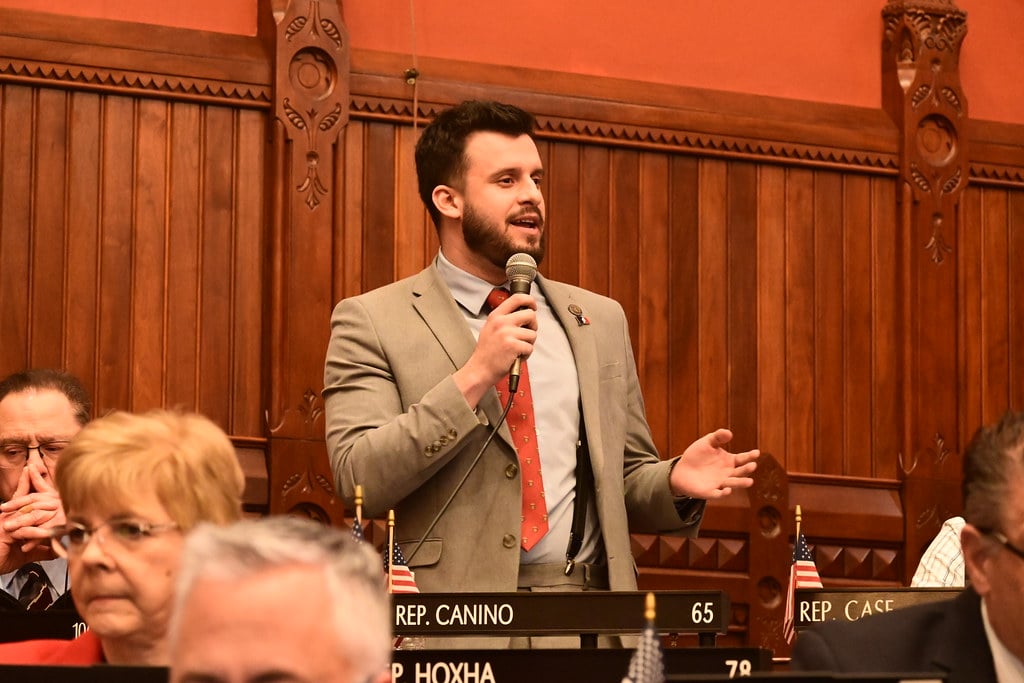
State Rep. Joe Canino represents Connecticut's 65th Assembly District, which is comprised of the City of Torrington.