
Rep. Callahan Op-ed: Revisiting Electric Bus Mandates for School Districts and the DOT
Key Takeaways
- Rep. Callahan urges repeal of the 2022 zero-emission bus mandate.
- Lawmakers warn electric buses cost up to three times more than diesel.
- Officials cite limited battery range, winter performance, and charging needs.
- Bill H.B. 5470 supports hybrids; Public Act 22-25 Section 13 should be repealed.
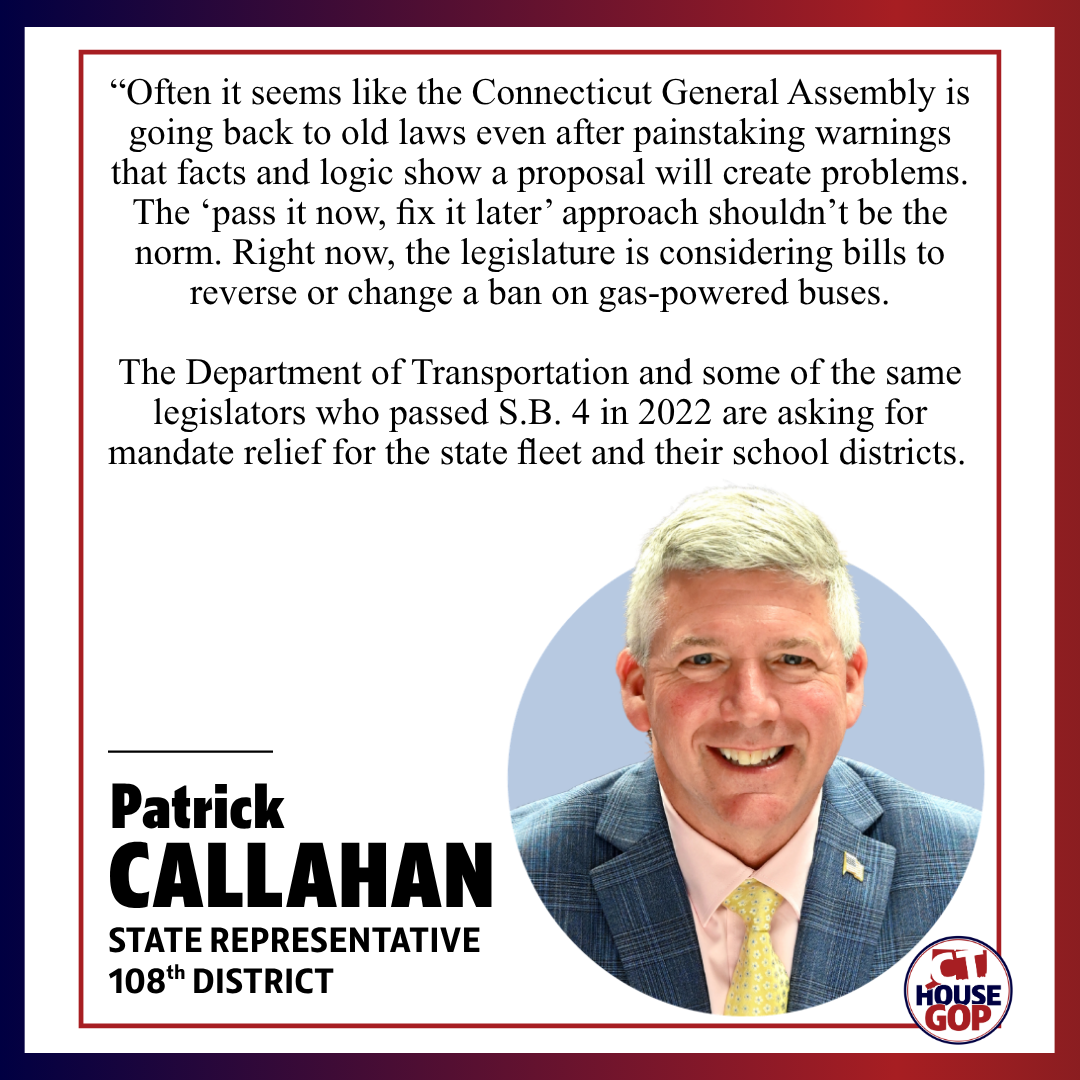
Lawmakers need to think about the big picture and consider ramifications of our actions before passing legislation. Often it seems like the Connecticut General Assembly is going back to old laws even after painstaking warnings that facts and logic show a proposal will create problems.
Moving forward with legislation in a deliberate way, listening to all stakeholders, takes time but produces a better regulation or law. The ‘pass it now, fix it later’ approach shouldn’t be the norm.
The bottle bill comes to mind as we recently voted to make adjustments to the recycling law after deposits were raised to $0.10 because of massive amounts of fraud. I and others warned that abuse of the system would happen when the proposal to hike the fee was implemented, but that argument wasn’t enough to sway the majority. That speedy Emergency Certification bill won’t fully address the issue, which is why the Environment Committee is considering further changes in a bill before us currently.
Another area where concerns were ignored: banning gas-powered buses.
S.B. 4 was passed by the majority in 2022. It included a provision to prohibit the state from purchasing diesel-powered buses after January 1, 2024. School districts were also required in another provision to transition their fleets to zero-emission vehicles.
Now, the State Department of Transportation and some of the same legislators who passed this bill are asking for mandate relief for the state fleet and their school districts. Bills are before both the Transportation Committee and the Energy & Technology Committee.
Some of the things we warned about when the initial legislation was debated are still concerns. The cost of an electric bus can be three times as much as a diesel bus, not including the cost of a charging station.
Cost is not the only issue.
Proponents of these provisions had on rose-colored glasses when they passed the feel-good bill and ignored market reality. The availability of this technology is another big reason why the CT DOT is now asking for a reprieve. Electric bus batteries haven’t advanced as far as passenger vehicle batteries.
Current technology also presents a challenge for school districts that are spread out because certain trips and routes require greater range than is available. In the winter, these batteries lose power and even if range wasn’t an issue, a midday recharge is still needed.
School districts can also purchase fuel tax-free, so the price of electricity and agreements with the bus companies will need to be considered. Our electric supply and distribution network to power charging for EVs will increase demand, and further drive up the cost of electricity to our residents. Taxpayers already have their budgets stretched to the max, something reflected in many towns needing several referenda to pass a budget these days. Expensive electricity exasperated by the “public benefits” charge also effects the affordability.
H.B. 5470 – An Act Concerning Hybrid School Buses – is a step in the right direction, but Section 13 of Public Act 22-25 must be repealed.