
Rep. Callahan Takes to Candlewood With CT DEEP to View Removal of Grass Carp
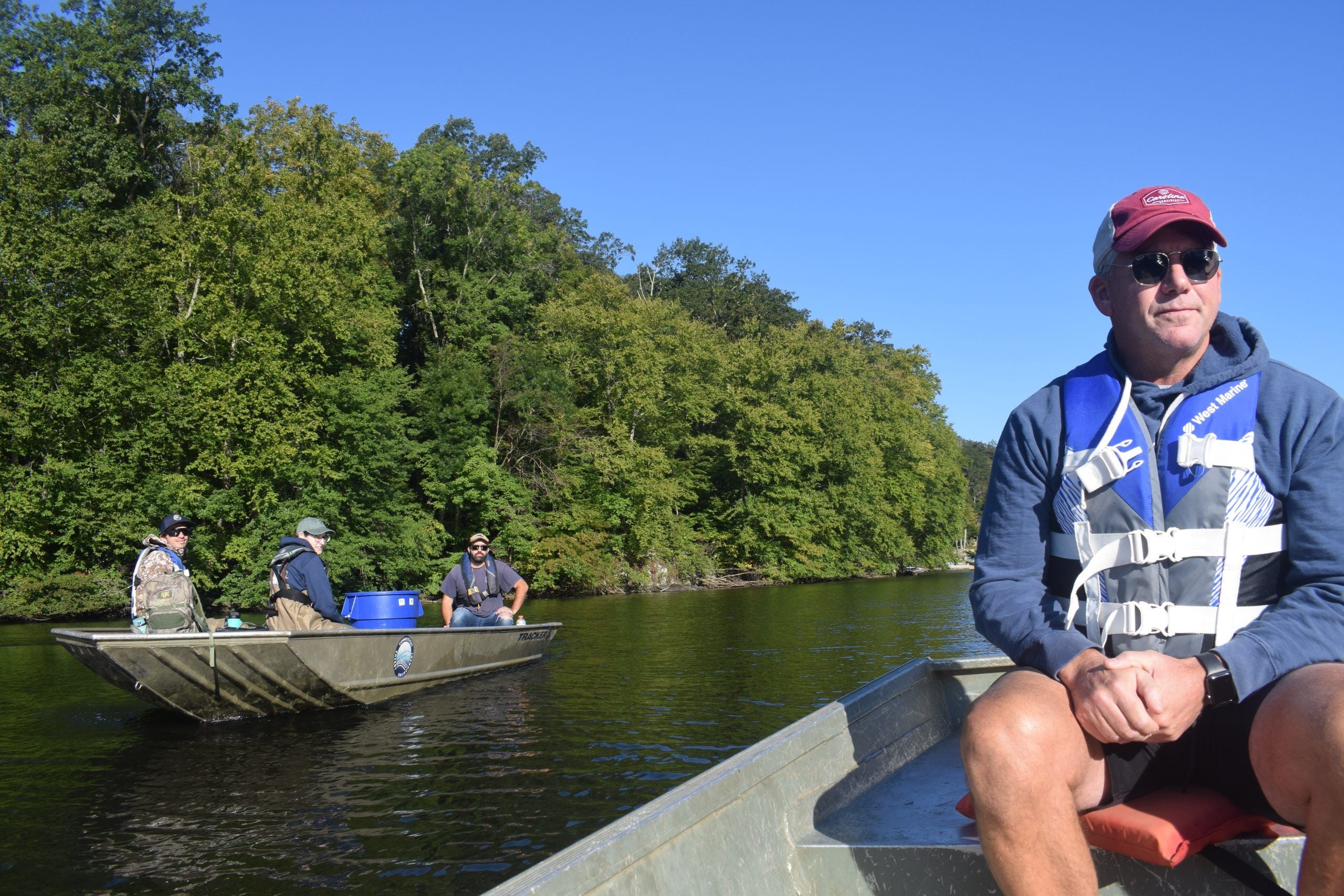
Sherman, Conn.—The Connecticut Department of Energy and Environmental Protection (CT DEEP) is removing some triploid grass carp from Candlewood Lake. State Representative Patrick Callahan (R-108), whose district includes four of the five towns surrounding the lake, is the Ranking Member on the legislature’s Environment Committee. He recently went out on the water with members of CT DEEP during one of their grass carp removal ventures. The operation involves an electrofishing boat, a gillnet boat, and a spotter boat to warn nearby vessels of the work.
“We’re suddenly seeing little to no weeds in Candlewood. This species of fish was added as a way to control invasive Eurasian Watermilfoil, which was clogging boat propellers and posed a hazard to swimmers. The fish that were stocked were sterile, so they’re not reproducing, they just became voracious,” said Callahan.
DEEP Supervising Fisheries Biologist Andrew Bade noted that over 200 have been removed from across Candlewood Lake to date. Gill-nets are spread across the entrance to a cove area and then the electrofishing boat and gillnets work together to catch grass carp. The gillnet has a big enough mesh size so that other fish are not caught in it.
Relying on natural mortality alone, it could take upwards of 20 years for the carp population to decline to levels that allow for the recovery of the aquatic plant community.
“The electrofishing boat has a dropper with wires that swing in front of the boat to put an electric current in the water. The fish caught in the electric field are immobilized or no longer in control of their swimming and we can then net them. This method is more commonly used for a fish community assessment because it’s non-lethal. When studying fish, we can then release them back into the water. Here, we corral them to get them out of the lake,” said Bade.
Most of the carp removed have been caught by DEEP. The agency did offer a Scientific Collectors Permit to anglers, but it’s been difficult to catch grass carp with a rod and reel. Only 15 have been caught by those with the permit so far.
Some vegetation is needed in the lake to keep the ecosystem in balance. The Candlewood Lake Authority requested that DEEP do this removal incrementally to avoid new side effects, such as a dramatic return of milfoil. About 8,000 grass carp total were stocked in Candlewood Lake in 2015 and 2017.
The estimated population of Grass Carp remaining in the lake ranges from 1,500-3,800 fish.