
Danbury Area Lawmakers Warn of ‘TCI tax-in-disguise’ Proposal
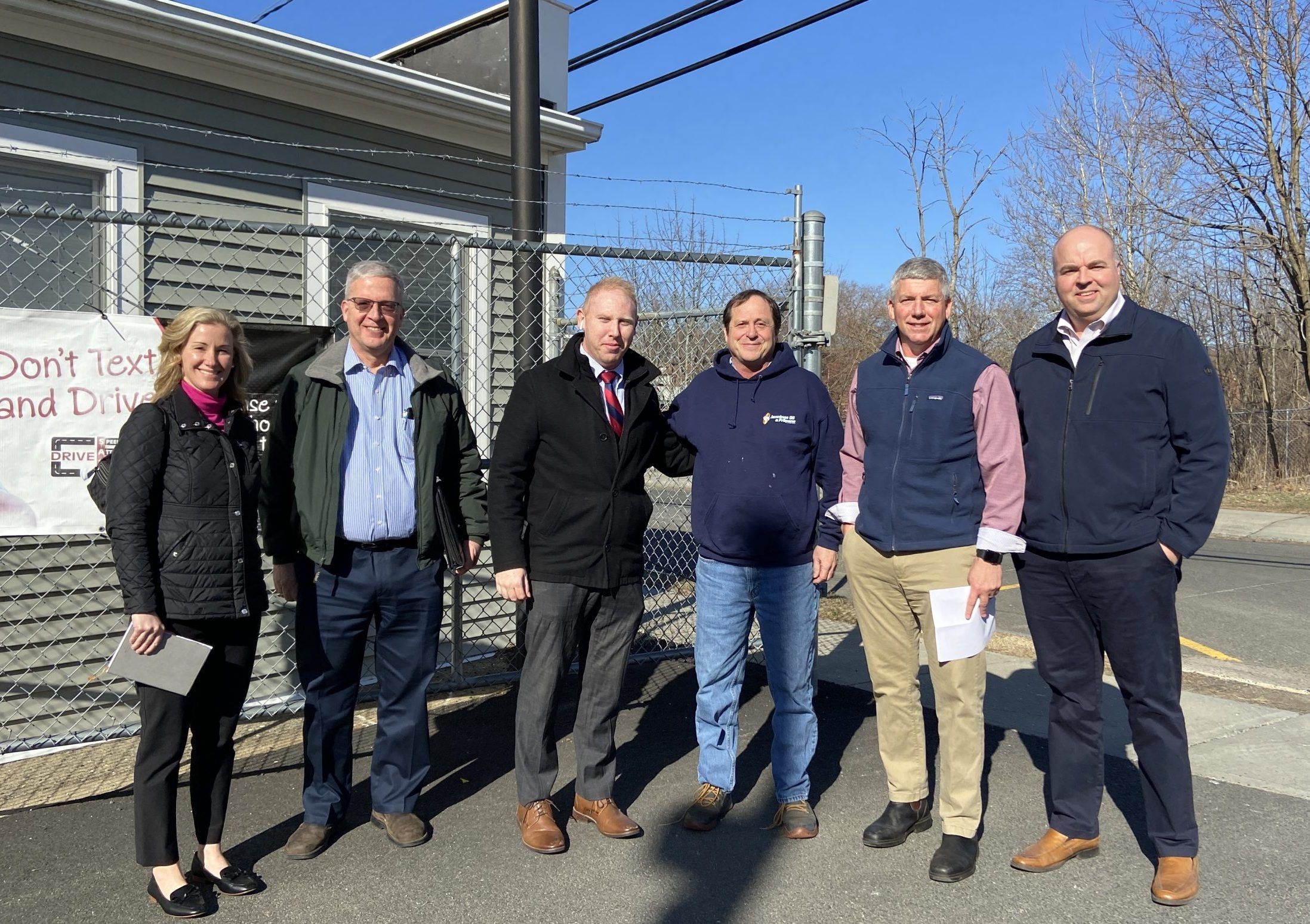
Danbury– In a meeting with officials of three local home heating oil delivery companies Monday, Environment Committee ranking members State Representative Patrick Callahan (R-108) and Senator Stephen Harding (R-30), and Representative Rachel Chaleski (R-138) discussed S.B. 1145. They talked with Leahy’s Fuels President Stephen Rosentel, Jennings Oil co-owner Jeff Jennings, and Norbert E. Mitchell President Matthew Mitchell about the proposal called An Act Concerning the Establishment of Sector Specific Subtargets For Greenhouse Gas Emissions Reductions and Regulating Emissions of Small Off-Road Engines.
“It’s hard to believe that something could be worse than the Transportation and Climate Initiative (TCI) tax bill, but this is it; there would be no legislative oversight. At least TCI would have been regional with other states so the Danbury area wouldn’t have had a problem with competition near the CT-NY border, but S.B. 1145 could involve agreements with places like Washington state or California that would kill Danbury businesses and businesses statewide,” said Callahan.
“The passage of this bill would add massive costs to the people of Connecticut to heat and cool their homes, as well as increasing gas prices at the pump. This also leads to yet additional inflation for food and other everyday goods and services. S.B. 1145 would also give the Commissioner of DEEP cart blanche to create and change standards, fees and penalties without legislative approval.”
TCI proposed two years ago would have dramatically increased the cost of petroleum through a series of policy changes and mandated caps on Connecticut suppliers, in turn causing prices to rise at the pumps. That proposal did not make it to the House for a vote.
“This is simply TCI under a different name. S.B. 1145, in its current form, would give the state Department of Energy and Environmental Protection Commissioner authority to enter into agreements, such as cap & trade and other ideas previously rejected in Connecticut, without legislative oversight. Only members of the Regulations Review Committee would have the opportunity to support or oppose the implementation of these regulations. It seems DEEP’s goal is to reduce demand by taxing people out of being able to drive to work and heating their homes that way they currently do,” added Callahan.
Among other things, this proposal would establish sector-specific targets for commercial and industrial heating and cooling, residential heating and cooling, industrial processes, natural gas distribution and service, natural and working lands and any other sector or source the Commissioner may designate as necessary to meet the greenhouse gas levels in those subdivisions.
“This is another tax in disguise that would further drive the cost of gasoline, lead to fuel shortages, and hurt residents and small businesses already feeling the pressure of today’s economy. Our small fuel companies in Danbury are continually working to provide better, more environmentally-conscious fuel sources through biodiesel blends,” said Chaleski.
Leahy’s employs 48 people, Jennings employs 30 and Mitchell employs 240 people. The deliverable fuel company officials say by giving DEEP this authority, it would automatically cause the downfall of the whole industry. They noted that the industry is moving to a biodiesel option by 2035.
“Oil hasn’t asked for subsidies. We’ve asked for fairness and to not be legislated out of business. We’re taking significant steps to lower our carbon footprint and reduce greenhouse gas emissions,” said Jennings.
“It was a great opportunity to meet with these local business owners today and hear directly the impact this legislation would have on middle class families across my district and across the state. I will continue to work with my colleagues to oppose this aggressive tax on our constituents,” said Harding.