
Bolinsky, CT House GOP Proposes Historic Property Tax Relief Plan
Key Takeaways
- Lawmakers propose middle-class property tax cuts to reduce the burden on Connecticut's homeowners
- Connecticut House Republicans propose targeted relief to lower residential tax bills
- Proposal includes exemptions/credits for qualifying middle-income homeowners
- Will provide relief & improve affordability while shielding families from tax hikes
Bolinsky & Foncello, Along with House Republicans Propose Property Tax Relief
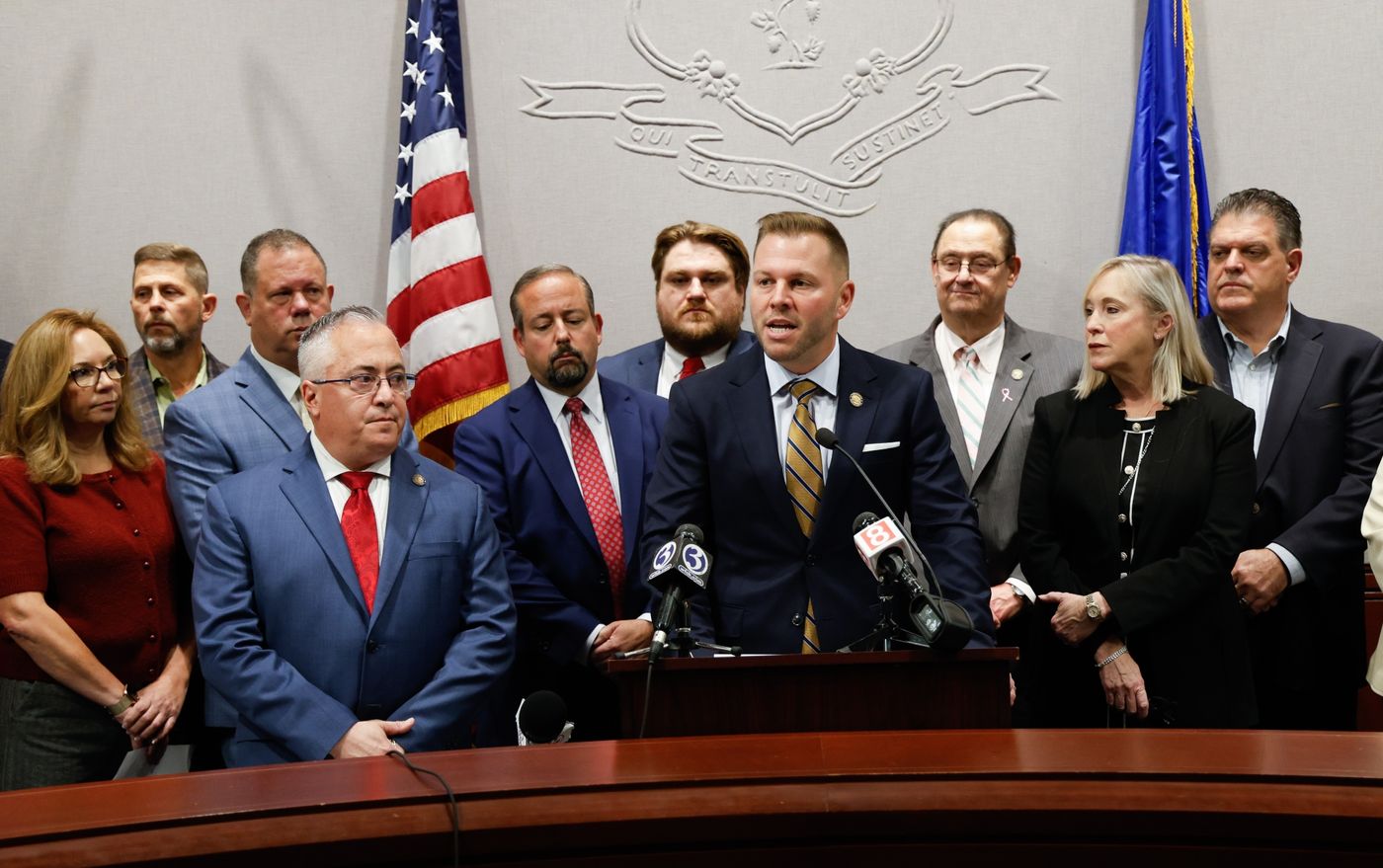
HARTFORD— Newtown State Representatives Mitch Bolinsky (R-106) and Martin Foncello (R-107) along with their House Republican colleagues proposed the largest expansion of Connecticut's property tax credit in state history, increasing the maximum credit to $1,000 and growing eligibility for additional relief to more than 800,000 Connecticut households.
-18.png)
The Newtown legislators stood with leadership, as well as municipal officials whose constituents are already facing financial pressure from double-digit property tax hikes driven by the state’s mandatory, periodic revaluation process. Such a process is to be undertaken in Newtown, in 2026, with the impact yet to be seen, although the cost to Newtown of the 2024 Democrat-led change in vehicle valuation was about $600,000 in lost state revenue for 2025, due to a reduction to our state personal-property municipal tax equalization grant.
The goal of today’s House Republican proposal is to provide real middle-class tax relief by redirecting a Democrat proposal to raid $500 million in state surplus dollars, creating an “off-budget” account to further increase state spending, ultimately skipping a budgeted retiree pension-debt payment to subsidize a "possible loss of federal funding" that won't be known until next year. The special session is planned for November 12, strategically scheduled by Democrat leadership to fall after the upcoming municipal elections.
“Here in Newtown, families are feeling the squeeze from higher costs, and recent personal-property revaluations have hit home already, with school and municipal valuation of real property coming in 2026. only added to that pressure,” said Rep. Mitch Bolinsky. “This plan delivers meaningful relief to middle-class taxpayers who need it most, especially our seniors and working families trying to keep up with rising expenses. Instead of stockpiling surplus money in another government slush fund, we’re choosing to give it back to the people who earned it.”
"We should provide relief for taxpayers as Connecticut runs budget surpluses. Excess money should be put toward the largest property tax credit expansion in state history. This would provide a true solution to the affordability problem plaguing our state," said Rep. Foncello.
Under the Republican plan, every qualifying taxpayer would see an increase in their credit. The proposal raises the maximum credit from $300 to $1,000 and sets a minimum credit of $400 for eligible filers. It also increases income eligibility thresholds by about $20,000 for single filers and $30,000 for joint filers. The plan particularly benefits joint filers by raising the eligibility threshold from $130,500 to $200,000. Under current law, thousands of these filers receive only the minimum $30 credit—or nothing at all. Overall, more than 800,000 filers would see more relief.
The Republican tax relief plan would use $501 million from the $1.9 billion in the state's volatile revenue, targeted by Democrats for yet another off-budget fund.
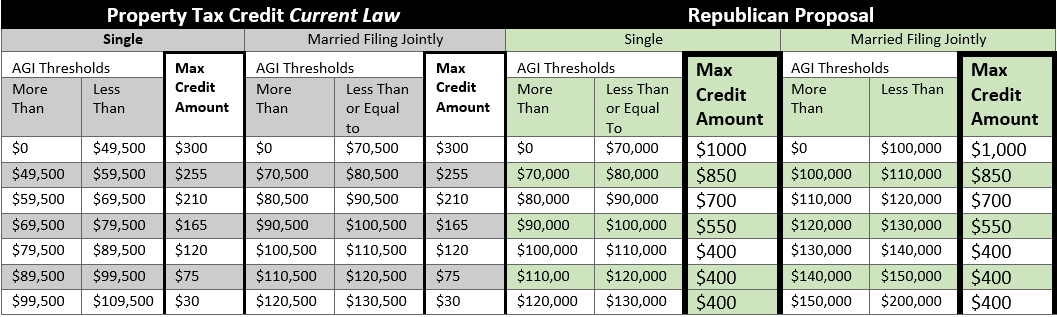
The $700 increase to the maximum property tax credit offered by Republicans contrasts sharply with Governor Lamont's 2025 proposal—a $50 increase that was ultimately ignored by Democrats in their final $55 billion two-year budget adopted in June.