
Bolinsky, Foncello Talk Budget, Seniors, and Local Priorities at Newtown Lunch & Learn
Key Takeaways
- Bolinsky and Foncello discuss budget impacts on local services and seniors
- Emphasizing protecting senior programs and ensuring reliable care
- Highlighting local priorities and community input for budget decisions
- Urging fiscal responsibility and targeted support for Newtown residents
Bolinsky, Foncello Talk Budget, Seniors, and Local Priorities at Newtown Lunch & Learn
NEWTOWN — Over afternoon pizza and plenty of straight talk, State Representatives Mitch Bolinsky (R-106) and Martin Foncello (R-107) sat down with local seniors last week for a Pre-Session Lunch & Learn to recap what Hartford accomplished last year — and what still needs fixing.
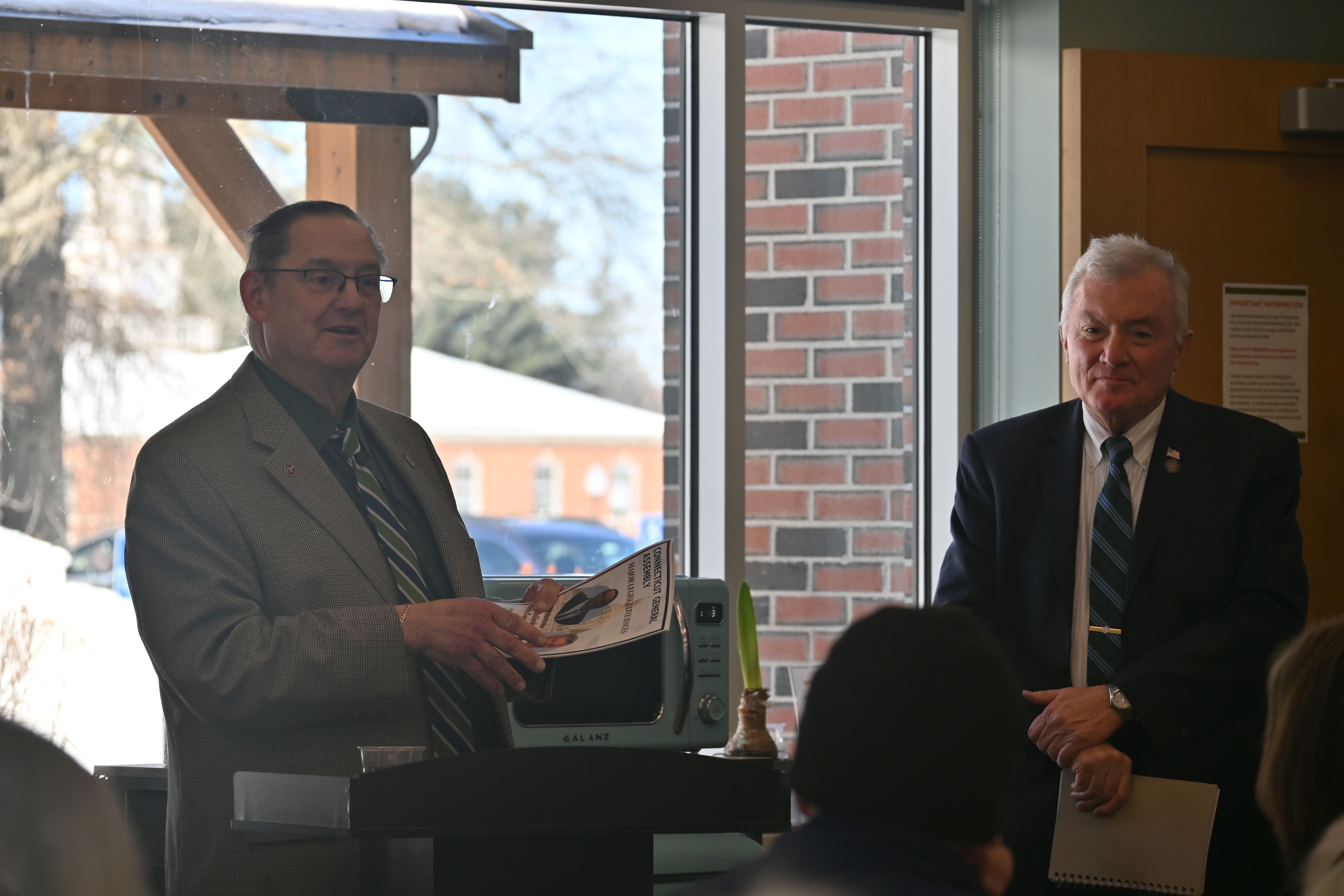
The gathering at the Newtown Senior Center felt less like a formal presentation and more like neighbors catching up around the kitchen table, with the lawmakers walking folks through what they call the “nuts and bolts” of state government.
Bolinsky kicked things off by explaining that 2026 is a budget adjustment year at the Capitol. As members of the Appropriations Committee, both he and Foncello said they plan to keep a close eye on state spending.
“We need to be watchdogs for taxpayers,” Bolinsky said, noting that every dollar matters, especially for residents on fixed incomes.
He also highlighted several wins from the legislature’s Aging Committee, including passage of a biomarker testing law aimed at catching Alzheimer’s disease and many cancers earlier, allowing positive outcomes — something many families in the room said hits close to home. In telling the story behind the “The Biomarker Bill”, Bolinsky joked about how unpredictable, and tense, the legislative process can be, sharing how last-minute changes, call “rats” are often inserted into great bill like this one, causing some supporters to change solid ‘YEA’ votes to reluctant ‘NAYS’. He explained that this pitfall is an everyday occurrence behind closed doors in Hartford and can result in ‘minutes before midnight negotiations’ to remove these “legislative rats” to avoid loss of a good policy bill, noting that, in the end, this one passed unanimously. Bolinsky quipped — “That’s sometimes how the sausage gets made in Hartford. “I’ve become great at spotting and exterminating rats!”
Both lawmakers agreed that helping seniors age in place remains a top priority. They discussed pushing to remove public benefits charges from electric bills and continuing efforts to eliminate waste and fraud to stretch taxpayer dollars further.
Several attendees voiced frustration about large, last-minute “aircraft carrier” bills that bundle many issues together, making it hard to know exactly what lawmakers are voting on. Bolinsky and Foncello said they share those concerns and support more transparency in the process.
Foncello turned the conversation toward education funding, calling special education costs one of the biggest pressures facing towns like Newtown.
“Local school budgets are often the largest part of a town’s expenses,” he said. “We can’t spend more than we take in, so we’ve got to set priorities and make sure Hartford is doing its part.”
He advocated for updating the state’s Education Cost Sharing (ECS) formula to reflect inflation and better support local districts. He also spoke about the need for improvements to the early voting system to ensure it runs smoothly and efficiently.
The discussion wrapped up with questions about animal welfare legislation, including last year’s proposed puppy mill ban. Both lawmakers explained they didn’t co-sponsor the bill after late changes raised concerns, and noted it ultimately stalled. They said they would consider supporting new legislation if it comes forward clean and straightforward.
By the end of the afternoon, the tone was clear: practical, local, and focused on everyday concerns.
“These conversations are what matter most,” Foncello said. “We work for you, and hearing directly from you helps guide what we fight for in Hartford.”
Bolinsky agreed. “It’s always better when we can talk face-to-face. That’s how good ideas start.”
Residents with questions or suggestions are encouraged to reach out to their offices or attend future community events.