
Bolinsky Asks Governor for State Participation in Federal Education Tax Credit
Key Takeaways
- Bolinsky urges Connecticut to opt in to a new federal education tax credit program
- The program would expand scholarships for eligible Connecticut students and families
- Opting in keeps federal scholarship dollars in-state instead of funding other states
- Bolinsky cites rising special education and unfunded mandates that strain local budgets
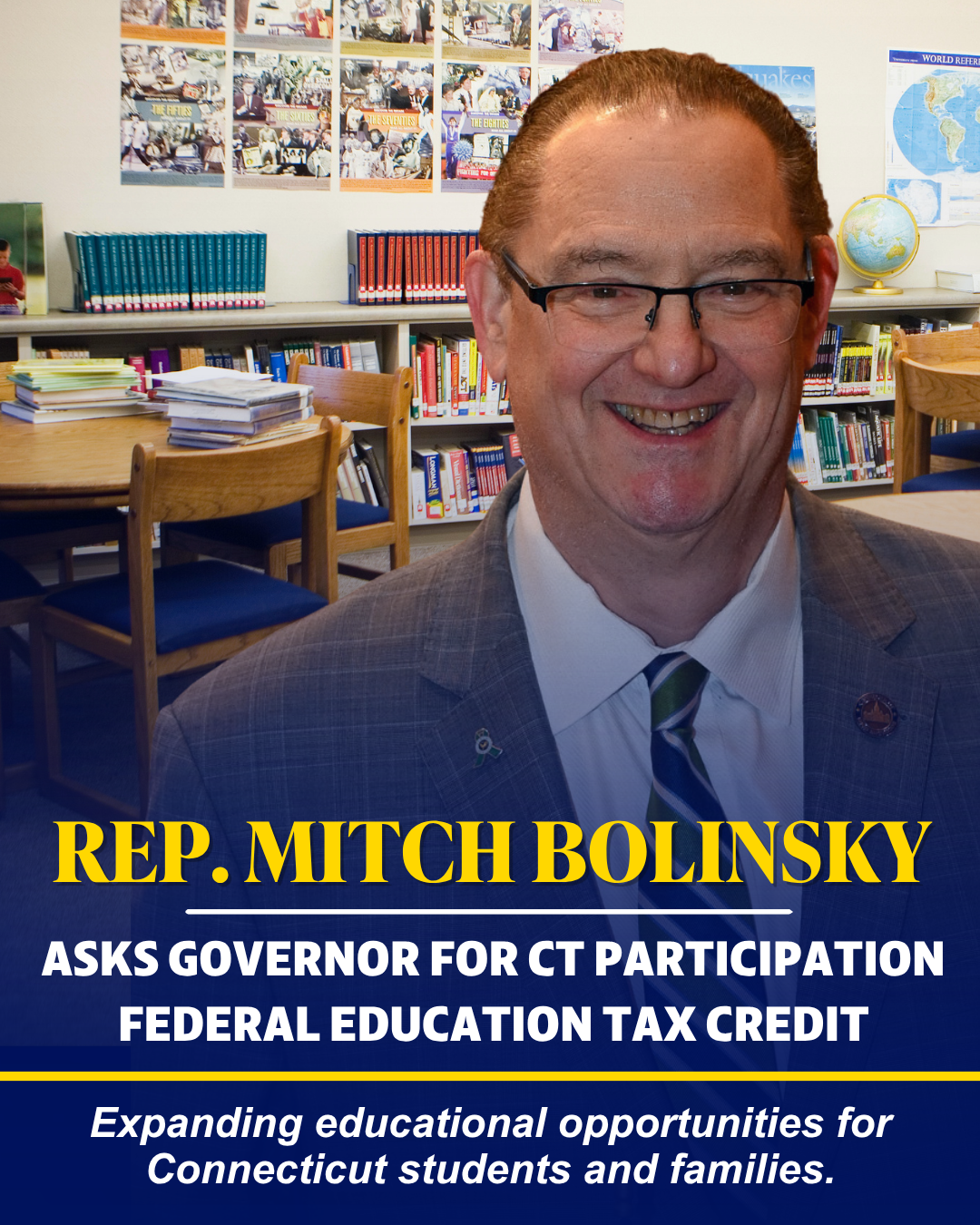
HARTFORD – State Representative Mitch Bolinsky (R-Newtown), a longtime member of the legislature’s Education Committee, a 2025 member of the Select Committee on Special Education, and a driver of the bipartisan formation of the state’s Office of Dyslexia and Reading Disabilities has joined fellow legislators in again urging Governor Ned Lamont to have Connecticut “opt-in” to participate in a new federal Education Freedom Tax Credit Program. The initiative is designed to provide additional educational scholarship opportunities for students and families at a time of rapidly increasing educational costs in states like Connecticut. The new federal program has already drawn 27-states and is still accepting enrollments.
In a state as reliant on local property taxes as is Connecticut, towns like Newtown are experiencing the brunt of growing demands on its school budgets in its General K-12 Public Education; it’s growing contractual obligations; greatly escalating Special Education costs in terms of utilization, demand, and transportation cost growth. Bolinsky, who has long been an advocate for the state paying its fair share, and reforming its longstanding habit of piling unfunded state mandates on local districts and taxpayers, said: “To turn away an opportunity to leverage federal resources that could help students while encouraging charitable education contribution in Connecticut would be an opportunity lost. The federal program, gearing up to begin in 2027, would allow Connecticut taxpayers to direct federal tax dollars toward scholarships for eligible Connecticut students—but only if the state chooses to participate. We need to participate!”
"Newtown families know firsthand how expensive it has become to educate every child while providing the specialized services many students need," Bolinsky said. "Our community is proud of our public schools, but we also know that special education costs continue to place significant pressure on our local budget and ultimately on property taxpayers. If there's an opportunity to bring federal dollars into Connecticut to help families and students, we should seize it—not send those dollars to other states."
Rep Bolinsky noted that Newtown families with children who need tutoring, specialized educational services, or additional support for those who “learn differently” could benefit from scholarships available through the program if Connecticut opts in. The scholarships may be used for a variety of qualified educational expenses, including tutoring, specialized services, and other K-12 education costs, with additional guidance expected later this year. Eligibility is targeted toward low- and moderate-income households but, ultimately holds the potential to provide systemic tax relief.
"If Connecticut chooses not to participate, contributing taxpayers can still receive the federal tax credit—but their donations will help students in another state instead of helping children here at home," Bolinsky said. "That simply doesn't make sense. I'd much rather see those dollars benefiting Newtown families, our students, taxpayers, and other communities across Connecticut."
Bolinsky concluded by sharing that special education costs now constitute nearly one-third of many district’s education budgets, while stagnated reimbursements from the state's Excess Cost Grant program fall further behind actual expenses with every subsequent year. “Connecticut’s Constitution guarantees every child have the opportunity for a ‘Free and Appropriate Public Education’ but, each year, the state contributes a smaller pierce of that promise, through a long obsolete funding model that pushes more to local taxpayers every year. That’s why I propose educational funding reform in every session. Part of the reform should be developing new sources of revenue like this new federal program. By itself, it won’t make our schools whole, but it’s a beginning – a first step in taking our foot off the local property tax accelerator.”