Latest News
Loading articles...
Loading photos...

State Representative
District
44th
Towns
3
Latest Updates
Swipe through recent posts

KILLINGLY- State Representative Anne Dauphinais (R-44) updates area residents on state farmland policy and recommendations regarding (PA 490) Public Act 490. PA 490 is Connecticut’s land use law established in 1963 to fairly tax land based on its use and not on marketability to protect farmland, forests, and open space from permanent conversion. A PA 490 Working Group was formed following an outcry from farmers across Connecticut, who urged Governor Ned Lamont to reinstate the 2020 recommended land-use values under Public Act 490. In response, the Governor issued a moratorium in October 2025, effectively putting on hold an updated valuation that would have significantly increased the assessed value of some farmland for municipal tax purposes beginning in 2026. While the moratorium provided relief to some farmland owners by preventing those increases from taking effect, the reinstatement of the prior values did not provide similar relief to forestland owners. In fact, the updated values would have reduced the assessed value of forestland, making the moratorium particularly disappointing for those seeking meaningful recognition of the damage caused by insects and disease to Connecticut’s native trees and forest habitats. The PA 490 Working Group recommends modernizing Connecticut’s farmland valuation system so that assessments better reflect 1) how land is actually being used , while improving the data used to establish those values. The recommendations 2) replace the older soil-based classifications with use-based categories, 3) create annual reporting to provide more reliable rental information, 4) establish safeguards when there is insufficient data, 5) maintain the existing DEEP methodology for forestland, and (6) require an automatic review when land values increase by more than 20%. The overall goal is to make the valuation process more consistent and prevent unusually large assessment increases that could place additional pressure on farmland. The working group recommendations are now in the hands of Governor Lamont, the Connecticut Office of Policy and Management (OPM) and the CT Department of Agriculture, all who must decide whether to accept or reject them. While I was involved at the state and local level in understanding and advocating for appropriate action on this system of valuation, I believe the real thanks go to those members and volunteers who graciously gave of their personal time to see this effort through. I offer my deep appreciation to the farmers and foresters who dedicated so many volunteer hours to this endeavor. I know that the recommendations presented in these documents are the culmination of many months of public meetings, and behind-the-scenes commitment and coordination. The work of these volunteers really addresses the core issues that resulted in the underrepresented data and erroneous valuation of some agricultural lands and represents a comprehensive beginning to what should be ongoing discussions. There’s a lot to talk about, and I applaud the work that went into collaboratively developing these recommendations. My personal thanks to Jennie Kapszukiewicz from Stone Hill Farm in Plainfield for her thorough and thoughtful presentation. She is not only a constituent, but I consider her a friend and neighbor. PA490 Working Group Recommendations For questions regarding the material presented please contact: OPM.PA490@ct.gov
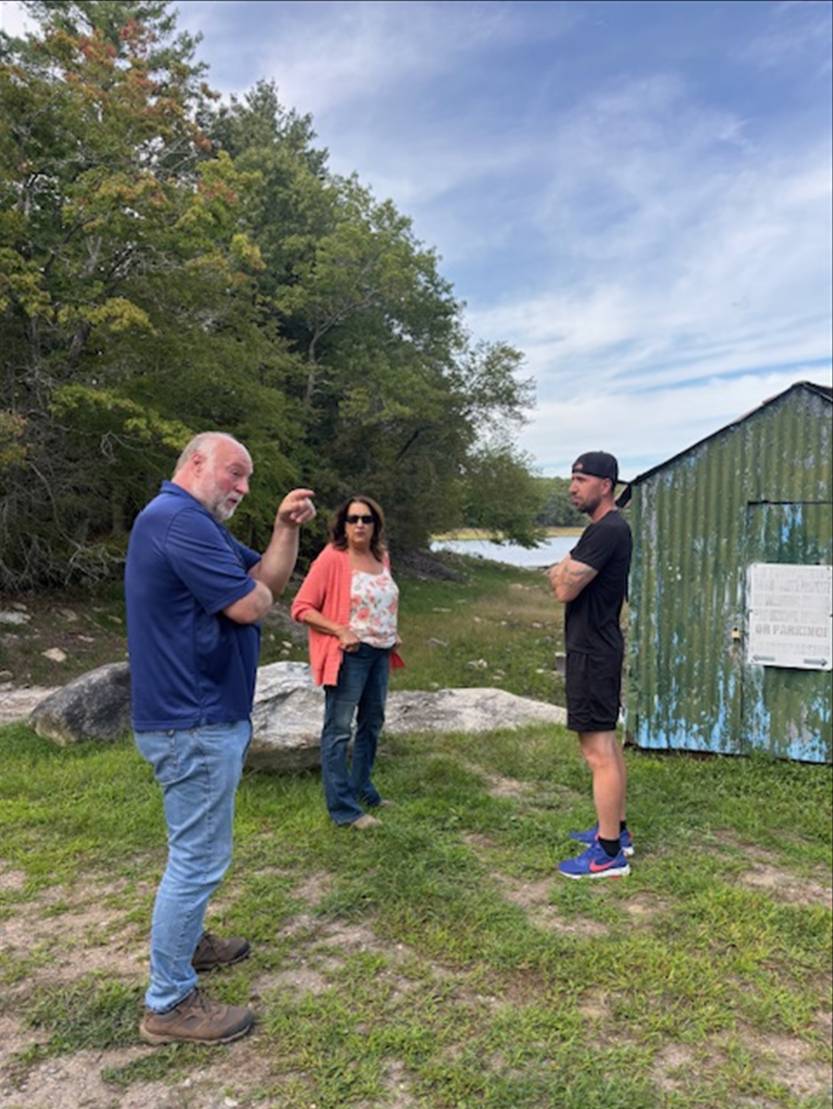
State Legislators Provide Update on Dam at Old Killingly Pond Issue KILLINGLY- In a follow-up to the Connecticut Department of Energy and Environmental Protection (DEEP) dam at Old Killingly Pond Issue, immediately after the Connecticut Department of Energy and Environmental Protection announced it had taken the first step in an enforcement action toward Wright Investors' Service Holdings Inc., (WISH), the owner of the dam at Old Killingly Pond, State Representatives Anne Dauphinais (R-44) and Chris Stewart (R-51) attended a meeting to better understand this action and its implications. DEEP has issued WISH a Consent Order requiring the organization to determine what work is needed to restore Old Killingly Pond’s pre-drawdown water levels. The options are to (1) repair or (2) completely replace the dam. While constructive negotiations are underway, officials remain cautiously optimistic that a solution is being developed to address the concerns of residents and others impacted by the historic drawdown. DEEP said the action resulted from a collaborative effort by local and state officials, as well as affected residents and the surrounding community. Old Killingly Pond is an important resource for Northeast Connecticut and also impacts the quality of life of nearby Rhode Island residents. While negotiations are ongoing, key issues for concern have remained at the forefront for DEEP, state legislators, town officials and area residents: · Resident safety · Resource protection (cold water source at risk to Killingly and surrounding towns) · Risk to endangered species and critical habitat · Corporate contractual responsibility In order to maintain this reduced water level, WISH must obtain a permit. The ability to obtain said permit is prohibited until the required repair or replacement of the existing dam has be completed. While Representatives Dauphinais and Stewart remain hopeful that actions undertaken by WISH are expeditious and appropriate, the state lawmakers understand that DEEP has enforcement tools and penalties at their disposal should they be deemed necessary. Rep. Dauphinais with Old Killingly Pond residents, Al Dufresne and Nick Tavernier
KILLINGLY- State Representative Anne Dauphinais (R-44) is demanding greater safeguards and protection of donor and taxpayer money after a local man has now admitted stealing more than $775,000 from two CT nonprofits, including hundreds of thousands of dollars through unauthorized wire transfers, checks, ATM withdrawals and purchases. One of the most victimized non-profits in this instance was the Holy Family Home and Shelter in Willimantic. Rep. Dauphinais said, “This case is a painful reminder that when we are dealing with taxpayer dollars and charitable donations, trust is not enough — we need safeguards. That should make every taxpayer and donor ask a simple question: Who is watching the money?” Rep. Dauphinais established that municipalities have safeguards in place for this very reason. In Connecticut, municipal financial systems may require multiple levels of authorization, and state law provides significant checks on how municipal money is paid out. For example, Connecticut law requires certain town orders to be signed by a majority of the selectmen before a town treasurer can pay them. “We should be looking at whether similar protections are being applied consistently when state dollars are awarded to nonprofit organizations,” said Rep. Dauphinais. "Every dollar matters. Families are working hard to pay their taxes, and people who donate to charitable organizations expect their money to help the people it was intended to serve — not end up in someone's personal bank account. Furthermore, the primary victim of this kind of crime is the person who is not receiving the services they so desperately need: shelter, food and other services. The secondary is the Connecticut taxpayer who believes that these services are important to helping residents in their communities to overcome difficult times." Rep. Dauphinais believes, we as a state, should consider commonsense financial safeguards such as a two-signature rule for significant withdrawals or transfers, independent financial review, stronger separation of financial duties, regular audits and clear reporting showing exactly where taxpayer dollars are going. There are additional safeguards that non-profits who receive taxpayer dollars must be required to comply with, and at the very least should include specific oversight regulations. “Let’s be honest, this isn't just about nonprofits. If the state's own top financial officials cannot clearly account for money allocated to outside organizations and demonstrate how those dollars are being spent, that is a serious problem. Connecticut taxpayers deserve transparency. They deserve accountability. And most importantly, they deserve to know that there are multiple sets of eyes on their money” .
.JPG)
Dauphinais Calls for Responsible Tax, Energy and Property Tax Relief HARTFORD – State Representative Anne Dauphinais (R) is calling for responsible tax and spending policies that provide relief to Connecticut families while protecting taxpayers and maintaining fiscal discipline. Connecticut residents continue to face high costs for housing, energy, groceries, transportation and property taxes. Dauphinais said state government should look for ways to find waste, fraud and duplication of all services while making sure taxpayer dollars are spent carefully and responsibly. “Connecticut families work hard for every dollar they earn, and they deserve a state government that respects that,” said Rep. Dauphinais. “We should be looking for ways to lower taxes and reduce unnecessary costs, while also making sure we are living within our means. Government should not automatically look for more money from taxpayers whenever there is a budget challenge.” Among the proposals being discussed by Rep. Dauphinais and House Republicans are changes to the state property tax credit, additional municipal support aimed at easing local property tax pressures, income tax relief and measures intended to reduce energy costs. Dauphinais said property taxes deserve particular attention because local tax increases can make it harder for families, seniors and small businesses to remain in their communities. “Property taxes are one of the biggest expenses many Connecticut families face,” Dauphinais said. “We need to take a serious look at how the state can help communities control costs without simply shifting the burden from one taxpayer to another. Long-term property tax relief requires responsible state spending and a commitment to making government more efficient.” Dauphinais also supports greater transparency and accountability when it comes to electric bills. House Republicans have proposed by minimizing subsidies and removing the Public Benefits Charge from electric bills and instead addressing those expenses through the regular state budget process, where lawmakers can debate and account for them openly. “People deserve to understand what they are paying for when they receive their electric bill,” Dauphinais said. “If the state is going to fund a program, taxpayers should be able to see it, understand it and have their elected representatives held accountable for that decision. Bonding these public benefits charges like the will only cost taxpayers more because we’re paying interest on bonding debt.” Dauphinais said she will continue supporting efforts to reduce the tax burden, wasteful out of control government spending and make Connecticut more affordable for working families, seniors and small businesses. “We don't need government to do more just for the sake of doing more,” said Dauphinais. “We need government to do its job well, spend taxpayer dollars carefully and give families more room in their own budgets. That's the kind of fiscal responsibility Connecticut should be working toward.”

I’m looking forward to discussing the 2026 legislative session and answering your questions at our upcoming update with State Representative Doug Dubitsky and State Senator Heather Somers. Date: Thursday, June 18, 2026 Time: 6:00–7:00 PM Location: Plainfield VFW Post 5446 7 Winsor Ave., Plainfield Questions you’d like addressed ahead of time? Email: Anne.Dauphinais@housegop.ct.gov
Towns Served