
Latest News
Loading articles...
Loading photos...

State Representative
District
63rd
Towns
3
Latest Updates
Swipe through recent posts
-1.png)
TORRINGTON - Residents, businesses, and nonprofits impacted by the flash flooding that struck the region on September 13, 2026, now have access to additional recovery assistance. The U.S. Small Business Administration (SBA) has approved a disaster declaration covering Fairfield County, as well as neighboring New Haven and Litchfield counties . The declaration makes low-interest SBA disaster loans available to eligible homeowners, renters, businesses, and nonprofits to help with recovery from the flooding. Rep. Case worked closely with the Governor’s Office following the flooding and also worked with constituents to report damage and make sure the impact on local communities was documented. This disaster declaration is an important resource for those who continue to deal with the effects of the storm. How to Apply Those seeking assistance can apply through the SBA’s online MySBA Loan Portal at https://lending.sba.gov . The portal allows applicants to submit applications, view loan information, check balances, make payments, and access statements. The SBA will also have a temporary Disaster Loan Outreach Center available for in-person assistance beginning October 7, 2026 , at: Margaret E. Morton Government Center 999 Broad Street Bridgeport, CT The center will generally be open Monday through Friday from 9 a.m. to 5 p.m. and Saturdays from 9 a.m. to 1 p.m. It will be closed Sundays. There are some adjusted hours: October 9: 9 a.m. to 2 p.m. October 12: Closed for Columbus Day October 20–21: 9 a.m. to 4 p.m. The center is expected to permanently close at 4 p.m. on October 21 . Important Deadlines For those who experienced physical damage, the application deadline is December 1, 2026 . For economic injury assistance, the deadline is July 2, 2027 . Anyone who was affected by the September flooding is encouraged to learn more about the available assistance and determine whether they may qualify. For help with the application process, contact the SBA Disaster Customer Service Center at 1-800-659-2955 or disastercustomerservice@sba.gov . Individuals who are deaf, hard of hearing, or have a speech disability can dial 7-1-1 for telecommunications relay services. If you or someone you know was impacted by the flooding, please share this information and help spread the word about these recovery resources.
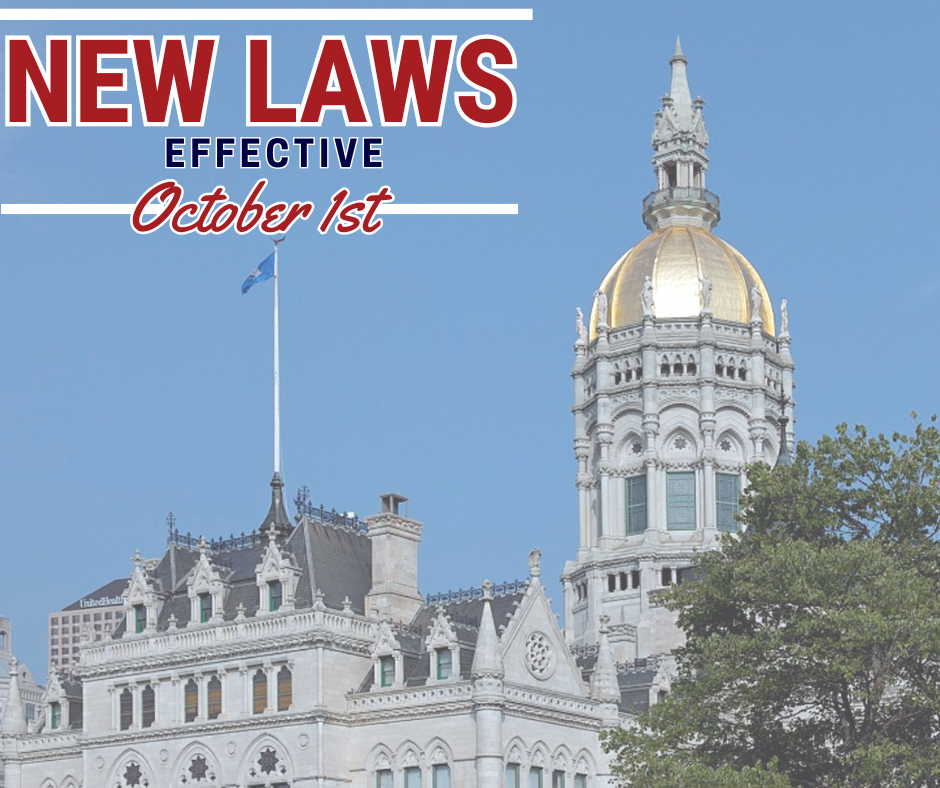
Hartford - Several new state laws will go into effect on October 1 and may be important to you, your family or your business. Our priority remains protecting public safety, supporting our veterans, and keeping state government accountable to taxpayers. Key legislative updates include: Enhanced Road Safety & Fines: Starting October 1, drivers face tougher penalties for certain violations. Distracted driving is now expanded to drivers who watch videos on their phones, and drivers who violate storm travel bans face an increase of fines to $250, among other changes. E-Bike Guidelines ( P.A. 26-24 ): Establishes an exact 750-watt motor limit for e-bikes, restricts Class 2 bikes on natural-surface paths without local authorization, and excludes dirt bikes and ATVs from e-bike classifications. Expanded Dental Care for Veterans ( P.A. 26-35 ): Under the Hero Act, eligible veterans can receive up to $3,000 per year for dental care. Consumer Privacy Safeguards ( P.A. 26-64 ): Among other changes, it prohibits a streaming video service from transmitting to a consumer commercial advertising audio that is louder than the video it accompanies, consistent with FCC regulations; makes violations a CUTPA violation. All new laws can be viewed by clicking here .
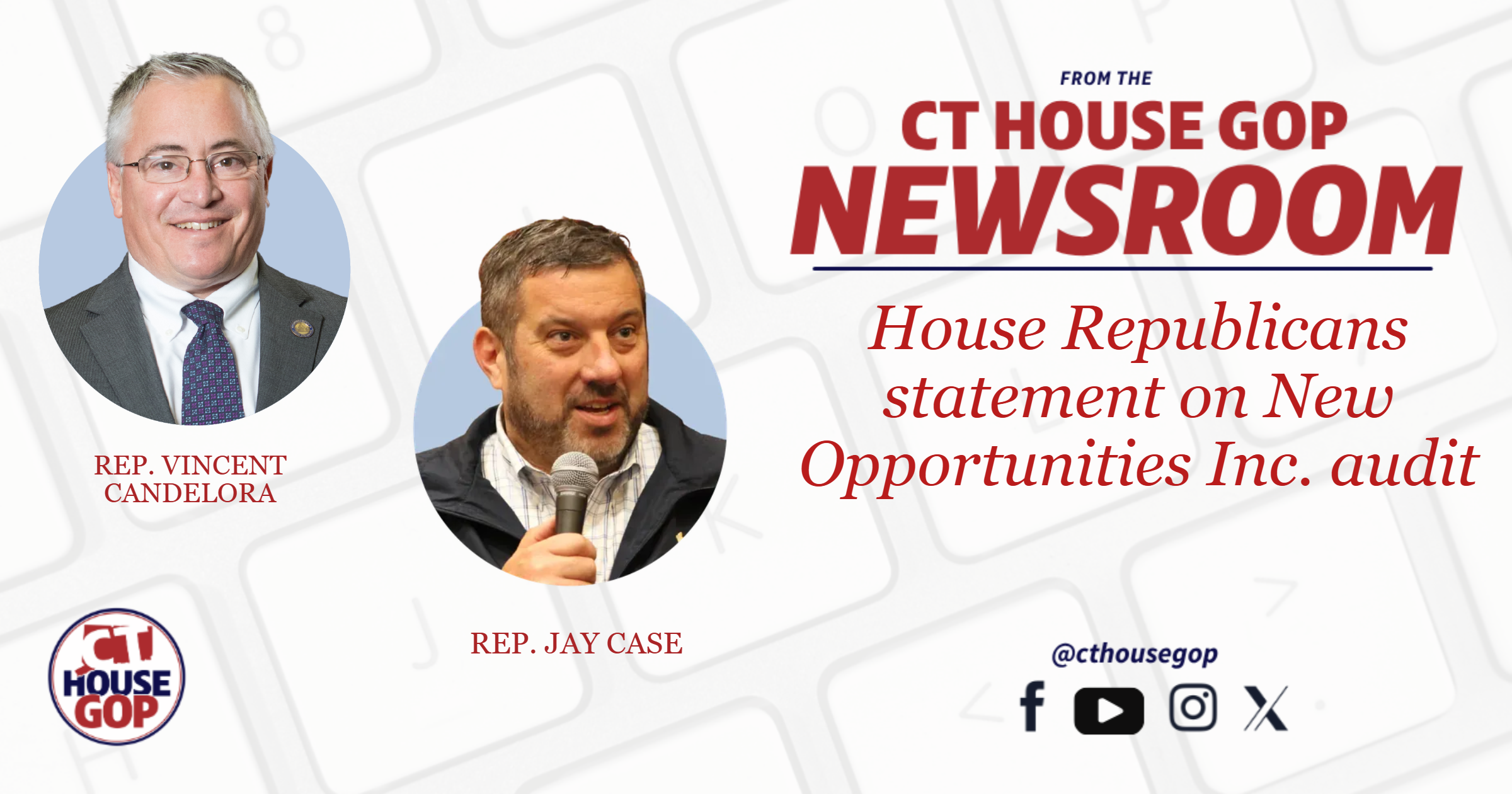
HARTFORD— House Republican Leader Vincent Candelora (R-North Branford) and Rep. Jay Case (R-Winchester), House Ranking Member of the Human Services Committee, released the following statement Tuesday in response to an independent audit conducted of New Opportunities Inc.: "This forensic audit exposes mismanagement of public dollars at New Opportunities that is even worse than we feared when this crisis first broke earlier this year. Energy assistance funds meant to heat the homes of low-income families were diverted to cover operating losses, including a failing hydroponics venture that bled money year after year. Checks bounced. Negative cash balances were disguised on the books and hidden from the board. We're glad this report has been referred to the Attorney General and the state’s attorney’s office. The audit rightly focuses on the former CEO and the current CFO, but we think the board of directors also has questions to answer. Management kept them in the dark, and that's inexcusable, but a board's job is to ask hard questions before a crisis, not after. Going forward, the state needs to know whether this board is up to the task of overseeing an organization entrusted with public funds. We urge authorities to pursue a thorough investigation in a timely manner, both for the families who depend on these programs and for taxpayers already stretched thin by the cost of living in a state where government spending climbs year after year."
June is Alzheimer's & Brain Awareness Month, a time to raise awareness about Alzheimer's disease and the importance of maintaining brain health throughout life. Alzheimer's disease is the most common form of dementia, affecting memory, thinking, and behavior. While age is the greatest known risk factor, Alzheimer's is not a normal part of aging. Early recognition of symptoms can help individuals and families access support and care sooner. Supporting brain health can include regular physical activity, a nutritious diet, quality sleep, social engagement, and staying mentally active. These healthy habits may help reduce the risk of cognitive decline and improve overall well-being. This month also honors the millions of caregivers who provide support to loved ones living with Alzheimer's and other forms of dementia. Their compassion and dedication make a meaningful difference every day. During Alzheimer's & Brain Awareness Month, take time to learn about the disease, support those affected, and promote healthy habits that benefit brain health at every age. Resources: Connecticut's Guide for Navigating Dementia Care Alzheimer’s Association
The Connecticut General Assembly’s Office of Legislative Research has released its 2026 “Major Public Acts” report. It is an annual overview highlighting the most significant legislation enacted during this year’s legislative session. The report organizes new laws by policy area and provides a helpful summary of the changes that may affect Connecticut residents, families, municipalities, and businesses. I encourage you to take a look, as many of these updates could have a direct impact on your daily life or work. Click here to access the full report.
Towns Served